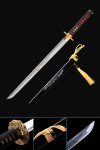
What makes ninjato different from a traditional katana?
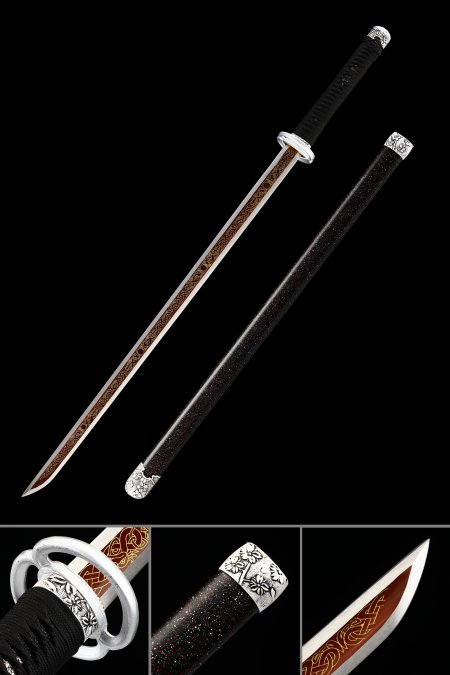
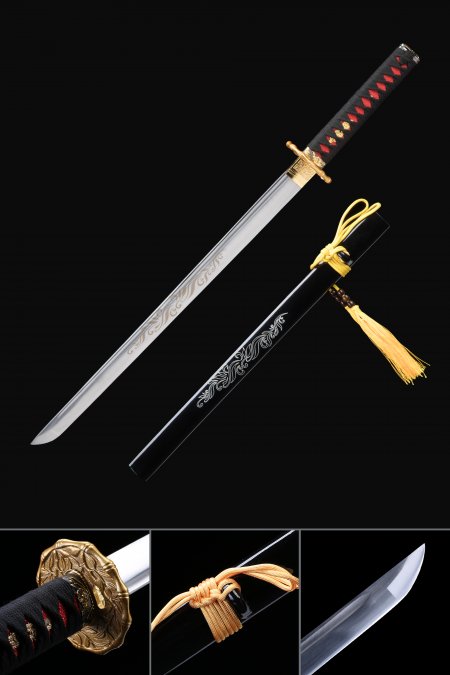
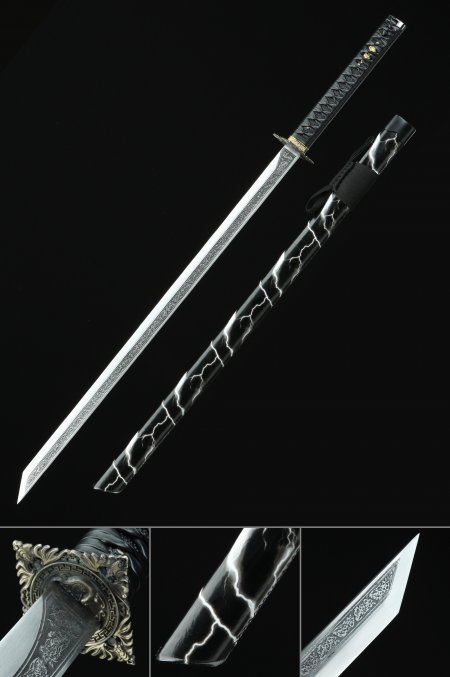
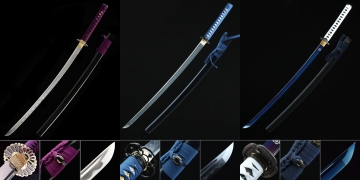
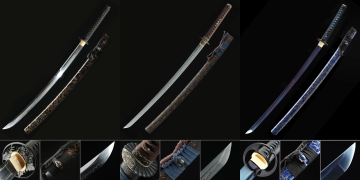
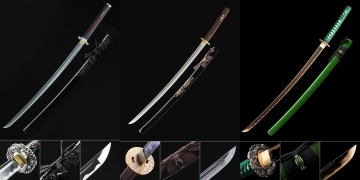
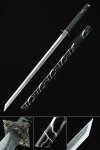
The most immediate distinction is geometry. A traditional katana features a pronounced curved blade optimized for specific cutting mechanics, while a ninjato has a straight or minimally curved profile that gives it a sharper, more linear visual presence. For collectors, this difference matters aesthetically: the ninjato's straight edge creates a cleaner silhouette on a wall mount and allows engraved blade details - like the vine patterns in this series - to be read without the distortion a curve introduces. The fittings also tend to differ; ninjato are frequently paired with square or simply shaped tsuba, though pieces in the Vine Blade series use more ornate floral designs to elevate the collectible quality. Both forms use full-tang construction in quality pieces, but the ninjato's straight geometry means the tang-to-blade transition is especially uniform, contributing to the structural consistency collectors prize in display-grade swords.
Is 1045 steel or manganese steel better for a display ninjato?
Both are excellent choices for display-grade collectibles, but they serve slightly different collector preferences. 1045 high-carbon steel has a tighter, more uniform grain structure that responds well to polishing and detailed surface engraving - the vine motifs on 1045 blades in this collection tend to have crisp, well-defined edges. It also holds decorative finishes reliably under stable indoor conditions. Manganese steel offers greater inherent toughness and has a naturally darker base tone that complements oxidized or matte-black lacquer finishes beautifully. If your display environment emphasizes dark aesthetics - black saya, dark wood stands, low ambient lighting - manganese steel's character reads particularly well. If you prefer higher-contrast engraving clarity and a brighter blade surface, 1045 is the stronger match. Neither is inherently superior; the choice comes down to the visual language of your specific display.
How should I care for an engraved blade to preserve the detail?
Engraved blades require slightly more attentive care than smooth-surface swords because the recessed channels of the design can trap moisture and fingerprint oils that accelerate surface oxidation. After handling, wipe the blade with a clean, dry microfiber cloth, then apply a thin, even layer of food-grade mineral oil or traditional choji oil using a soft cloth - working the oil gently into the engraved grooves rather than simply wiping across the surface. Avoid silicone-based products, which can leave a residue that becomes tacky and traps fine debris in the engravings over time. For storage, keep the sword horizontal in its saya in a stable environment with low humidity - ideally below 60% relative humidity. A silica gel packet placed near the display or in a storage case offers inexpensive, effective moisture control. Re-oil the blade every two to three months under normal display conditions, or immediately after any handling session.
Are these ninjato suitable as gifts for serious sword collectors?
Yes - and the vine engraving detail is a meaningful differentiator that elevates these pieces above standard display swords in a gift context. Serious collectors tend to notice and appreciate the specificity of design choices: the contrast between a black lacquer saya with its own surface texture and an engraved blade, or the way a gold chrysanthemum tsuba anchors an otherwise dark color palette. These are not generic novelty pieces. The full-tang construction and quality steel selection also signal to a knowledgeable recipient that the gift was chosen with genuine understanding of what makes a display sword worth keeping. For collectors who already own curved katana, a straight-blade ninjato offers genuine variety rather than redundancy - a complement to an existing display rather than a duplicate. Pair it with a quality wall mount or wooden stand to complete the presentation.
Can vine-engraved ninjato be displayed alongside curved katana?
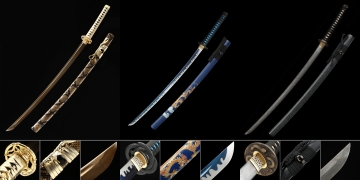
Absolutely, and the pairing often produces more visually compelling results than displaying matched sets of the same blade type. The straight line of a ninjato creates a geometric counterpoint to the arc of a katana - when mounted horizontally side by side, the contrast draws the eye across both pieces and highlights the distinctive character of each form. The vine engravings provide a thematic thread that can tie together a mixed display, particularly if paired with katana featuring complementary botanical or nature-inspired fittings. From a practical standpoint, straight blades are easier to position precisely on wall mounts, which can simplify the process of creating a balanced, symmetrical display arrangement. Consider the tsuba finishes when planning mixed displays - gold and silver fittings can be alternated deliberately to create a rhythm across multiple mounted pieces.