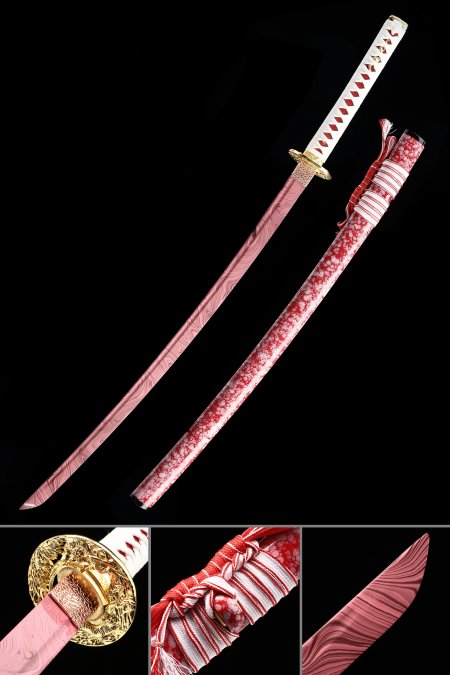
White Red Handle Katana

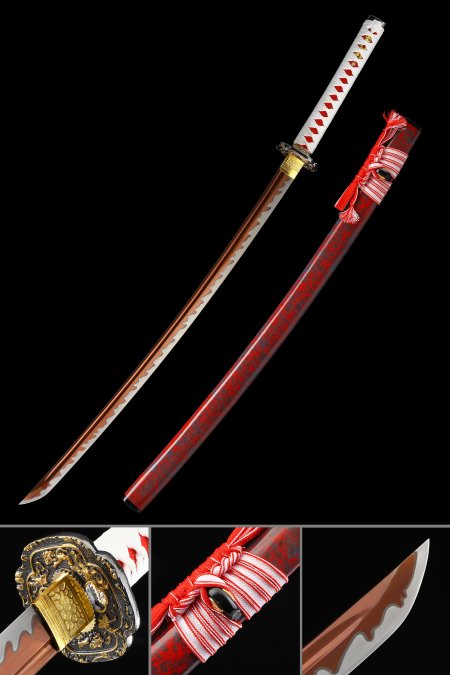
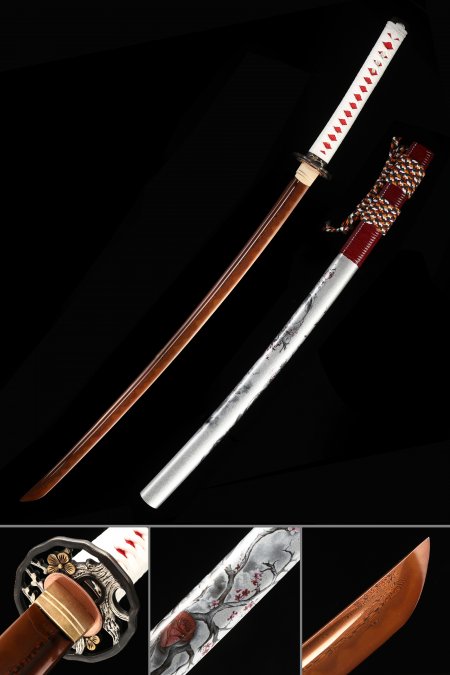
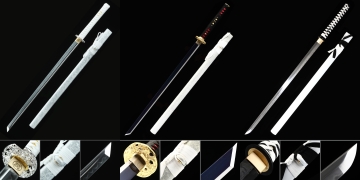
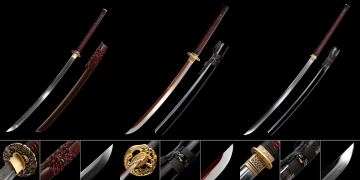
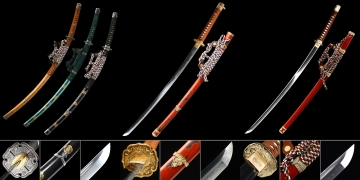
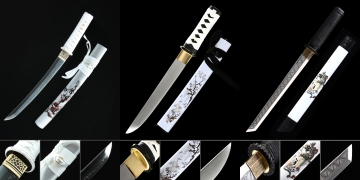
White and red handle katana pieces bring a striking visual contrast to any serious collection - pairing the purity of white silk or ray skin wrapping with bold crimson accents that echo centuries of Japanese aesthetic tradition. Each piece in this selection is hand-assembled with full-tang construction and period-inspired fittings, from lacquered sayas to engraved tsubas. Enjoy free standard shipping on your order, plus a straightforward return policy so you can collect with confidence.
Showing 5 Products

Frequently Asked Questions

What makes white and red the most collected katana color pairing?
White and red carry deep roots in Japanese aesthetic and ceremonial tradition. White, associated with ritual purity in Shinto practice, was a common color for formal sword presentation materials, including the wrapping cords (sageo) and handle coverings of ceremonial pieces. Red, used in lacquerwork and braided ito, signaled vitality and prestige in samurai court culture. Together they create maximum visual contrast - light against dark, warm against cool - which makes them particularly effective for display purposes. When mounted on a proper katana stand, a white-red tsuka reads clearly at distance, which is one reason collectors working with open shelf or wall-mounted displays tend to prefer this pairing over more subdued colorways.
What is clay tempering, and how does it affect the blade's appearance?
Clay tempering is a traditional heat treatment technique where a layer of refractory clay is applied to the spine of the blade before it is heated and quenched in water or oil. Because the clay-coated spine cools more slowly than the exposed edge, the two zones develop different crystalline structures - hard martensite at the edge for durability, and softer pearlite along the spine for flexibility. The boundary between these zones becomes the hamon, the visible temper line that runs along the length of the blade. No two clay-tempered blades produce an identical hamon; the line's shape, texture, and activity are influenced by the clay application pattern, the steel's carbon content, and the quench speed. For collectors, this means each clay-tempered piece is effectively unique at the metallurgical level, which significantly increases its interest as a display collectible compared to uniformly heat-treated blades.
How do 1095, T10, and Damascus steels compare in this collection?
These three steel types represent meaningfully different manufacturing approaches. 1095 high-carbon steel contains approximately 0.95% carbon, making it hard enough to hold a well-defined edge and capable of showing a vivid hamon when clay tempered. T10 tool steel adds a small amount of tungsten to the alloy, which improves wear resistance and produces a slightly finer grain structure - collectors often note that T10 blades exhibit a more refined, detailed hamon activity. Damascus steel (also called folded or pattern-welded steel) is produced by forge-welding multiple steel billets together and folding the composite repeatedly; when etched with acid, the alternating steel layers reveal flowing patterns across the surface. Damascus pieces are primarily chosen for their visual surface character rather than any single metallurgical advantage, making them a strong choice for collectors prioritizing decorative impact.
How should I store a white-handle katana to prevent ito discoloration?
White silk or cotton ito wrapping is particularly susceptible to yellowing from UV exposure, humidity, and skin oils transferred during handling. For long-term display, position the piece away from direct sunlight and fluorescent lighting with high UV output - both cause fiber degradation over time. If you handle the tsuka during repositioning or cleaning, use clean cotton gloves to avoid transferring oils to the white wrap. For storage in a cabinet or display case, maintain relative humidity between 40-60%; levels below this range can dry out the same (ray skin) under the ito, causing it to contract and affect the wrap's tension. A light cedar block placed near (not touching) the saya can help regulate moisture without chemical risk to lacquer finishes.
Are these pieces suitable as gifts for anime or Japanese culture enthusiasts?
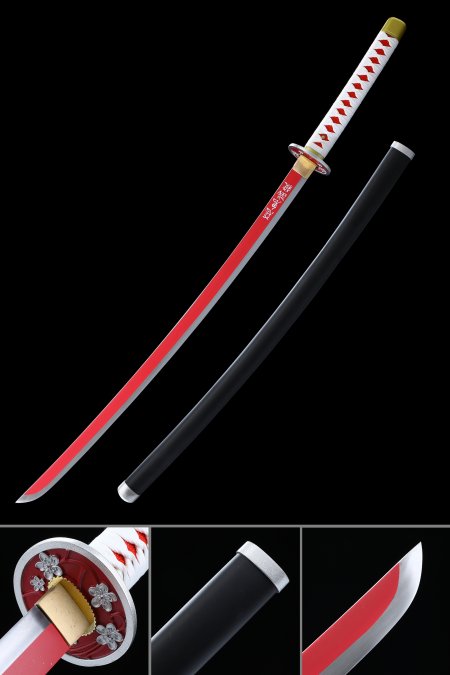
Yes, and for different reasons depending on the recipient's interest. For collectors who appreciate traditional Japanese sword aesthetics, pieces featuring clay-tempered high-carbon steel blades, genuine rayskin tsuka, and hand-engraved tsubas offer substantive craftsmanship behind the visual appeal. For enthusiasts of titles like Demon Slayer, the Nichirin-style replica in this collection uses 1045 carbon steel full-tang construction - the same structural standard as classically styled pieces - while presenting the distinctive blade design recognizable from the series. Either way, pairing the katana with a dedicated display stand completes the presentation, as the white-and-red color story reads best when the piece is mounted horizontally and visible from multiple angles.

Customer Reviews

Matthew Sokolowski New Jersey, United States

Katana is very nice, scabbard not so much. Very difficult to re sheath once drawn. Blade is hitting the part of the inside of the saya that obviously wasn’t finished well. I would buy again, because the 1095 carbon blade is well made. Hopefully I can buy another scabbard from True Katana to replace the present one. I don’t see how I could fix the issue without splitting the saya in half.

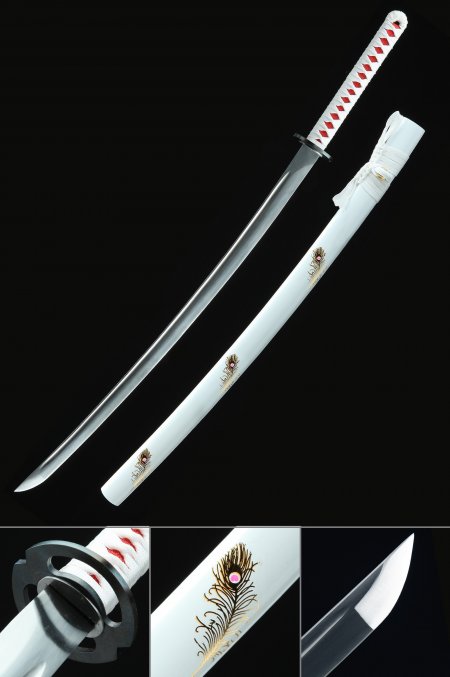
1095 Clay Tempered Katana with White Piano Lacquer Saya and Peacock Feather Design - Full Tang Collectible Sword 1095 Clay Tempered Katana with White Piano Lacquer Saya and Peacock Feather Design - Full Tang Collectible Sword