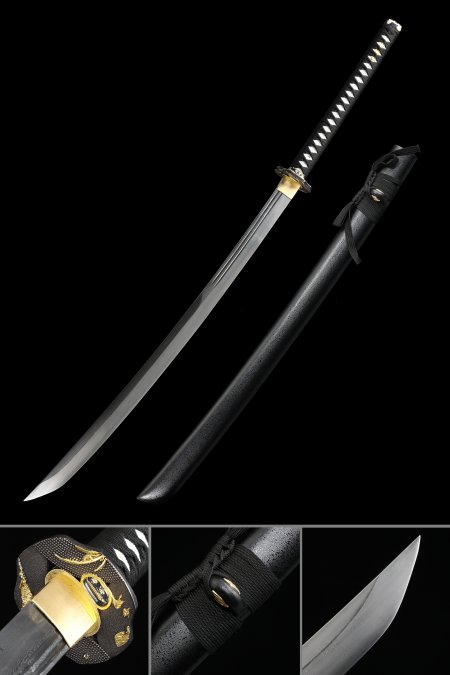
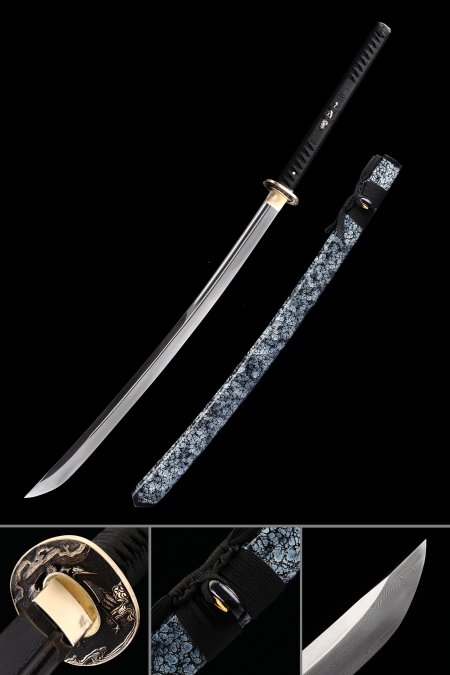
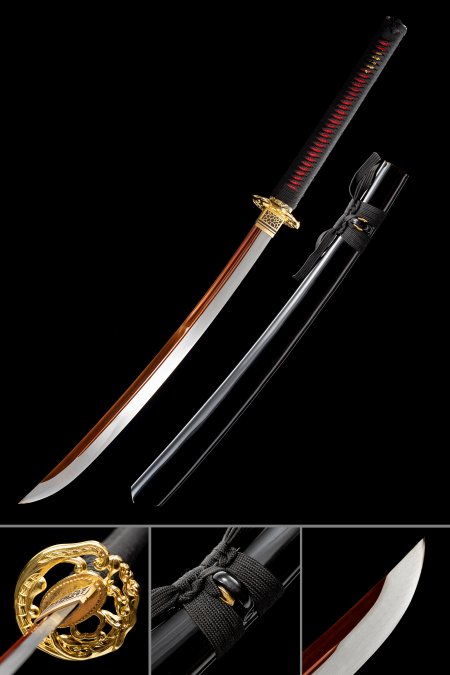
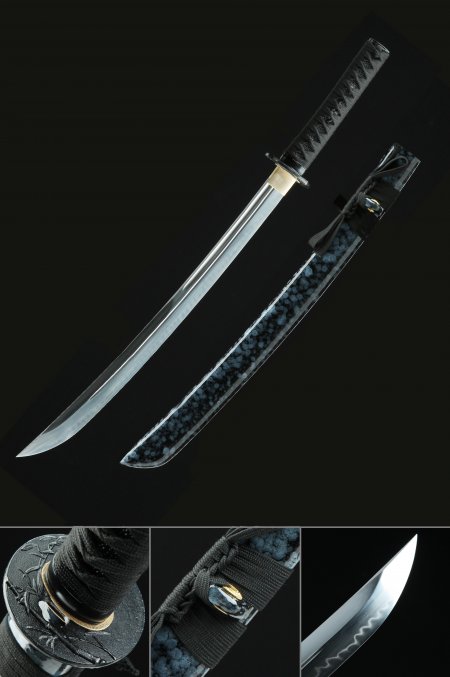
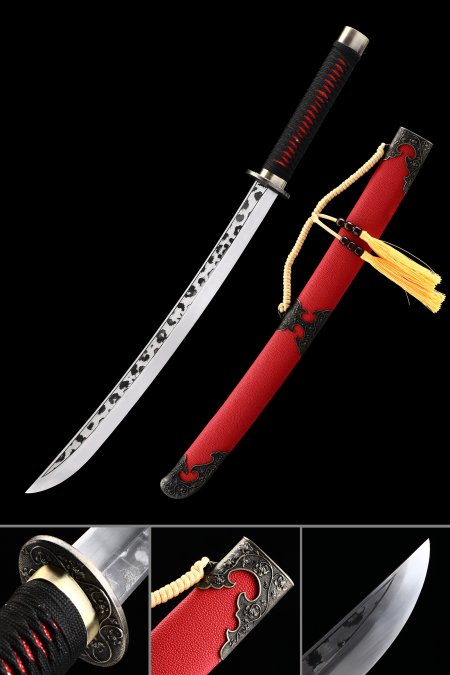
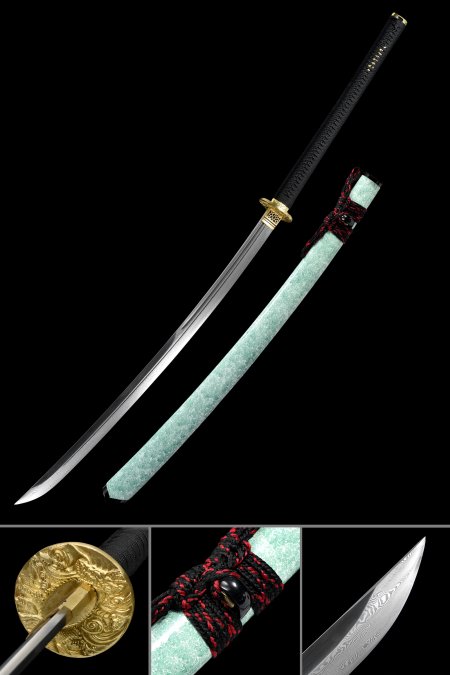
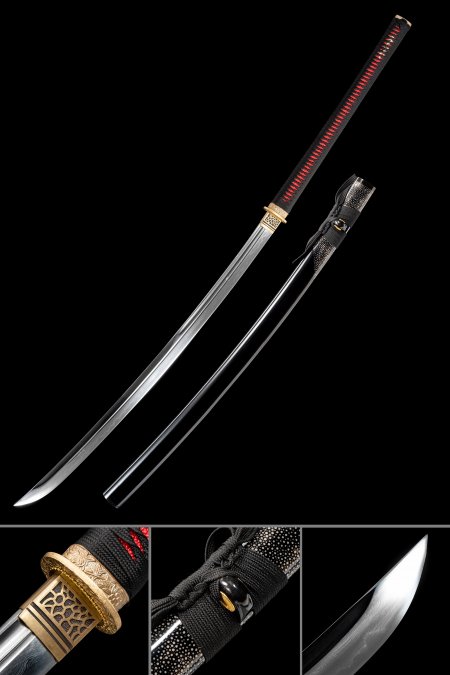
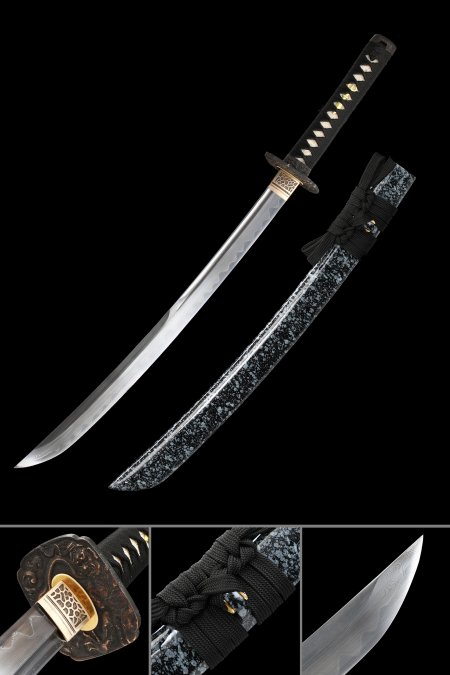
Why do some black naginata blades show visible hamon lines?
Updated Feb 2026
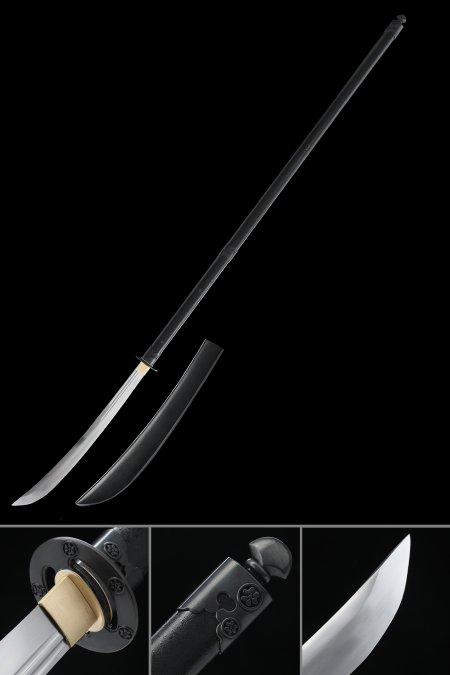
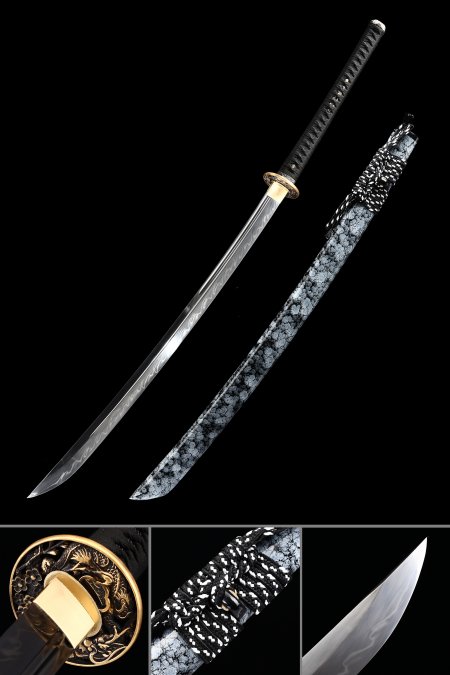
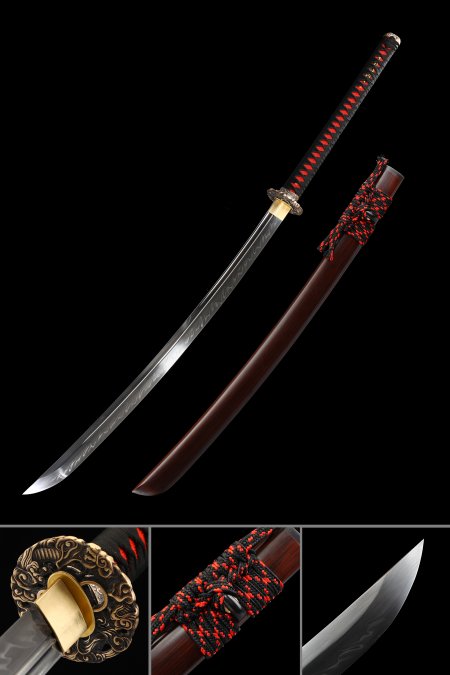
Visible hamon lines appear on blades that have been clay tempered, a centuries-old technique where a clay mixture is applied unevenly across the blade before quenching. The thinner clay layer along the edge cools faster, producing harder martensite steel, while the thicker clay on the spine cools slowly, leaving softer pearlite. The boundary between these two zones creates the hamon — a wavy, cloud-like line unique to each blade. On black-finished naginata, the hamon becomes especially dramatic because the contrast between the dark surface treatment and the brighter temper line draws the eye. It is both a functional indicator of differential hardening and one of the most prized visual details a collector can look for.