What makes a white tanto different from a standard tanto?
Updated Feb 2026
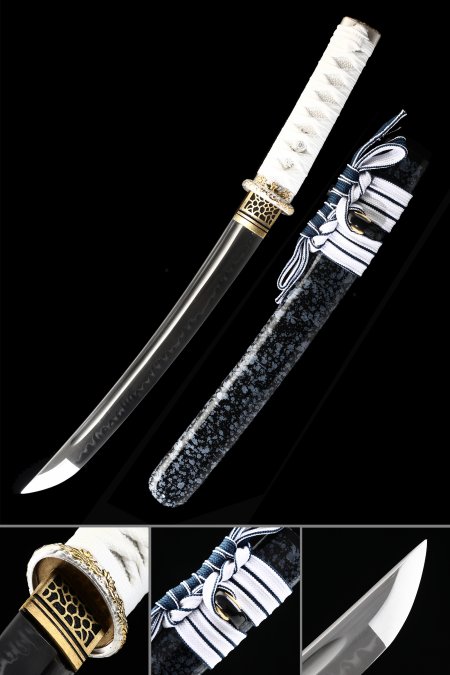
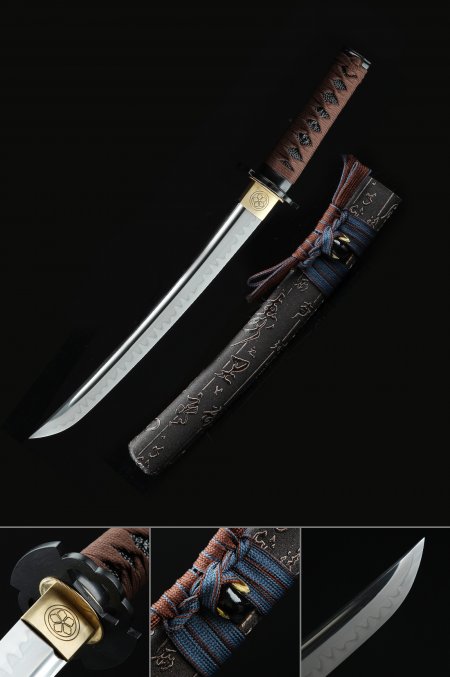
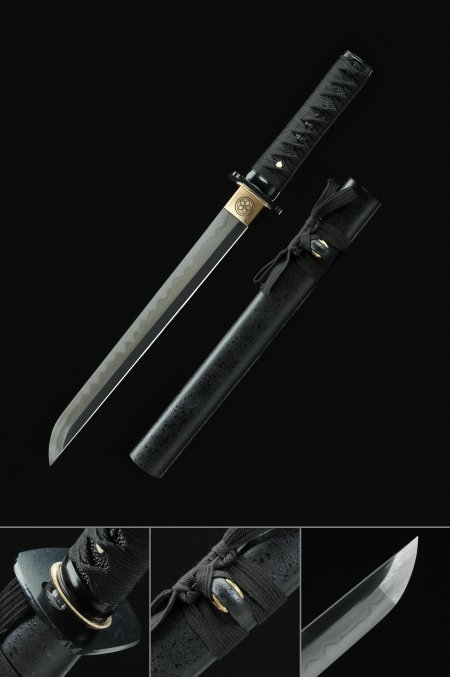
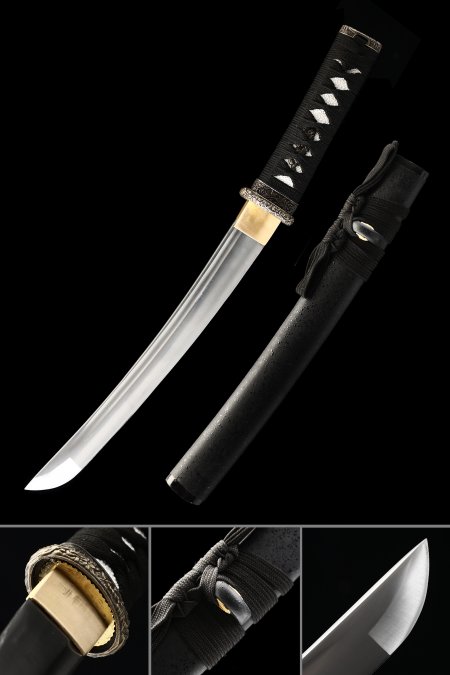
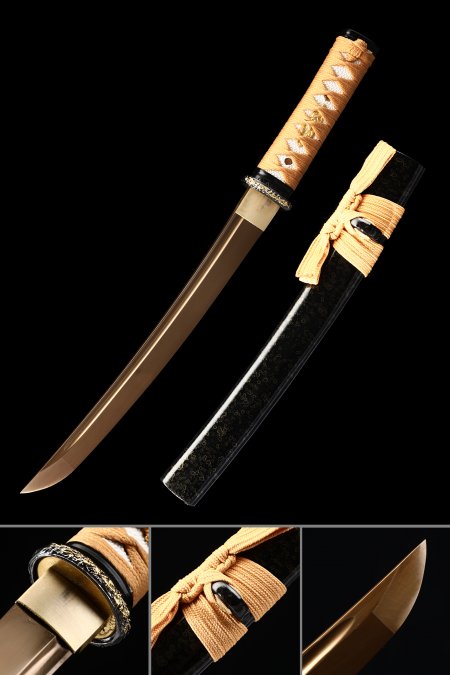
The core distinction is the all-white finishing scheme applied to the saya, and often the handle wrapping, fittings, or rayskin underlayer. A standard tanto may feature natural wood, black lacquer, or dark-toned wraps, whereas a white tanto deliberately inverts that convention. The pristine palette draws the eye to surface details that might otherwise recede — the grain of the lacquer, the relief work on the tsuba, and especially the hamon temper line along the blade. White lacquer is also technically demanding to apply; imperfections show far more readily than on darker finishes, so each saya must be sanded, primed, and coated through multiple layers to achieve an even, glass-like surface. The result is a collectible that feels ceremonial and modern at the same time.