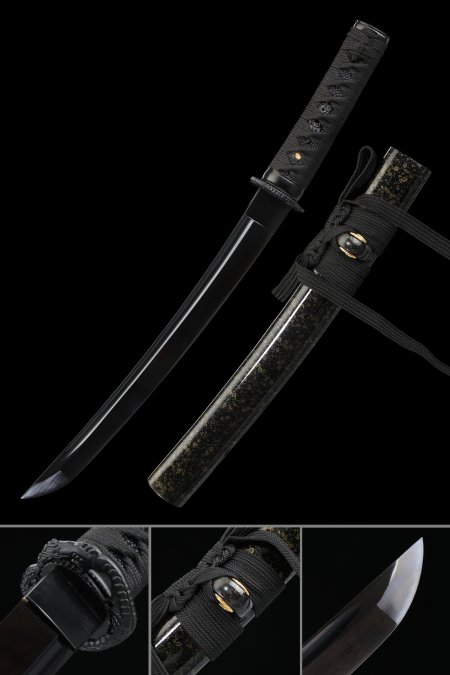
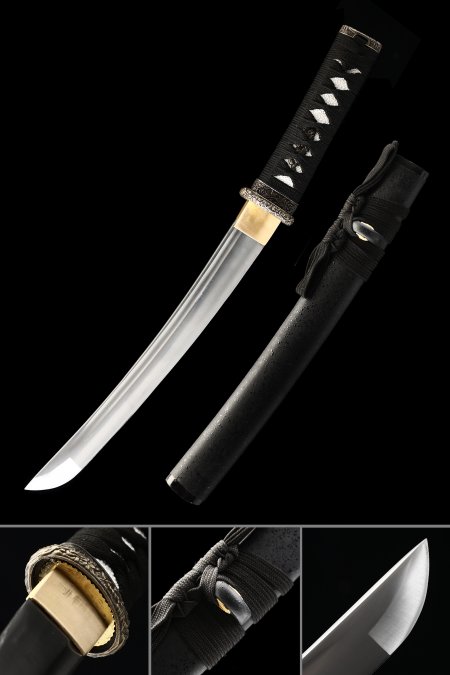
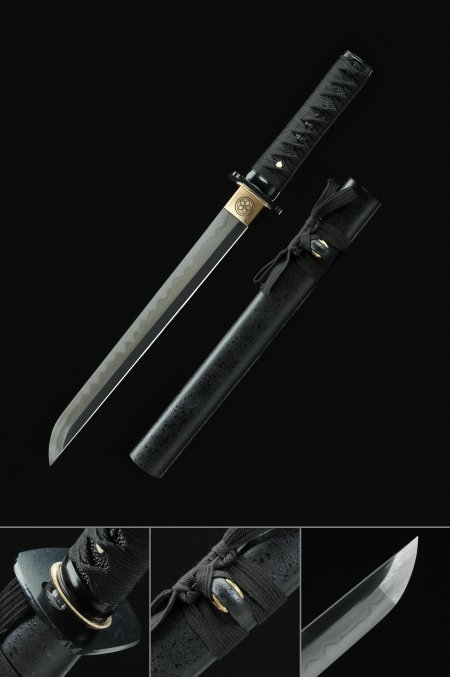
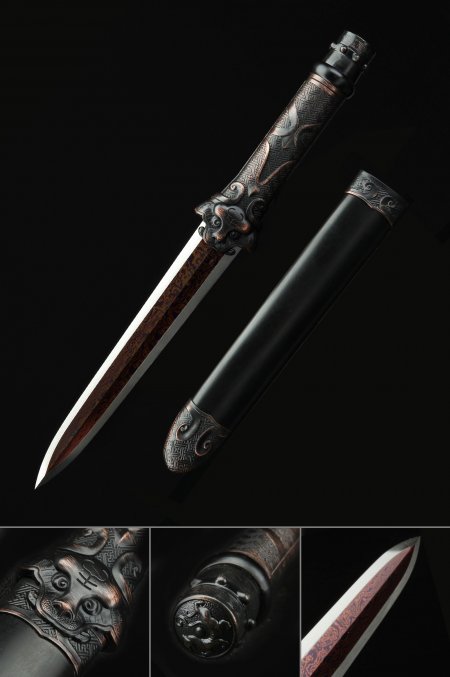
What exactly makes an aikuchi different from a standard tanto?
Updated Feb 2026
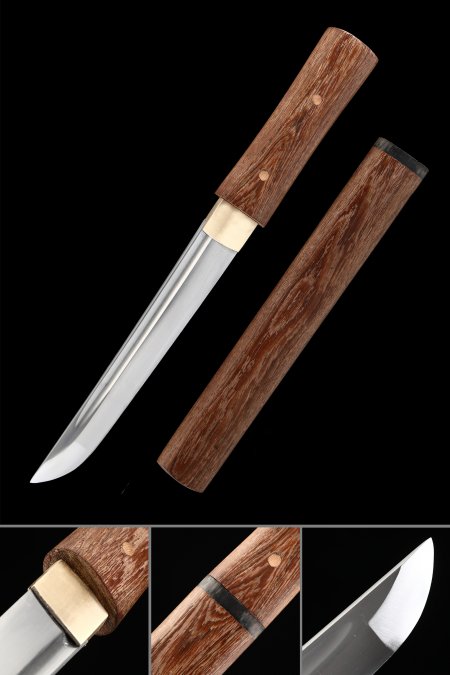
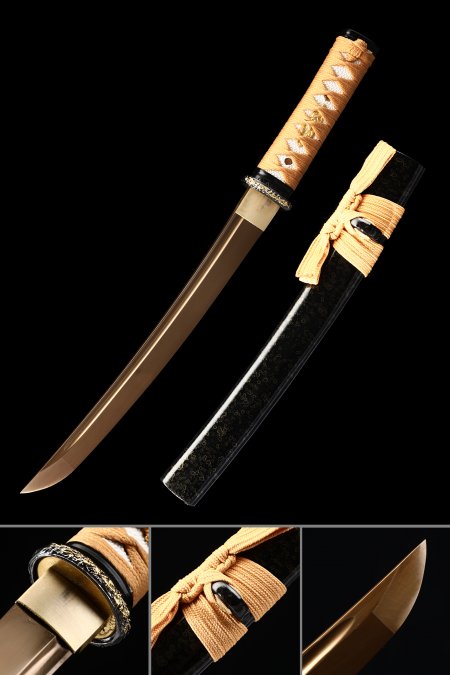
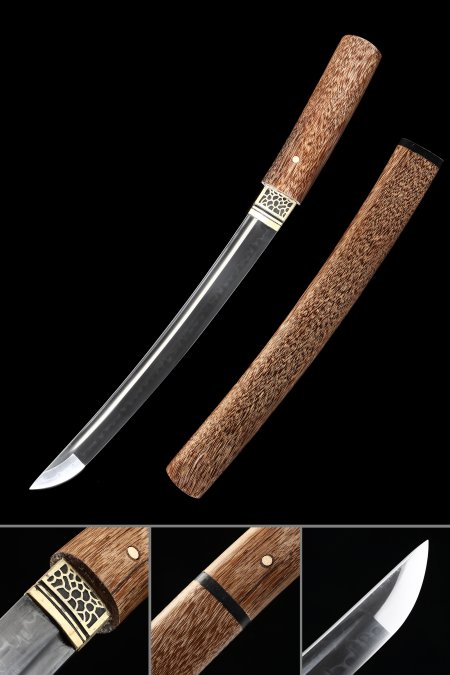
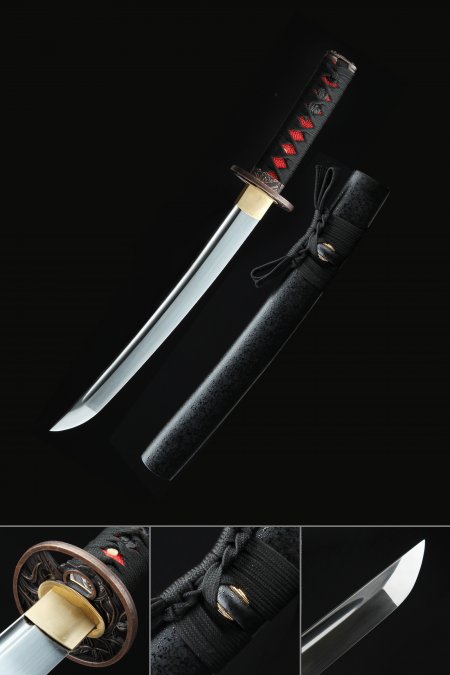
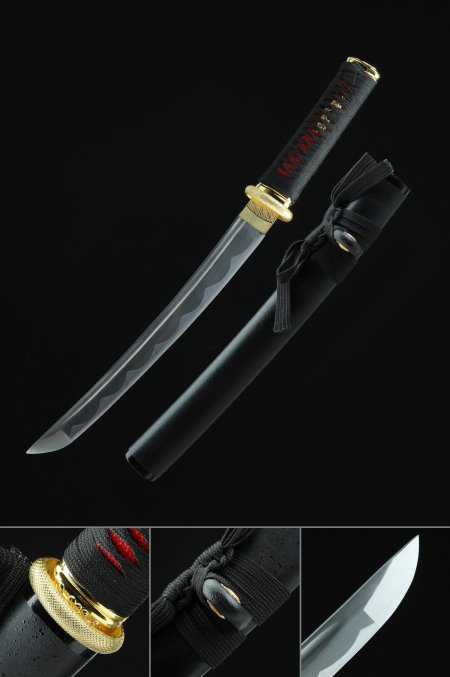
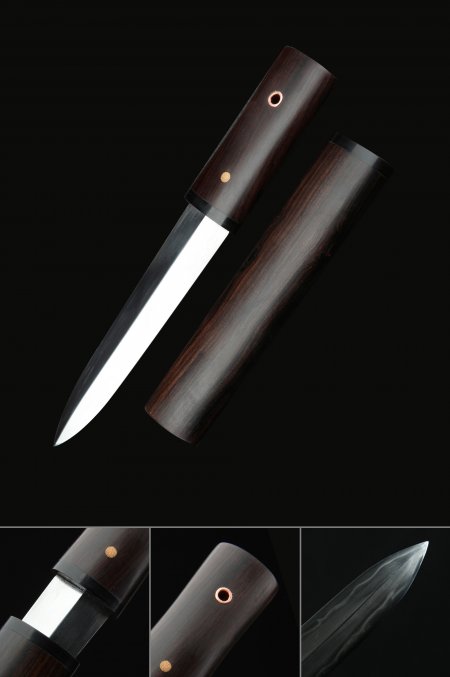
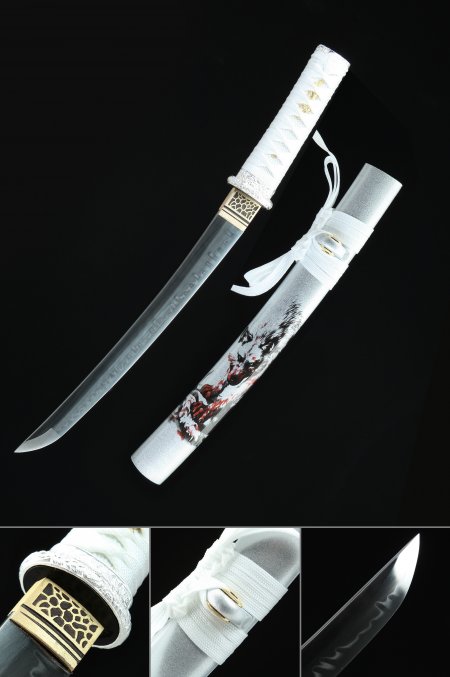
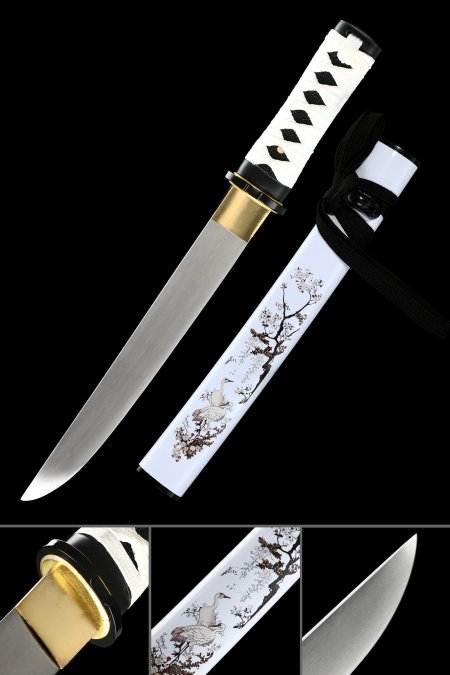
The defining feature of an aikuchi is the absence of a tsuba, or hand guard. While a standard tanto mounting typically includes a small tsuba between the handle and the blade collar, an aikuchi eliminates it entirely so the handle meets the scabbard mouth in a flush, seamless fit. This guardless design originated among Japanese court aristocracy who wore blades primarily as status symbols and wanted an understated profile that would not snag on layered silk robes. In practical terms for collectors, the aikuchi form highlights the transition from handle wrap to habaki and blade with nothing interrupting the visual flow — making the quality of the fittings and the precision of the scabbard throat especially important. It is this minimalist elegance that continues to draw serious enthusiasts to the aikuchi style today.