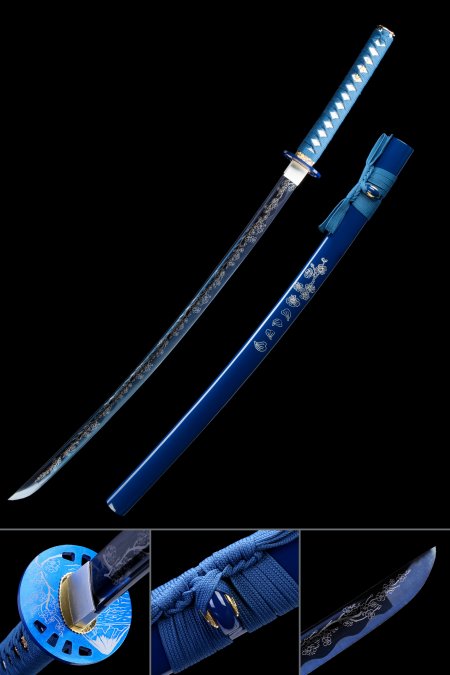
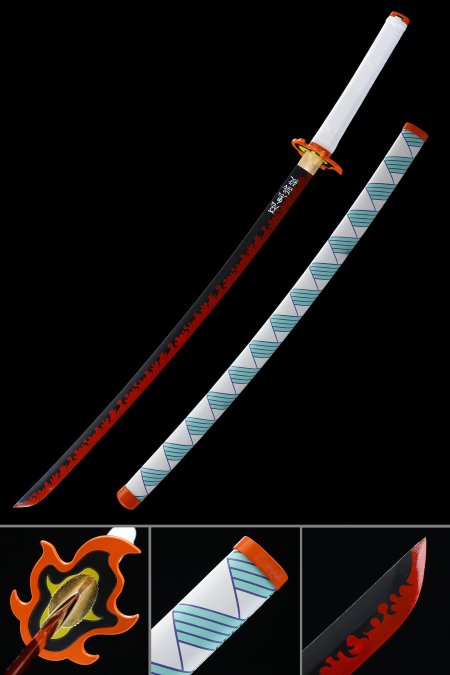
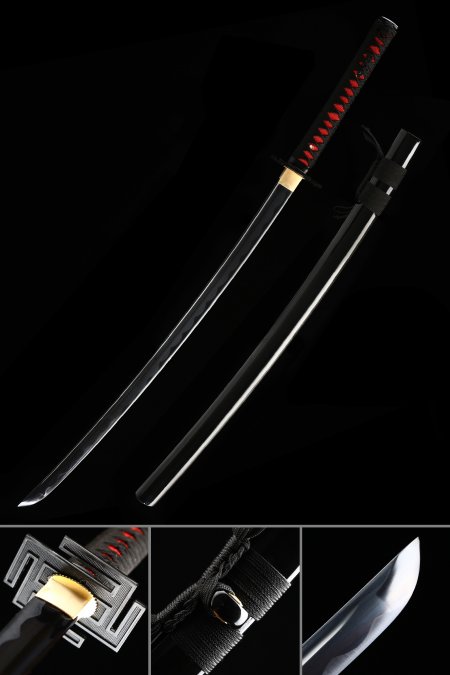
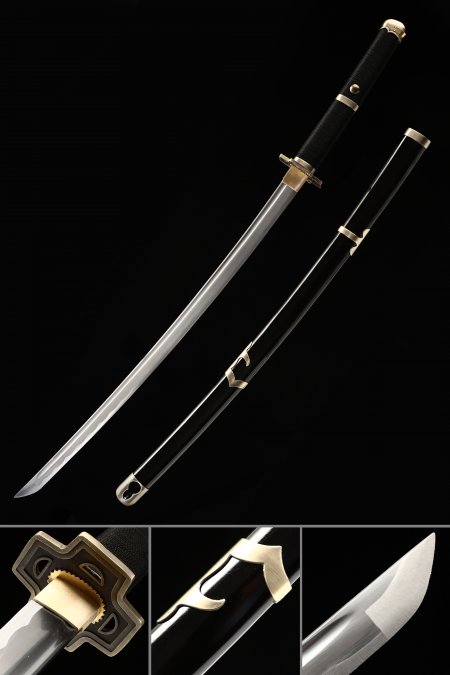
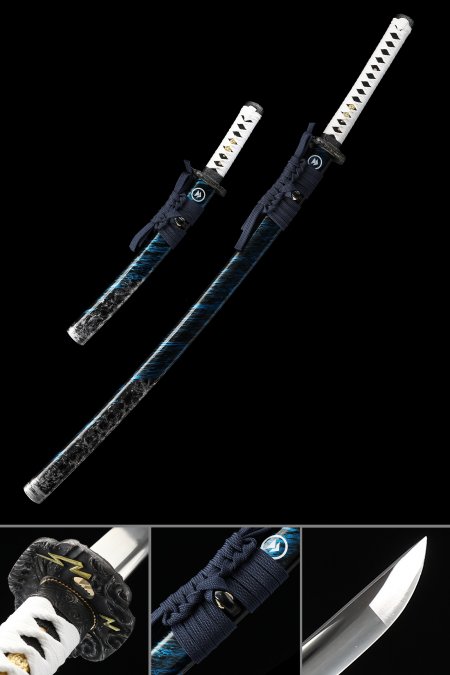
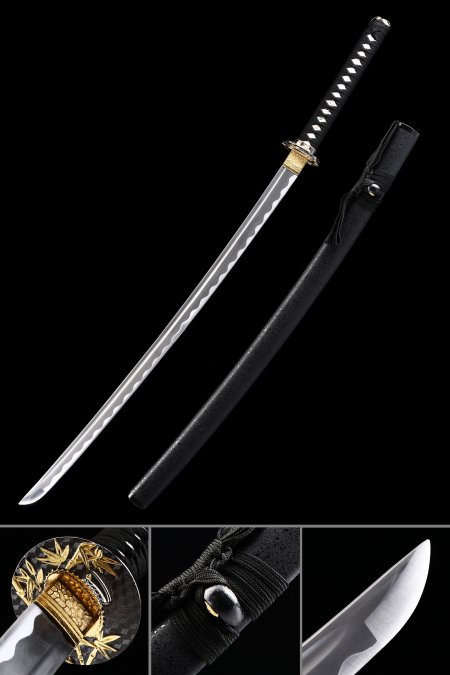
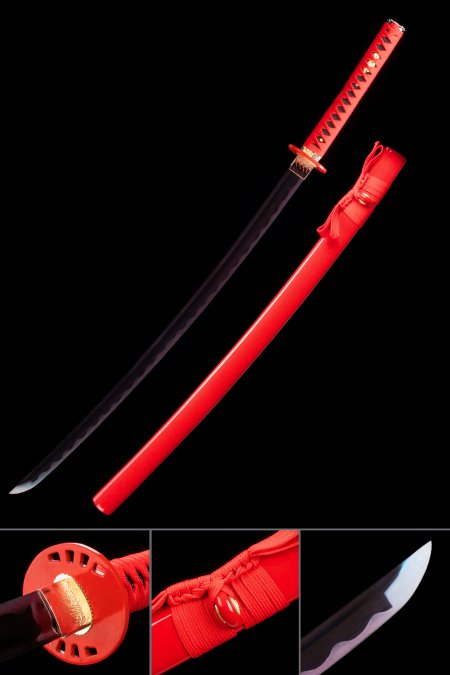
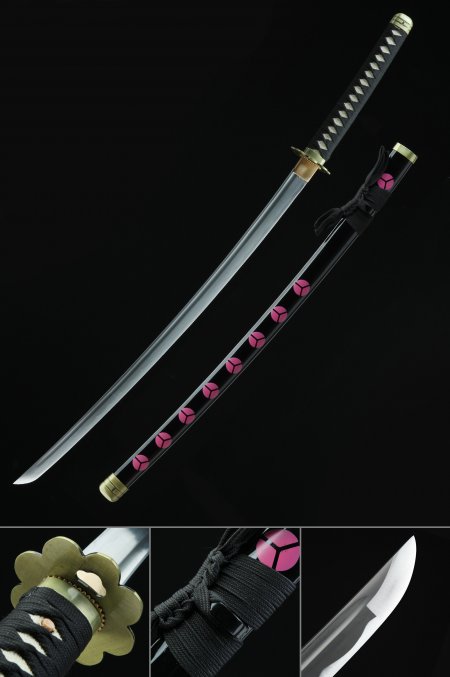
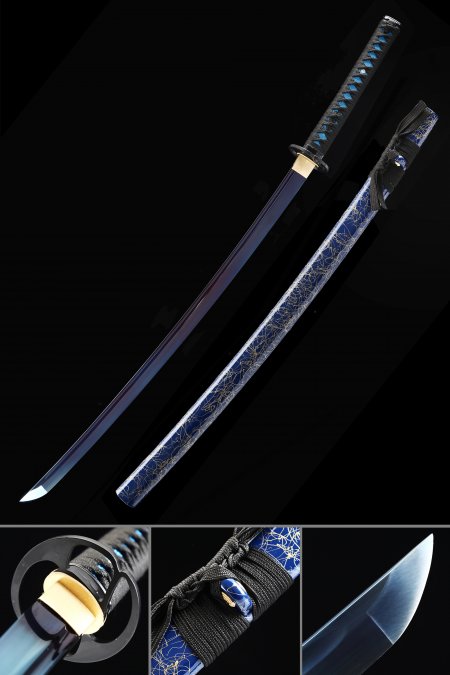
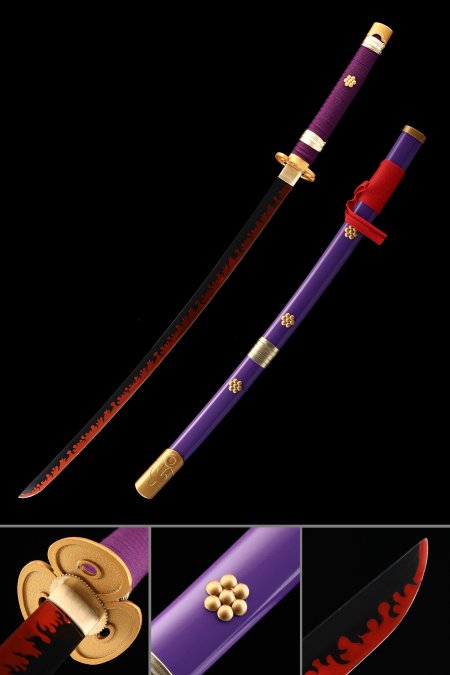
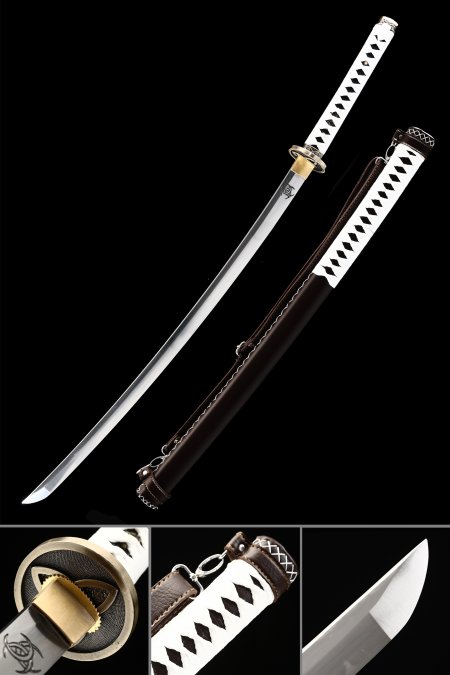
A real hamon is a temper line produced through differential hardening - a process where clay is applied to the spine of the blade before quenching, causing the edge to cool faster and develop a harder crystalline structure. The boundary between these two zones becomes visible as a distinct, undulating line running the length of the blade. Unlike etched or acid-treated imitations, a genuine hamon displays microscopic activity within the line itself: granular nie crystals, softer nioi haze, and subtle topographical variation that shifts under changing light angles. To identify a real hamon, examine the blade under a raking light source. A printed or etched line will look flat and uniform; an authentic hamon will appear almost three-dimensional, with depth and movement that cannot be faked by surface treatment.