What gives black Damascus steel its distinctive dark appearance?
Updated Mar 2026
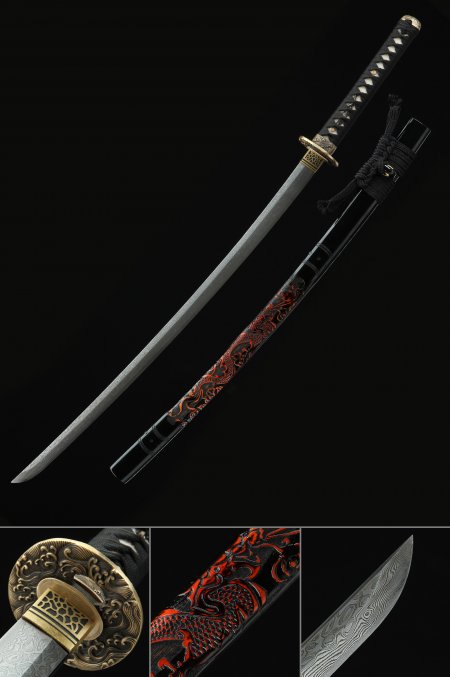
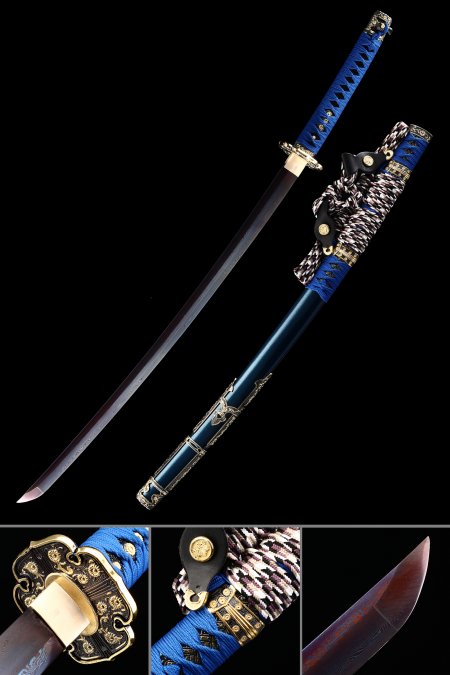
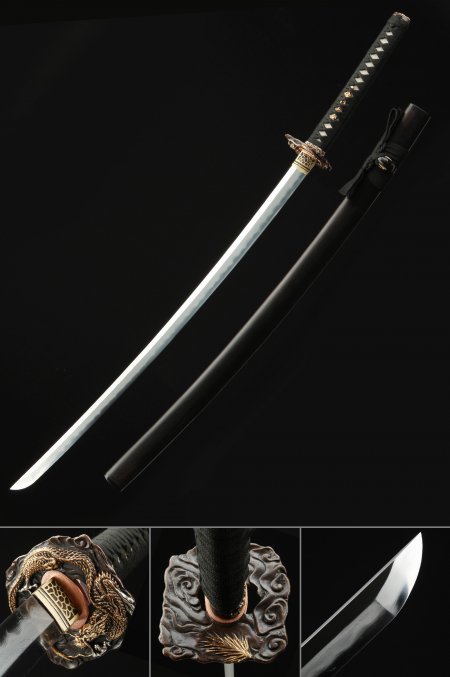
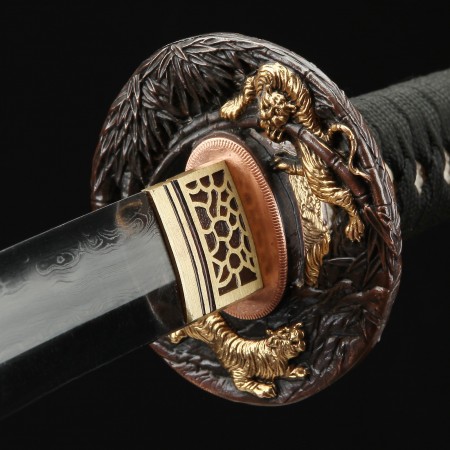
The dark surface on a black Damascus steel katana is not simply a painted or coated finish. It typically results from one of three methods: controlled acid etching that differentially darkens the high-carbon layers and reveals the fold pattern simultaneously, heat patination applied by hand after the blade geometry is finalized, or a combination of both. Because Damascus steel is itself a composite of alternating high- and low-carbon layers, the etching process reacts unevenly across the surface - softer iron-rich layers etch lighter, harder carbon-rich layers go darker - which means the dark finish and the visible grain pattern are produced by the same process. This makes the coloration a structural feature rather than a cosmetic one, and it will not chip or peel the way a sprayed coating would.