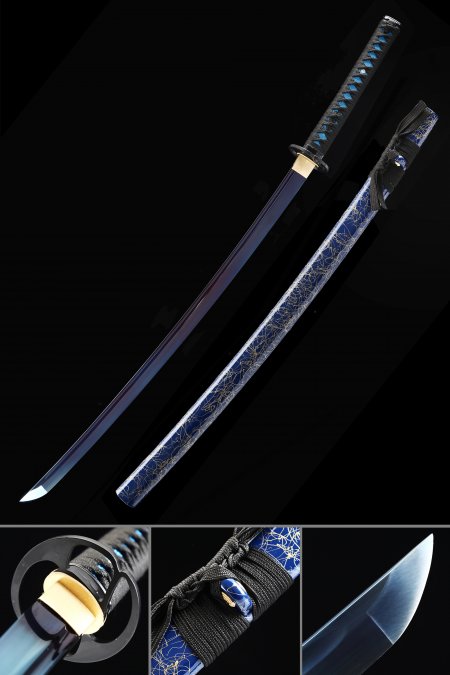
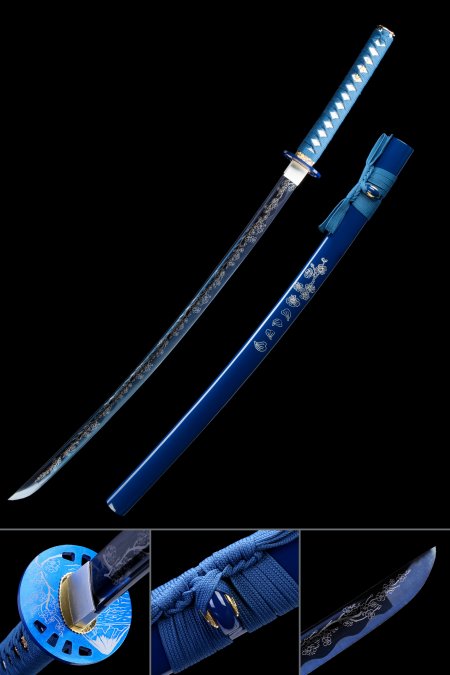
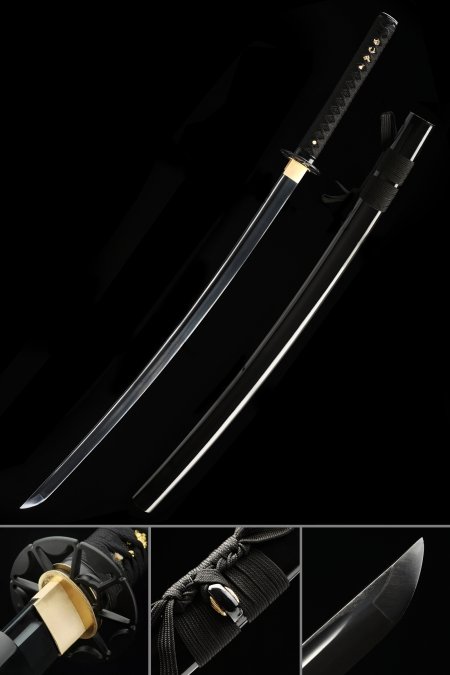
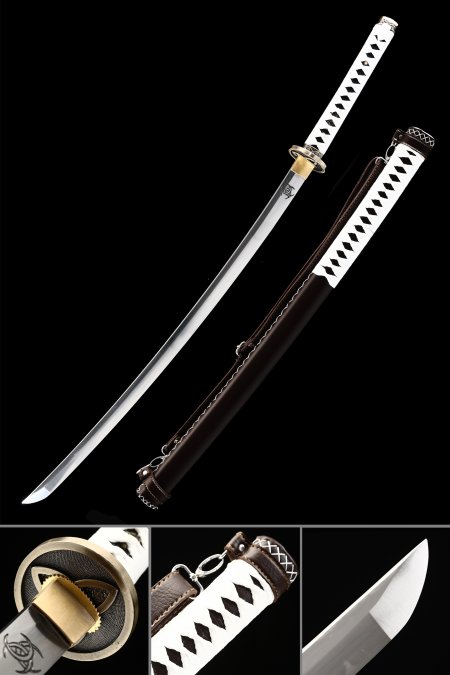
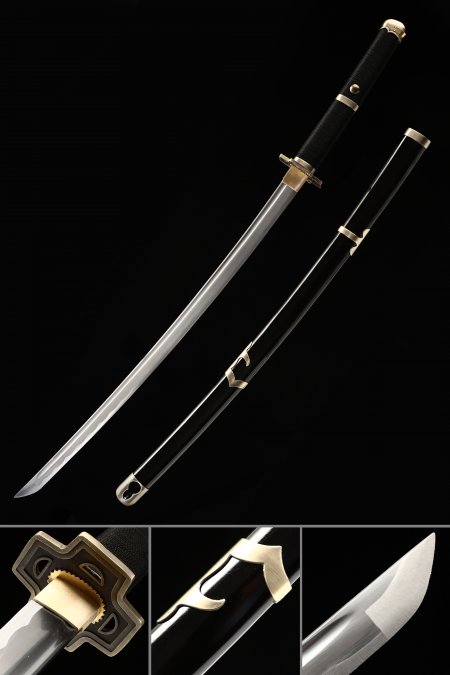
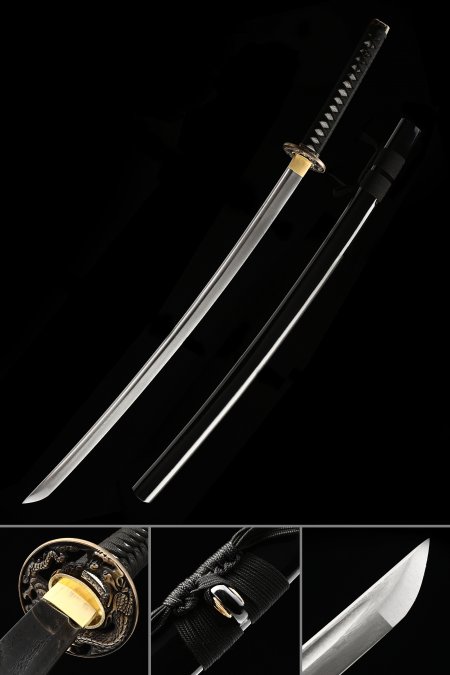
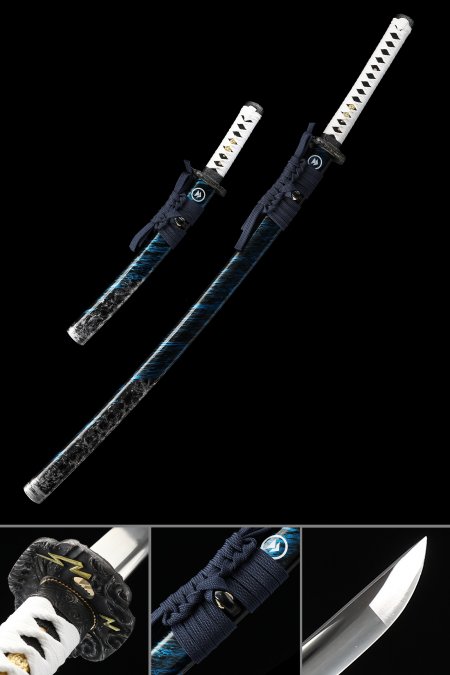
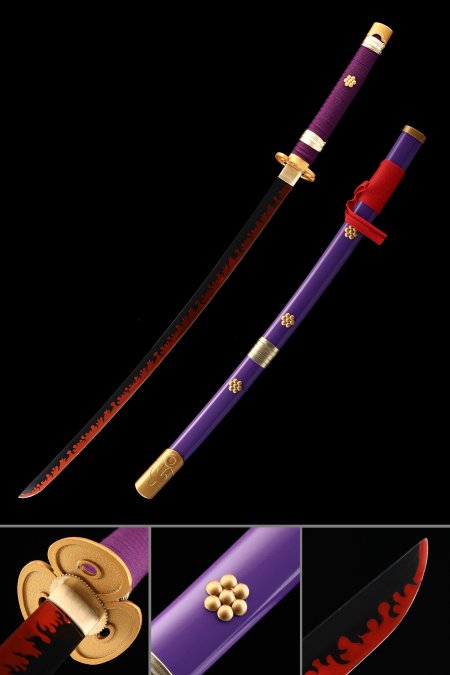
What do the different tsuba designs represent on these katanas?
Updated Mar 2026
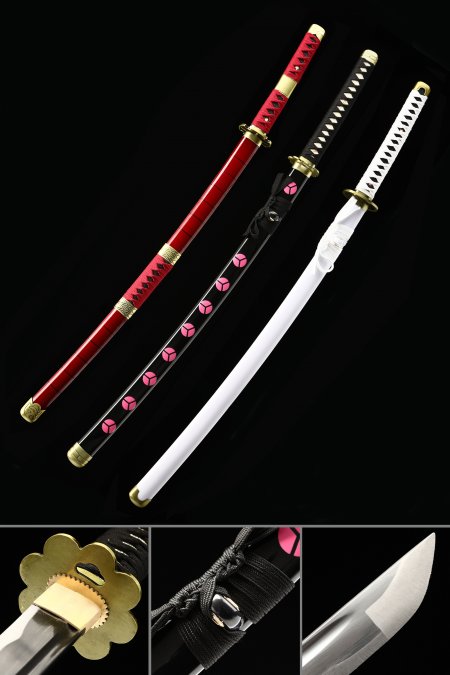
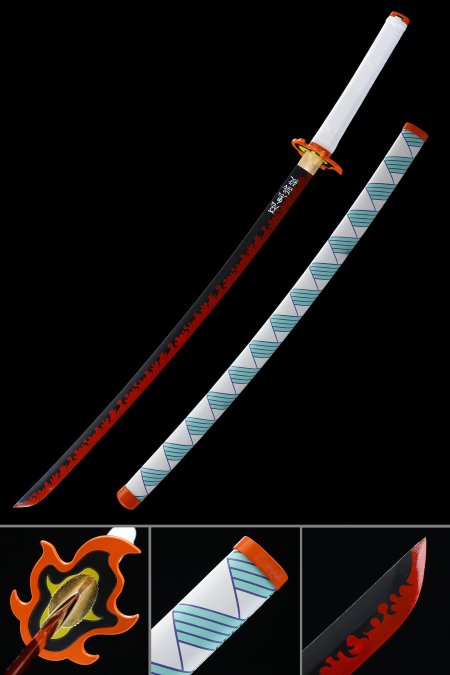
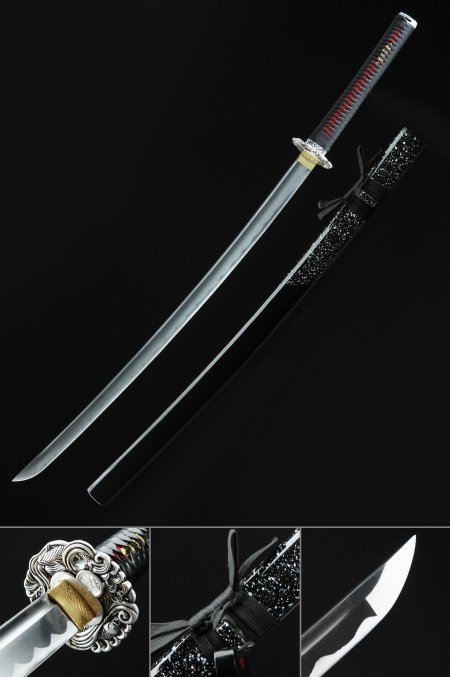
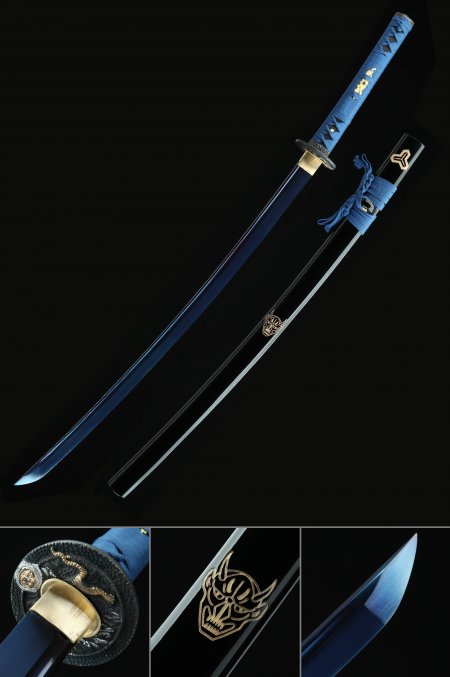
The tsuba - the handguard positioned between blade and handle - serves both a protective and a decorative function in traditional Japanese sword design, and its motifs carry cultural meaning. Chrysanthemum designs are associated with the imperial family and themes of longevity and refinement. Dragon motifs represent strength, wisdom, and transformation in East Asian symbolism, making them a popular choice for display pieces intended to convey presence and authority. Snake or serpentine tsuba carry associations with adaptability and guardianship in Japanese folklore. Selecting a tsuba motif is one of the more personal decisions a collector makes, since it sets the thematic tone for the entire piece and influences how the sword reads on a display stand or in a collection context.