How can I tell if a katana has a genuine hamon or an etched imitation?
Updated Feb 2026
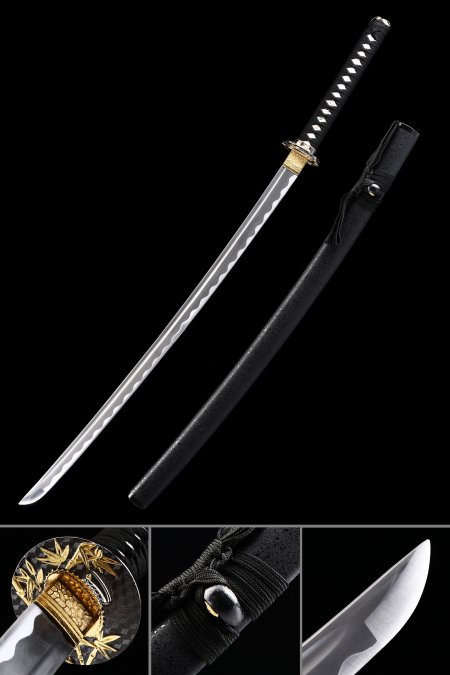
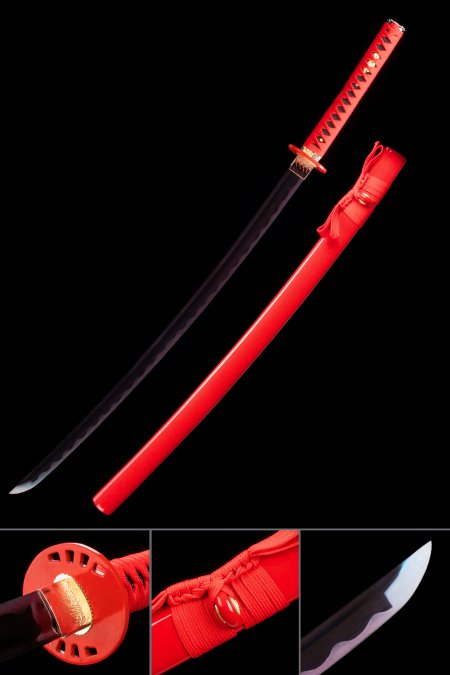
A genuine hamon is created through differential clay tempering and exists as a structural boundary within the steel itself. Under close inspection, a real hamon shows subtle depth and dimension — the crystalline structure of the hardened edge zone (martensite) differs visibly from the softer spine zone (pearlite) when viewed under different lighting angles. The line has organic irregularity and may include features like nie (individual crystal particles visible along the hamon) and nioi (a misty, cloud-like effect). An etched or acid-applied hamon, by contrast, appears flat and uniform with no depth variation when tilted under light. It may also show perfectly repeating patterns that lack the natural variation of hand-applied clay tempering.