How is a naginata blade different from a katana blade in construction?
Updated Feb 2026
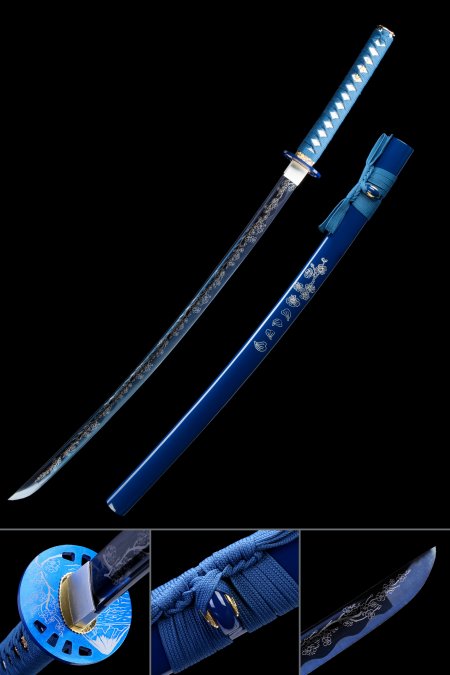
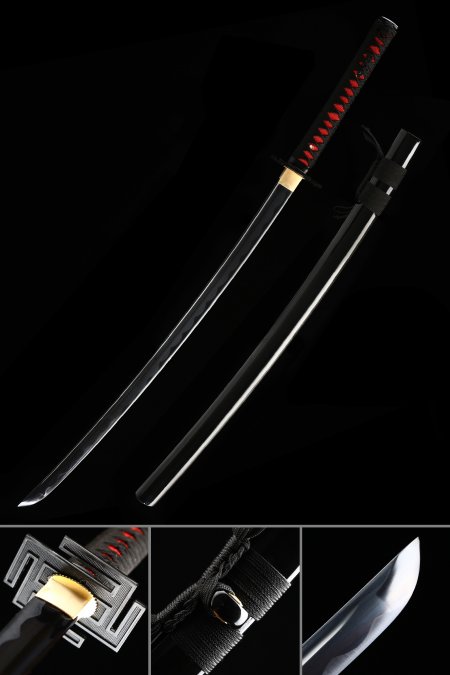
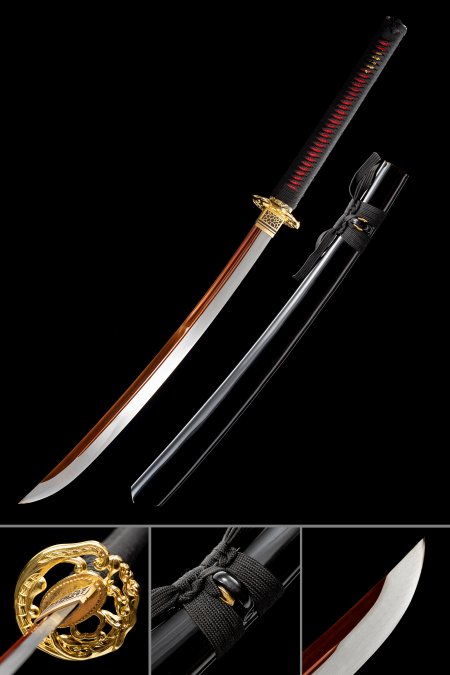
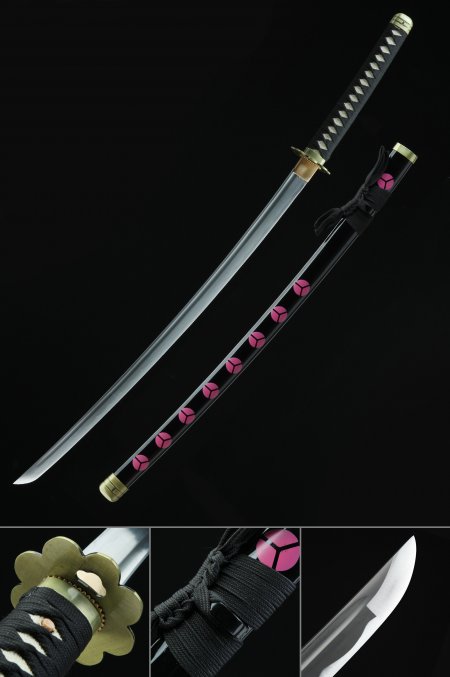
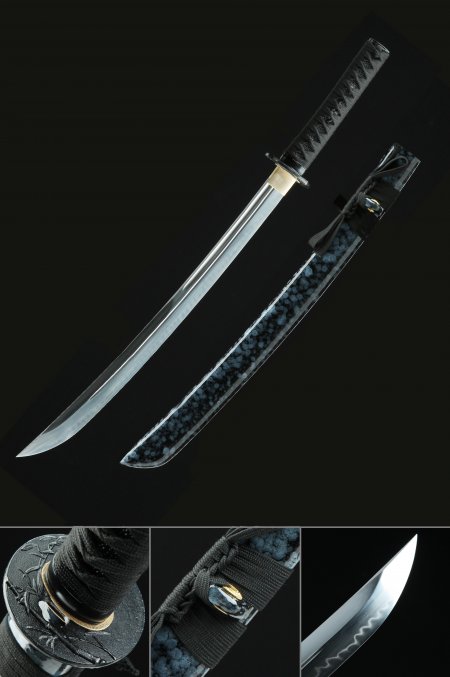
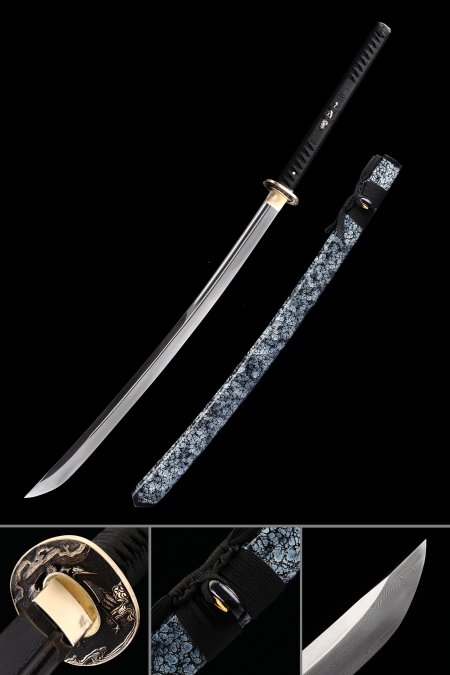
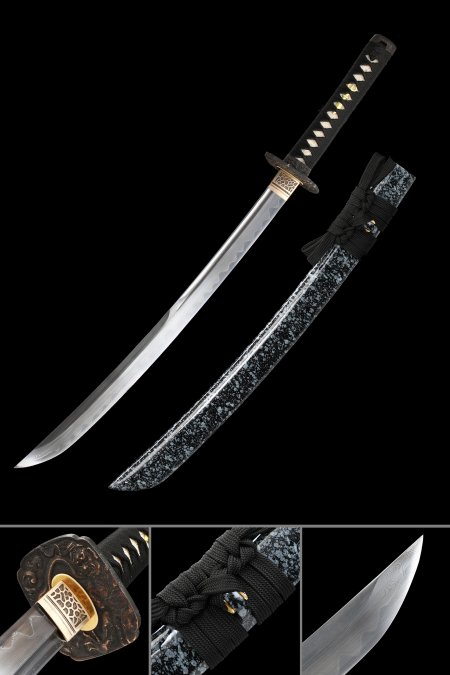
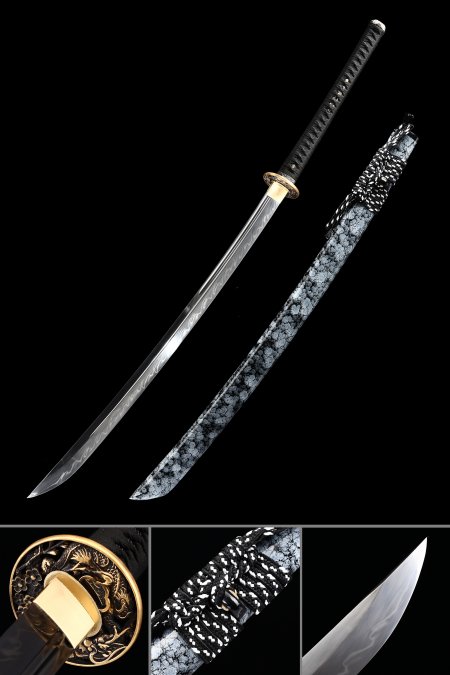
A naginata blade and a katana blade share the fundamental construction approach - curved single-edged blade in carbon steel with differential hardening - but differ in proportion, geometry, and mounting. A naginata blade is typically 30 to 60 centimeters in length, which is shorter than a katana blade of 60 to 75 centimeters, but it is mounted on a long wooden shaft rather than a handle, giving the overall assembly a reach of 150 to 200 centimeters total. The blade's curvature tends to be more pronounced toward the tip than a katana's more even curve, and the cross-section geometry is designed for the sweeping, drawing cuts characteristic of naginata technique rather than the point-forward thrusting emphasis of a katana. The tang of a naginata blade is inserted into the shaft rather than fitted with a handle assembly, and the connection is typically secured with mekugi pins through the shaft. The construction of the blade itself - forging, clay tempering, quench, polish - follows the same traditional process as katana production.