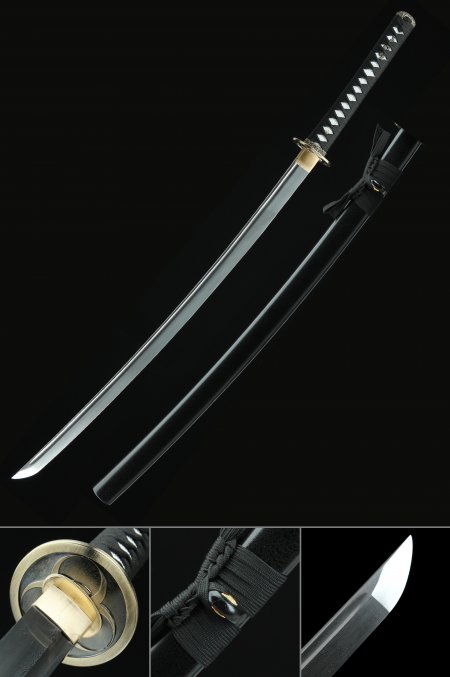
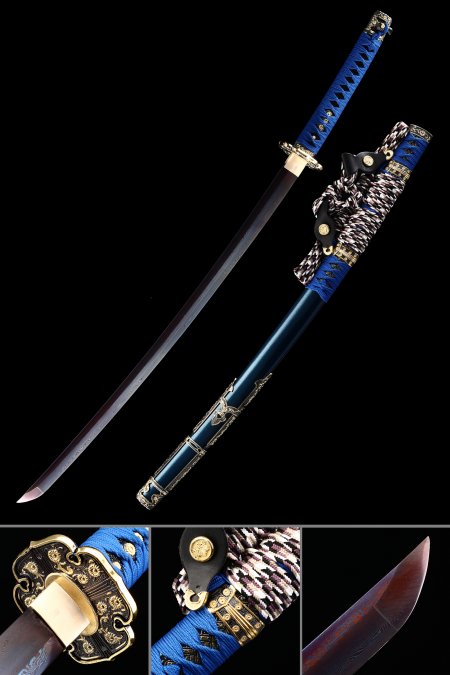
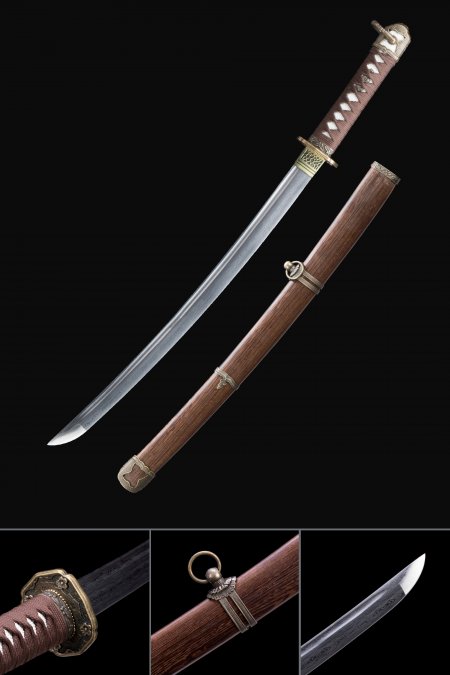
How is the hamon on a Damascus sword different from hamon on T10 steel?
Updated Feb 2026
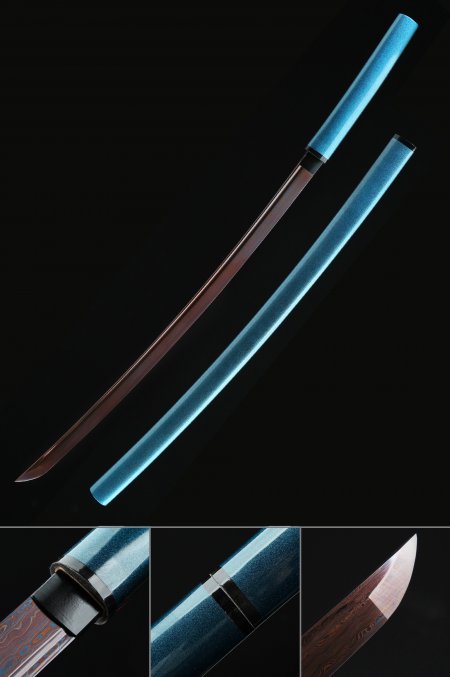
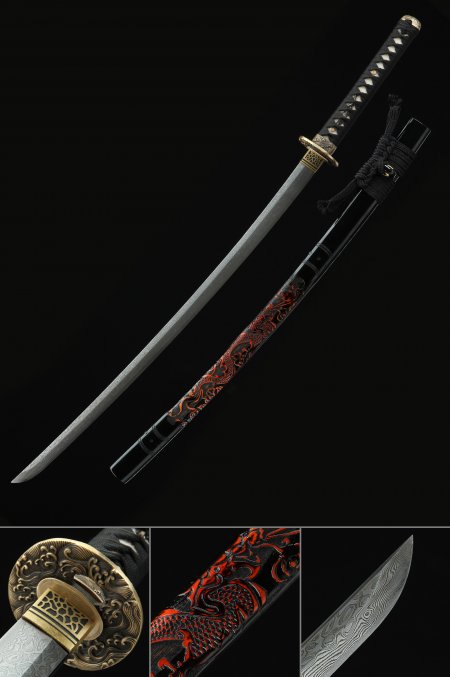
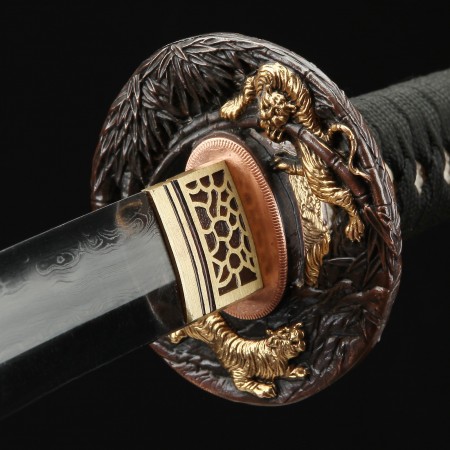
The hamon on a Damascus sword and the hamon on a T10 carbon steel sword are both created by clay tempering - applying clay to the blade in a deliberate pattern before quenching to create differential hardness. The visual difference comes from the steel itself. On T10 steel, the hamon appears as a cloud-like or wave-like boundary line visible in the polished blade surface, with a clear contrast between the whiter, harder edge zone and the darker, tougher spine. The hamon line itself can show a range of natural activities - small formations along the boundary called nie and nioi - that are characteristic of high-quality Japanese clay tempering. On a Damascus blade, the flowing grain pattern of the steel creates an additional visual layer. The hamon line is still present and visible, but the Damascus grain pattern runs through both the edge zone and the spine, creating a more complex surface where the hamon and the folded grain pattern interact. Collectors who examine these blades closely find multiple layers of visual information: the grain pattern of the Damascus, the hamon line at the edge zone boundary, and the activities within the hamon line itself.