How do I identify a good hamon on a shirasaya wakizashi?
Updated Feb 2026
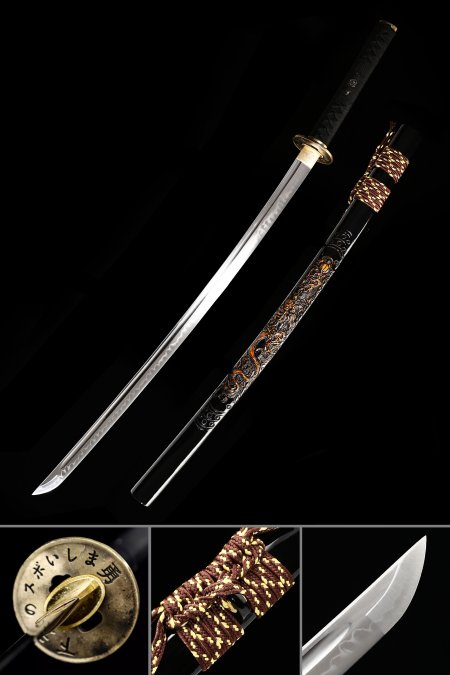
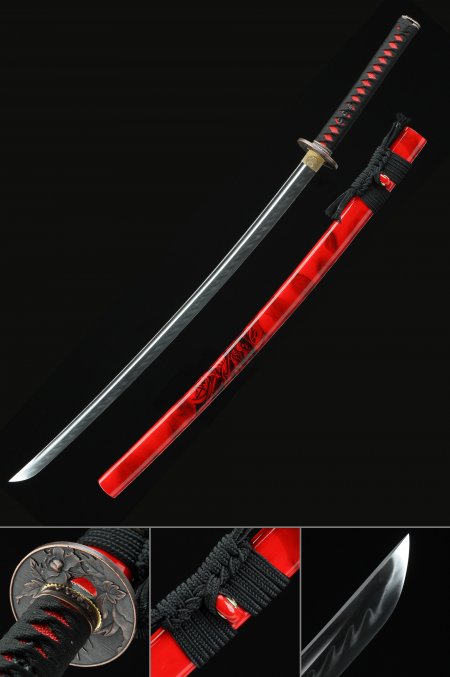
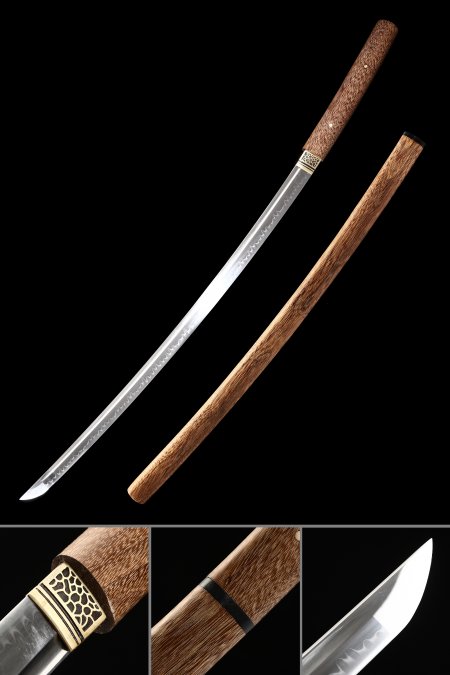
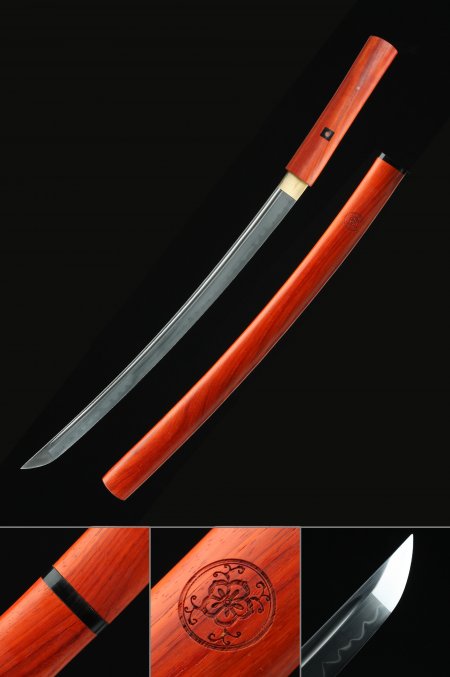
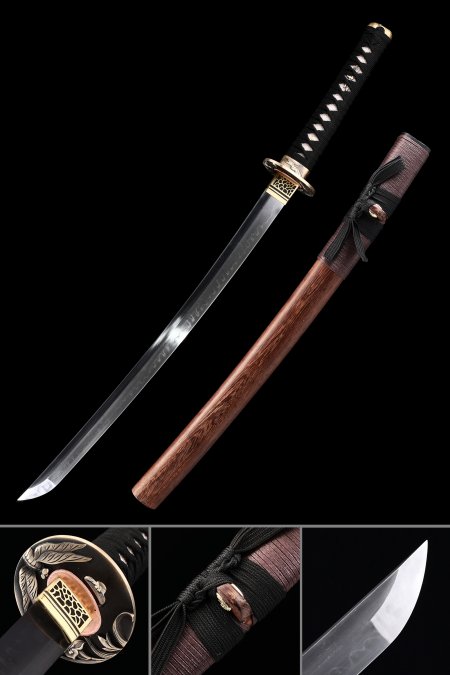
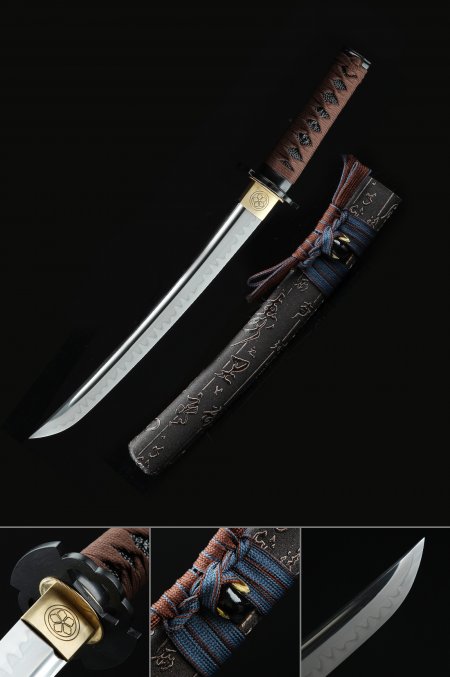
A well-defined hamon on a shirasaya wakizashi T10 blade is one of the most rewarding details in Japanese short sword collecting, and identifying it requires understanding what to look for and how to observe it. The hamon appears as a line running along the blade edge from the kissaki tip toward the habaki collar - it is the visible boundary between the harder edge zone and the tougher spine zone created by differential heat treatment. To see the hamon clearly, hold the blade under a directed light source - a lamp, spotlight, or bright window light - at a low angle to the blade surface, approximately ten to thirty degrees. As the light plays across the edge zone, the hamon boundary becomes visible as a white or grey undulating line against the darker background of the blade surface. A well-executed hamon will show consistent activity along its length: subtle patterns within the transition zone known as nie (visible crystalline activity) and nioi (a misty haze at the boundary) are indicators of quality heat treatment. The hamon's shape - whether a gentle wave, a dramatic cloud formation, or a complex pattern - varies by the smith's technique and the specific piece.