How does the white samurai sword aesthetic relate to Japanese cultural traditions?
Updated Feb 2026
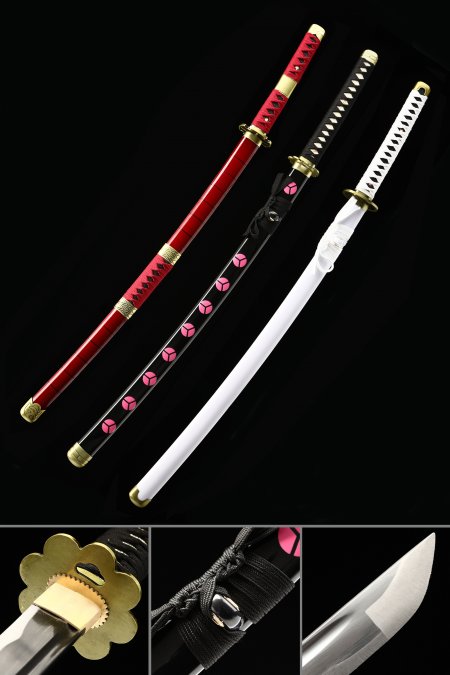
The white samurai sword draws from several converging threads in Japanese cultural and aesthetic tradition. In Shinto religious practice, white is the color of ritual purity and spiritual cleanliness - white is the color of offering cloths, the garments of shrine maidens, and the implements of purification ceremonies. The association of white with purity and spiritual significance gave the color a particular resonance in the samurai class, which maintained close relationships with Shinto practice and ritual. In Japanese aesthetics more broadly, white occupies a position within the wabi-sabi framework of restrained, refined beauty: a white samurai sword's visual restraint and absence of ornamental color is an aesthetic statement of its own kind - the beauty of simplicity and purity over the beauty of richness and decoration. The shirasaya - the plain white wood mounting traditionally used for blade storage - reflects this same aesthetic philosophy, where the reduction of visual elements to their most essential form is considered a sign of cultivation rather than poverty of means.