
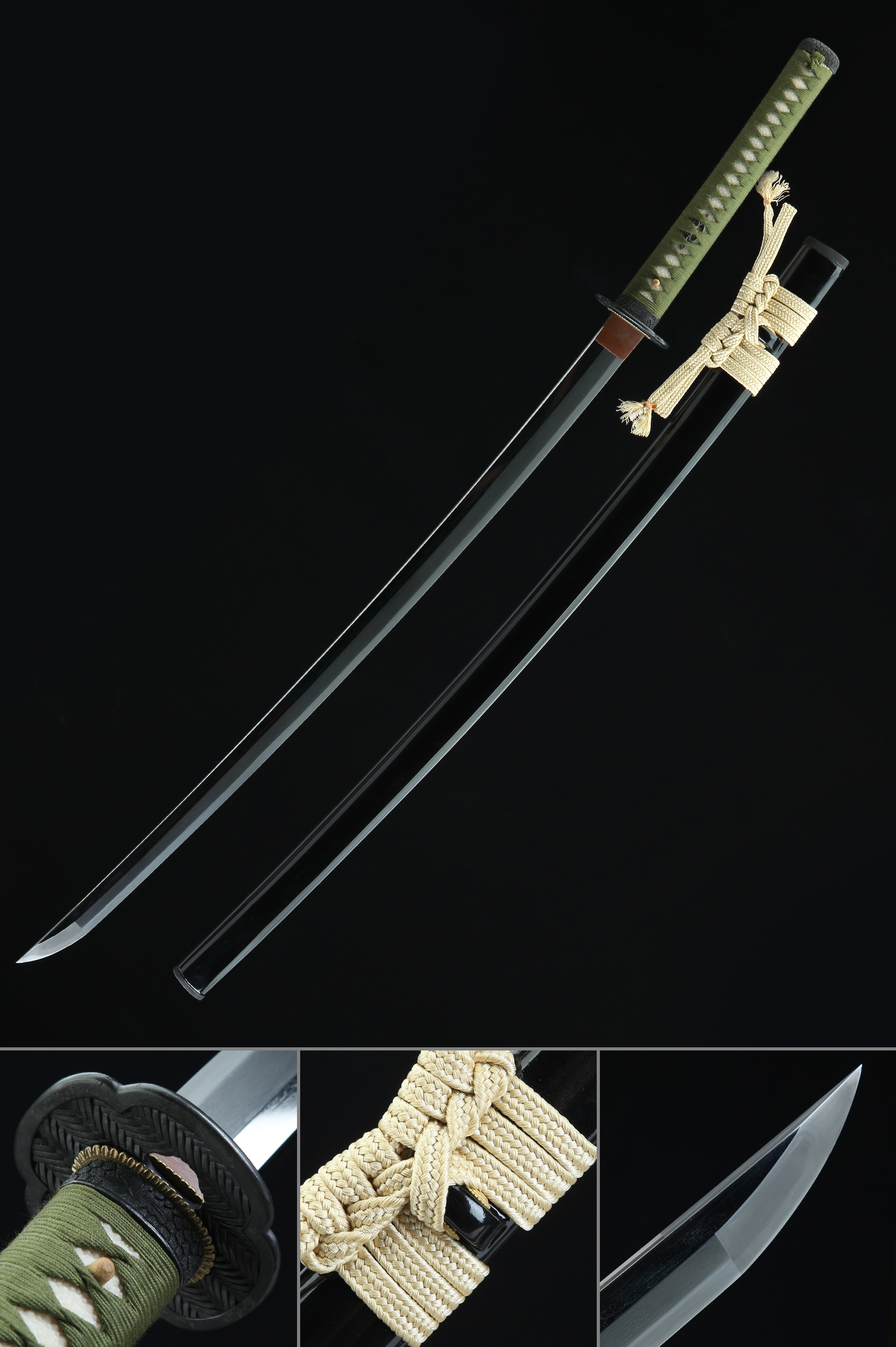
Tamahagane Steel Katana with Real Hamon - Black Lacquer Saya, Green Ito & Beige Sageo
3,569.00 USD
10% OFF
Apply code: TK10OFF at the checkout page when you spend 129+
In-stock
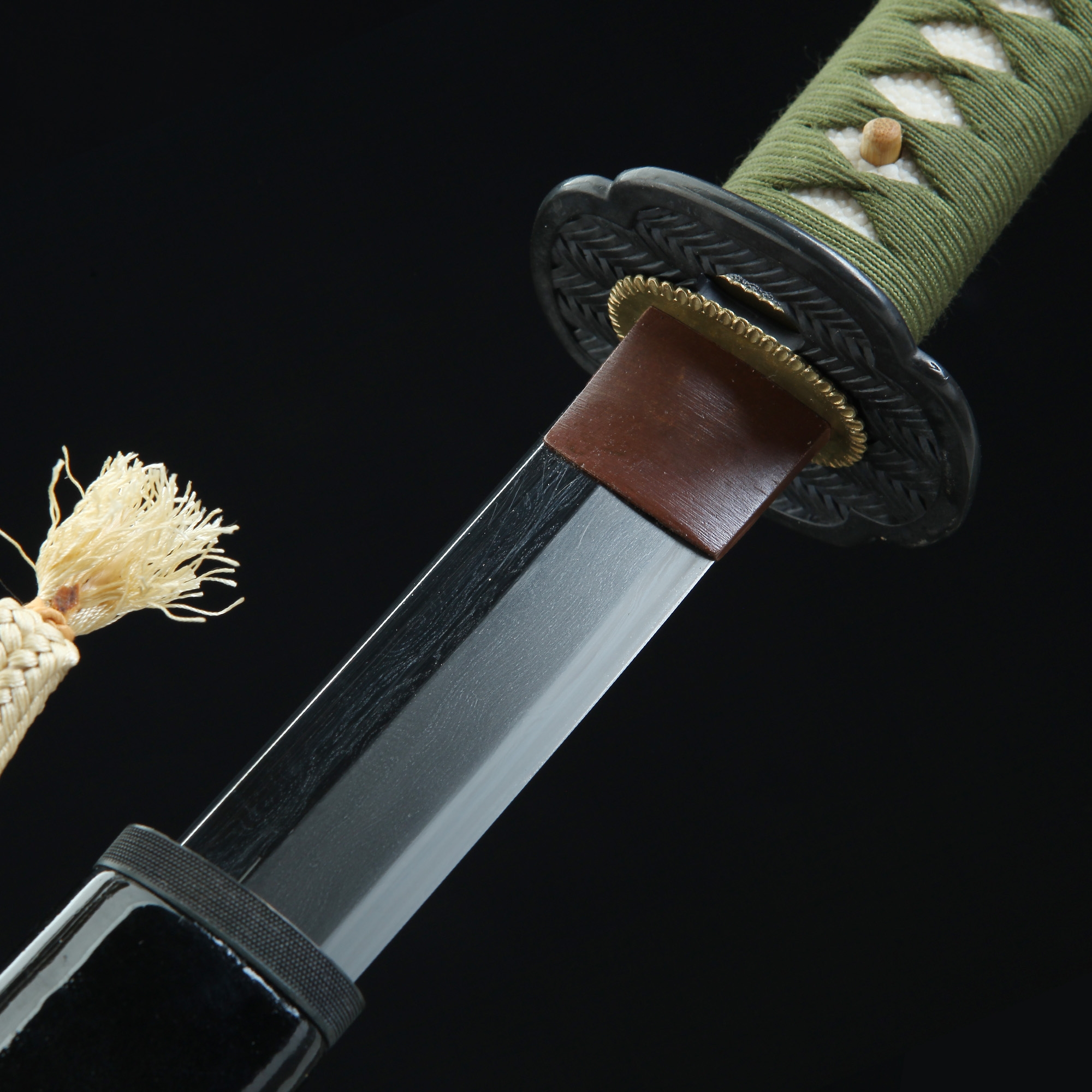
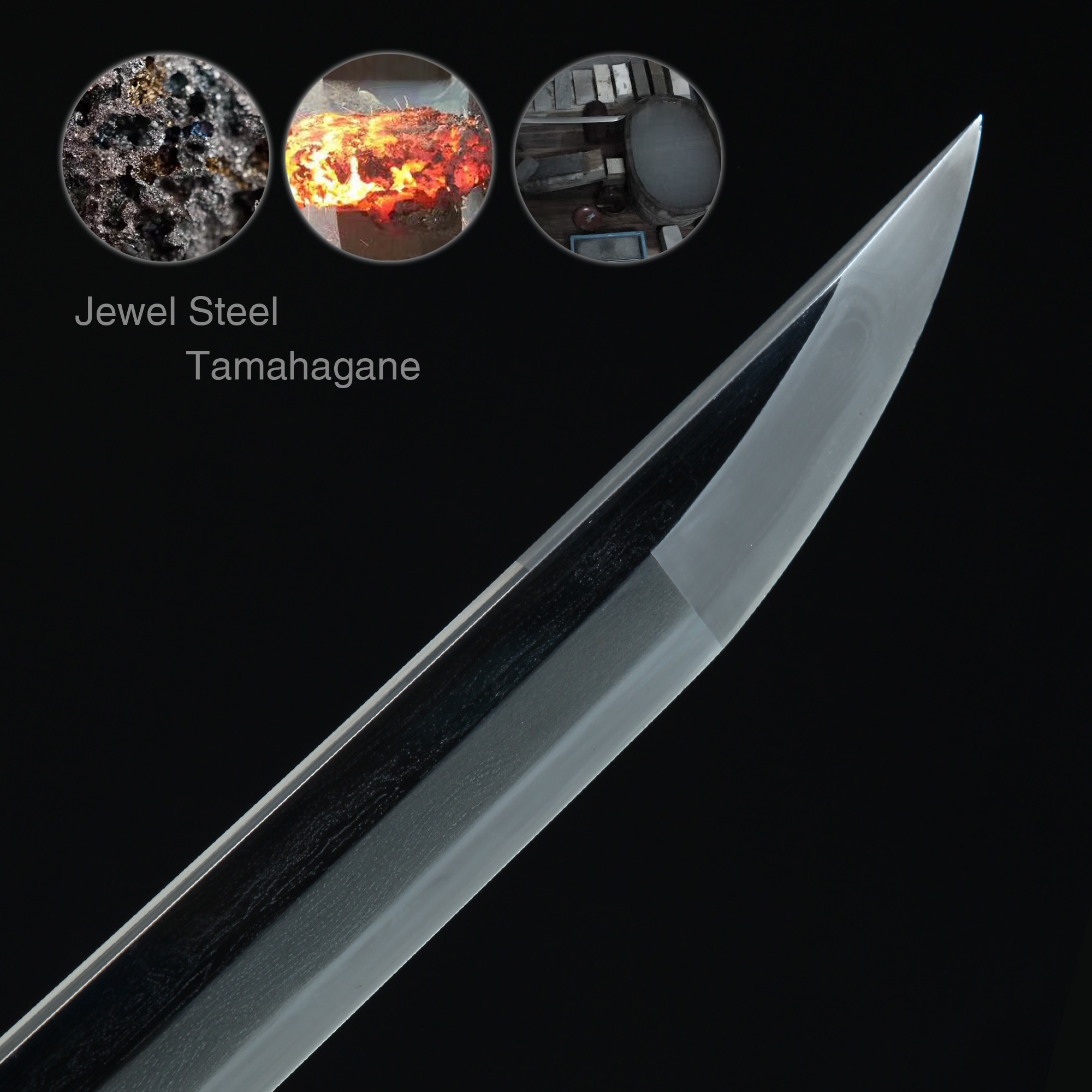
- Forged from traditional tamahagane steel - smelted from iron sand and charcoal in a tatara furnace - the full-tang blade undergoes high-to-low carbon sorting and hand-forging before final polishing for a mirror-bright finish.
- Clay tempering produces a genuine hamon line revealed through hazuya and jizuya stone polishing, with the blade worked section by section using wafer-thin stone slices to bring out the grain pattern and edge detail.
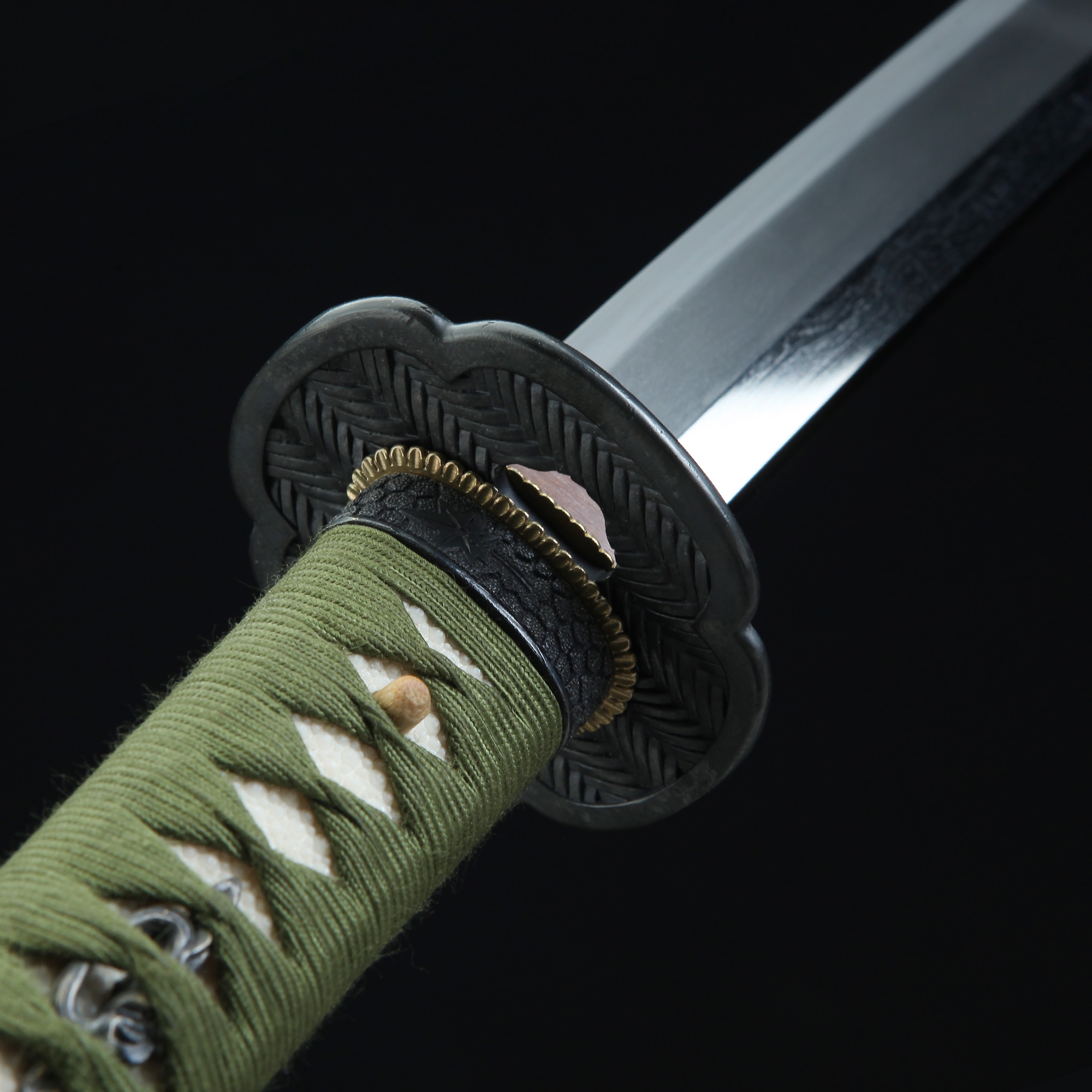
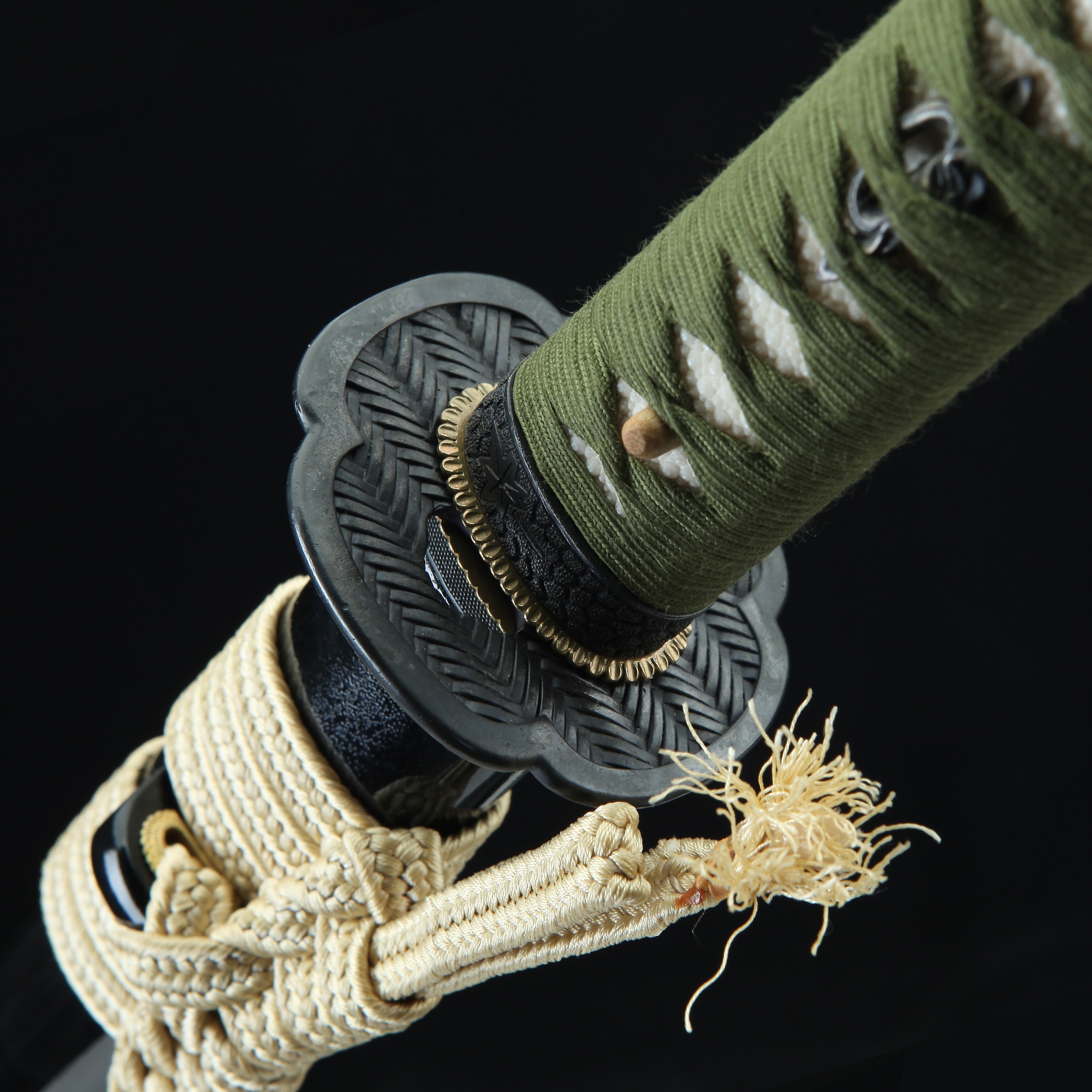
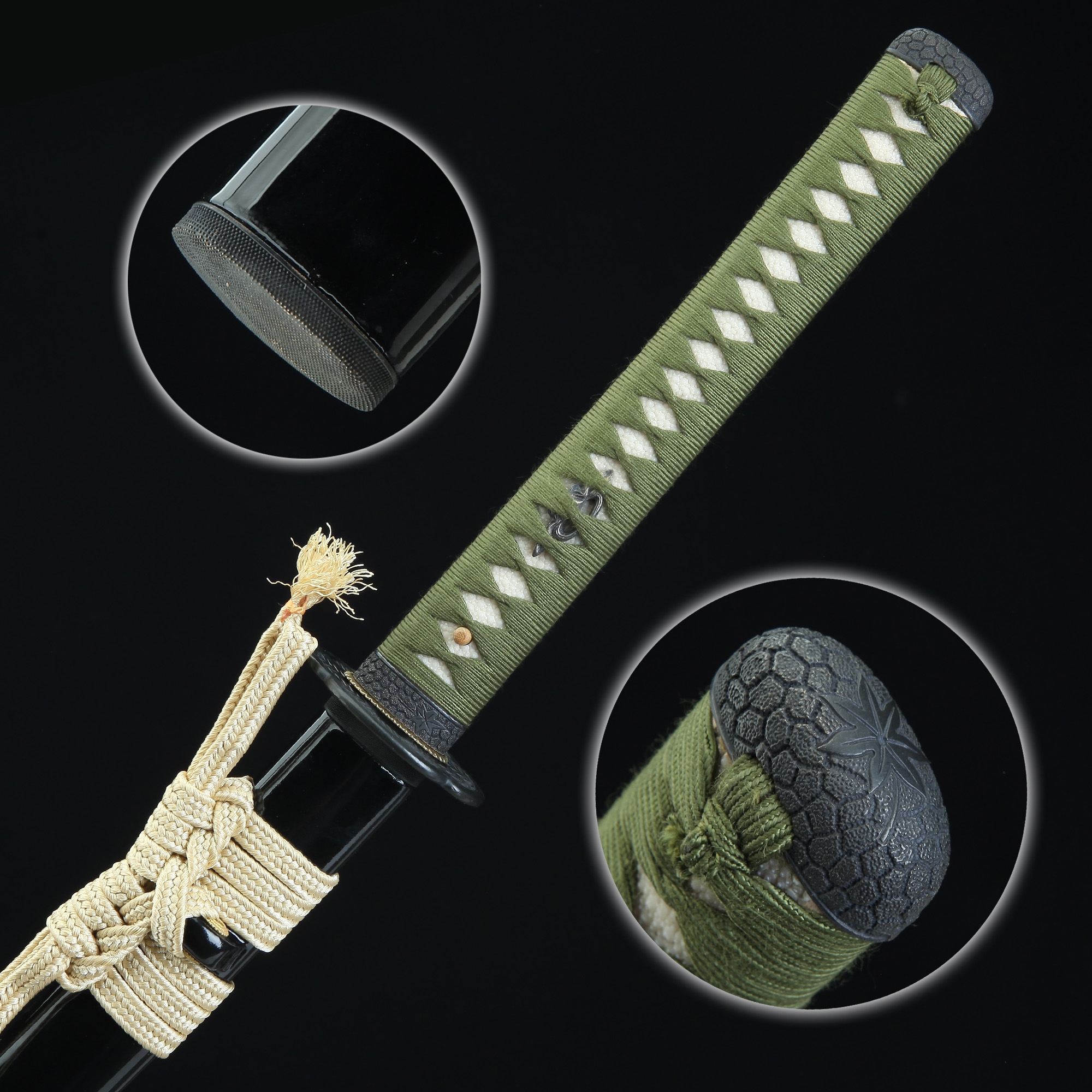
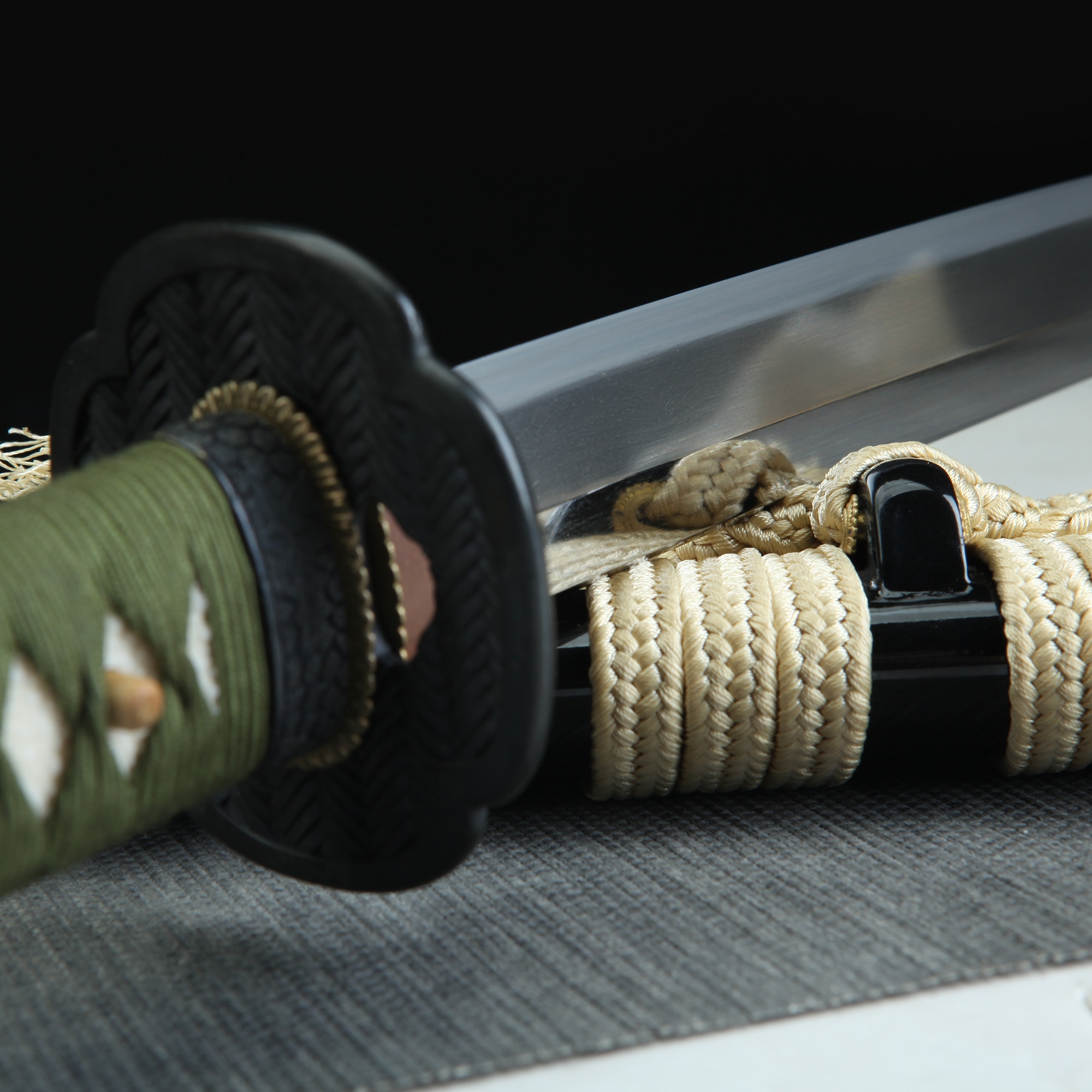
- The tsuka is wrapped in olive-green ito over real white samegawa using a knot paper wraps technique, creating a diamond-pattern grip with secure texture and a classic koshirae aesthetic.
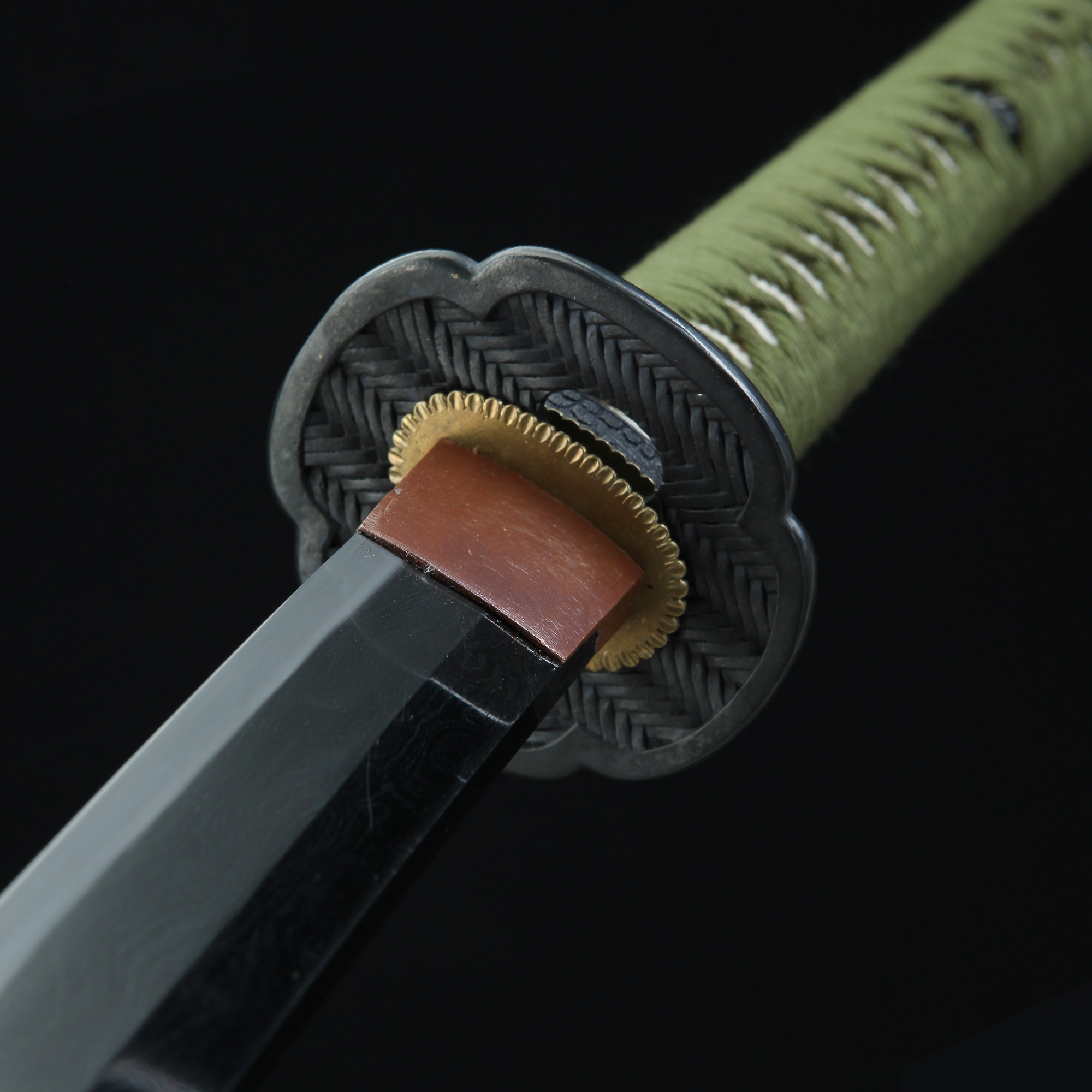
- A black-lacquered geometric iron tsuba provides a clean, structured hand guard, paired with a copper habaki that transitions the blade into the black hardwood lacquer saya.
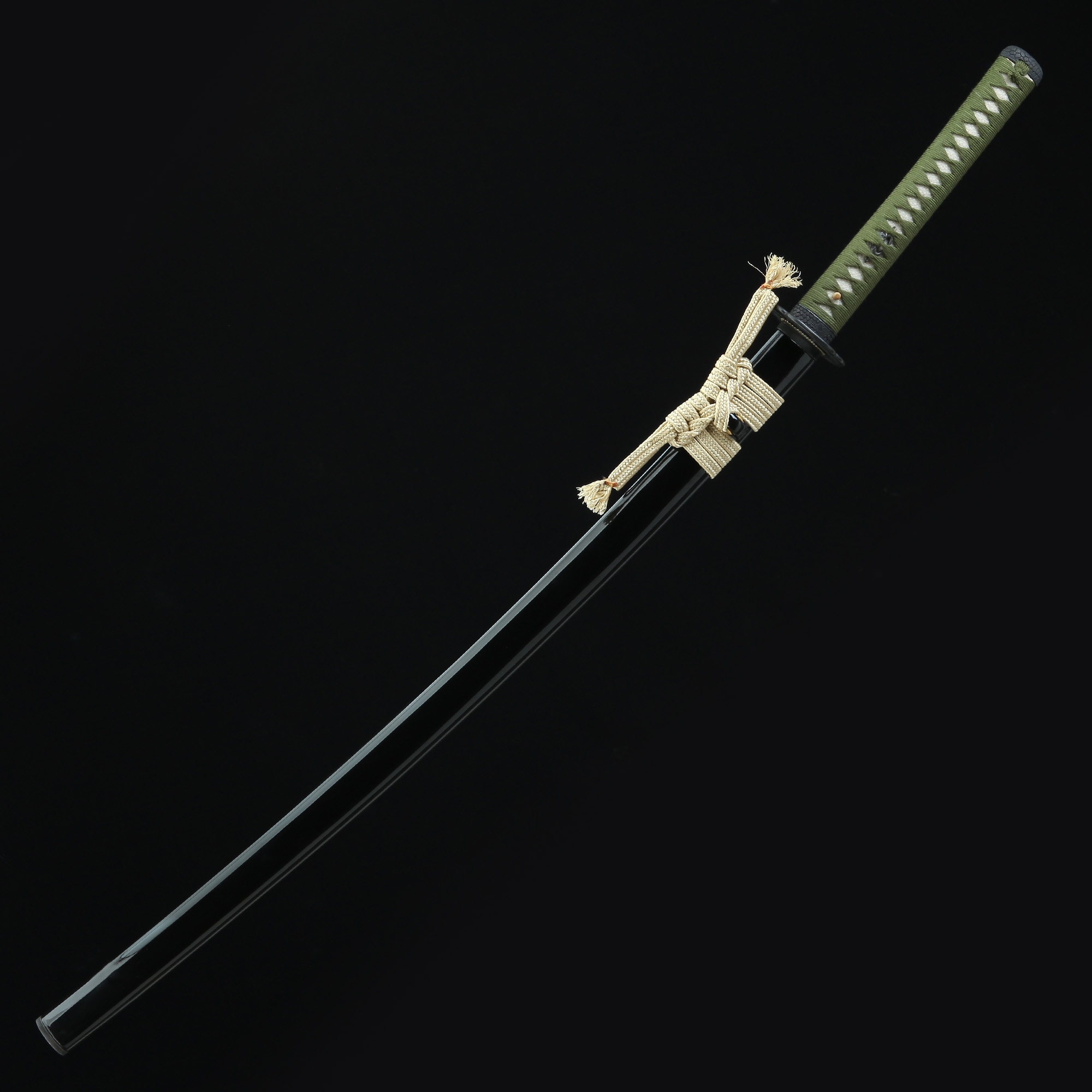
- Beige braided sageo is knotted at the koiguchi in a layered decorative arrangement, adding a strong visual contrast against the black saya - visible in the characteristic multi-strand knot at the scabbard mouth.
- Overall length 41 in, blade width 1.259 in, spine thickness 0.275 in, total weight 3 lb - proportioned for display or koshirae study by serious collectors.
 | Handmade by seasoned sword-smiths. |
 | Free U.S. express shipping. |
 | 30 day money back guarantee! |
 | SSL end-to-end encrypted secure payments. |
 | Trusted by 150,000+ purchased customers. |
Product Details
The blade of this katana is forged from tamahagane steel - traditional Japanese jewel steel produced by smelting iron sand and charcoal in a tatara furnace. After smelting, high-carbon and low-carbon pieces are sorted by hand: the high-carbon steel forms the cutting edge and core for hardness, while the low-carbon steel encases the core for resilience. The finished blade measures 41 inches overall with a 1.259-inch width and 0.275-inch spine, weighing 3 lb as a full-tang construction. For collectors pursuing authentic tamahagane pieces, our Black Tamahagane Steel Katana collection covers a range of finishes and fittings.
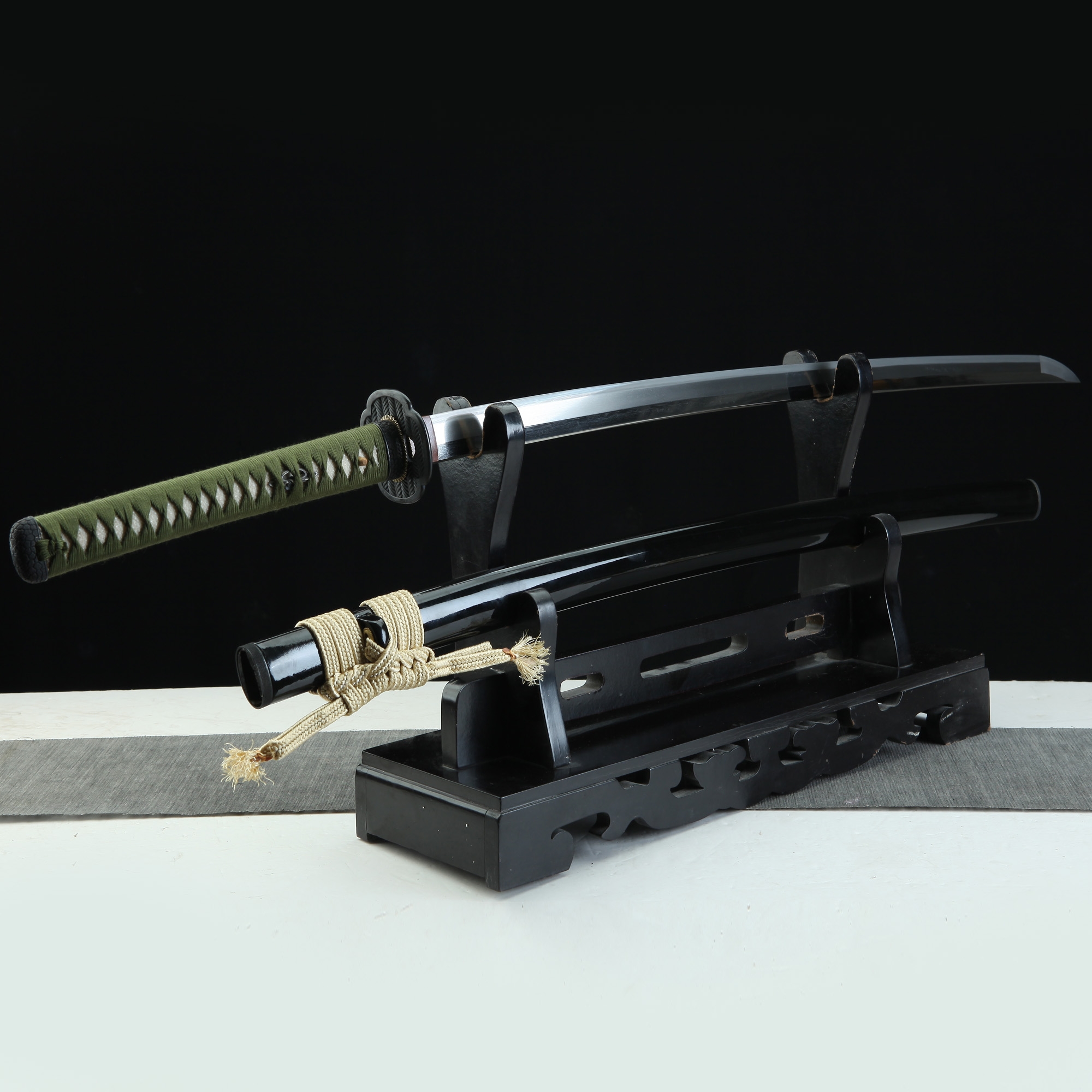
Clay tempering is applied before heating and quenching, producing a genuine hamon along the blade's edge. Hazuya and jizuya polishing stones are then used to reveal the hamon line and surface grain pattern, with the blade worked section by section using wafer-thin stone slices. Final hand-polishing brings out the chrome-bright reflective finish visible along the nagasa in the product image.
The tsuka is built over a full-tang core wrapped with real white samegawa, providing a textured foundation for the olive-green ito. The cord is applied using the knot paper wraps technique, forming the characteristic diamond-pattern windows that expose the white rayskin beneath - a detail clearly visible in the close-up image of the handle.
The black geometric iron tsuba features a dense herringbone-relief pattern across its face, with a copper habaki seated at the blade base. A beige braided sageo is tied in a multi-strand decorative knot at the koiguchi, creating a strong contrast against the glossy black hardwood lacquer saya. The saya is crafted from hardwood and finished with a premium natural lacquer coat that protects the wood from moisture while maintaining a deep, even gloss.
This koshirae-style katana brings together tamahagane steel forging, clay-tempered hamon, green ito over white samegawa, and a black lacquer saya into a single cohesive piece suited for serious collectors and Japanese sword enthusiasts seeking authentic construction methods and traditional fittings.
- Forged from traditional tamahagane steel - smelted from iron sand and charcoal in a tatara furnace - the full-tang blade undergoes high-to-low carbon sorting and hand-forging before final polishing for a mirror-bright finish.
- Clay tempering produces a genuine hamon line revealed through hazuya and jizuya stone polishing, with the blade worked section by section using wafer-thin stone slices to bring out the grain pattern and edge detail.
- The tsuka is wrapped in olive-green ito over real white samegawa using a knot paper wraps technique, creating a diamond-pattern grip with secure texture and a classic koshirae aesthetic.
- A black-lacquered geometric iron tsuba provides a clean, structured hand guard, paired with a copper habaki that transitions the blade into the black hardwood lacquer saya.
- Beige braided sageo is knotted at the koiguchi in a layered decorative arrangement, adding a strong visual contrast against the black saya - visible in the characteristic multi-strand knot at the scabbard mouth.
- Overall length 41 in, blade width 1.259 in, spine thickness 0.275 in, total weight 3 lb - proportioned for display or koshirae study by serious collectors.
Specification
| Item Number | TK-JP-G10437 |
|---|---|
| Primary Color | Black |
| Primary Material | Tamahagane Steel |
| Saya Color | Black |
| Saya Material | Hardwood Lacquer |
| Tsuka Color | Green |
| Nagasa Color | Chrome |
| Sageo Color | Beige |
| Tsuba Color | Black |
| Tsuba Theme | Geometric |
| Nagasa Hamon | Yes |
| Style | Koshirae |
| Dimensions | 41 x 1.3 x 0.3 Inches |
| Weight | 3.0 Pounds |
| Packing Size | 43 x 4 x 4 Inches |
| Shipping Weight | 4.0 Pounds |