Black Gold Handle Tanto
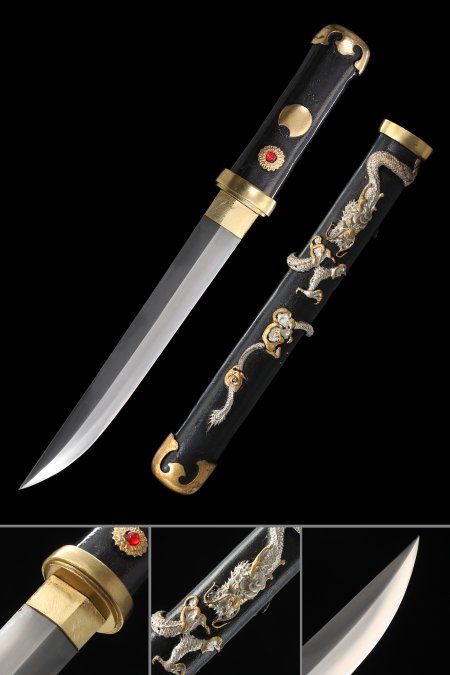
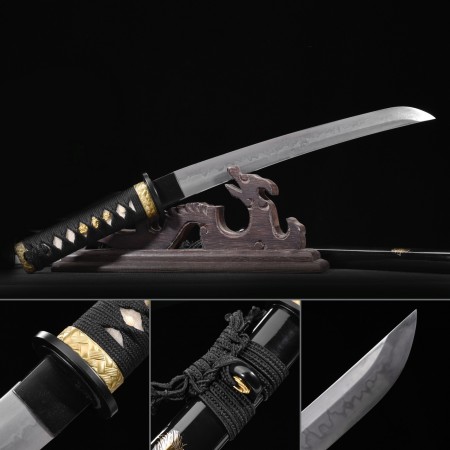
The Black Gold Handle Tanto collection brings together hand-forged tanto blades paired with boldly contrasted black and gold fittings — a combination that speaks to both classical Japanese aesthetics and the discerning eye of the modern collector. Each piece features carefully selected high-carbon steel, traditionally shaped geometry, and tsuka wrapping that balances visual drama with authentic craftsmanship. Enjoy free standard shipping on every order, backed by our hassle-free return policy.
Related Collections
Black And Gold Katana14 items
Gold Ninjato2 items
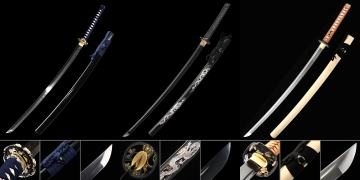
Black Gold Tsuba Katana128 items
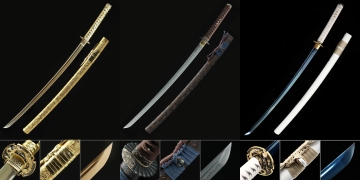
Gold Black Tsuba Katana124 items
Frequently Asked Questions
What makes a tanto handle "black gold" style?
The term refers to a specific aesthetic pairing found across the tsuka (handle) and its associated fittings. The black element typically comes from tightly wrapped black ito (cord or ray skin) over the tsuka, while the gold refers to the tone of metal fittings — fuchi, kashira, and menuki — finished in brass, gilt, or gold-toned alloys. In better-quality collectible tantos, the menuki (decorative handle ornaments) are often cast with detailed motifs such as dragons or phoenixes and then given a warm gold finish that contrasts sharply against the dark wrap. This pairing is rooted in Edo-period aesthetics, where visual contrast in blade mounts signaled both taste and status. For display purposes, the black-gold combination photographs exceptionally well and holds visual impact across a wide range of lighting environments.
How does T10 steel differ from 1095 in a tanto blade?
Both are high-carbon steels well suited to traditionally styled tanto blades, but they have meaningful differences. T10 tool steel contains a small amount of silicon and trace tungsten, which refines its grain structure and improves wear resistance at the edge. When clay-tempered, T10 produces a particularly vivid and active hamon — the temper line is more pronounced and often shows complex nie and nioi activity under magnification. 1095 carbon steel has a slightly coarser grain and is more forgiving during forging, which makes it a classic choice for hand-forged collectibles. Its hamon tends to be softer and more diffuse in character. For collectors, the choice often comes down to visual preference: T10 hamons tend to be dramatic and well-defined, while 1095 hamons have a subtler, more traditional aesthetic.
What is a real hamon, and why does it matter for collectors?
A real hamon is the temper line produced by clay tempering — a process where the smith applies a clay mixture to the blade before the quench, leaving the edge exposed to rapid cooling while the spine cools slowly. This differential hardening creates a visible boundary between the hard edge steel and the softer spine, appearing as a misty, undulating line along the blade. In contrast, acid-etched or wire-brushed "fake" hamons are purely cosmetic and have no relationship to the steel's actual hardness profile. For collectors, a genuine hamon is significant because it confirms that the blade underwent traditional heat treatment, making each piece individually unique — no two clay-tempered hamons are identical. It also indicates a higher level of craftsmanship investment in the piece.
How should I store and maintain a display tanto at home?
High-carbon steel tanto blades — whether T10 or 1095 — will develop surface oxidation if left untreated, so routine care is essential for long-term display quality. Apply a thin coat of choji oil or food-grade mineral oil along the blade surface every one to three months depending on your local humidity. Store the tanto horizontally or in its saya on a dedicated display stand, away from direct sunlight which can fade the saya lacquer and dry out any natural wrap materials. Avoid storing in sealed plastic cases without a desiccant, as trapped moisture accelerates rust. If the blade shows light surface patina from handling, a soft cotton cloth with a small amount of oil will restore the finish. Keep the saya interior clean and free of grit, as particles inside the saya can scratch the blade over repeated insertions.
Is a black gold tanto a good choice as a collector's gift?
A tanto with black and gold fittings is one of the more visually distinctive options in Japanese-style blade collecting, which makes it particularly effective as a gift for someone who appreciates either Japanese history or decorative edged collectibles. The compact size of the tanto form — typically under 12 inches of blade — means it is easier to display than a full katana, requiring less wall space or cabinet depth. A lacquered saya with relief carvings adds an immediate decorative element that non-collectors also appreciate aesthetically, making it accessible beyond dedicated enthusiasts. When selecting one as a gift, consider whether the recipient prefers a cleaner, minimalist presentation or something more ornate — the dragon-carved saya options in this collection suit the latter preference particularly well.
Customer Reviews
Joel Nino I
California, United States
Really sharp and will match with my Katana and Ninjato black dragon theme...
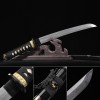 |
T10 Carbon Steel Tanto with Clay-Tempered Blade in Black Lacquer Saya - Real Hamon |