Black Gold Tsuba Tanto
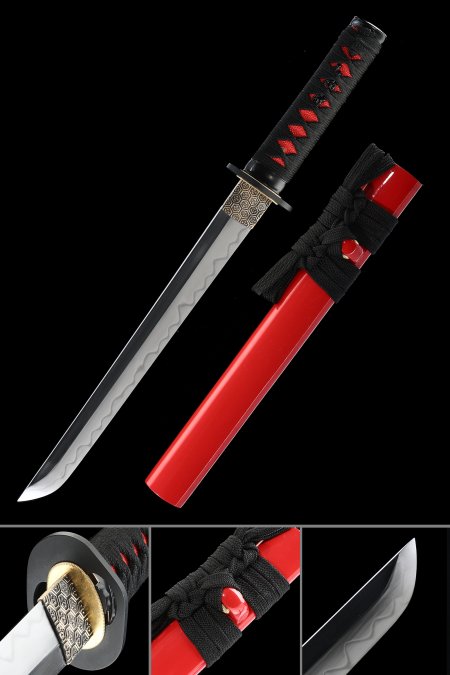
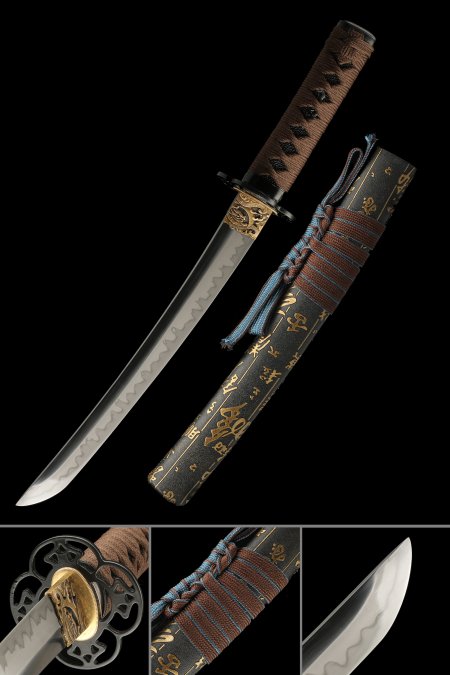
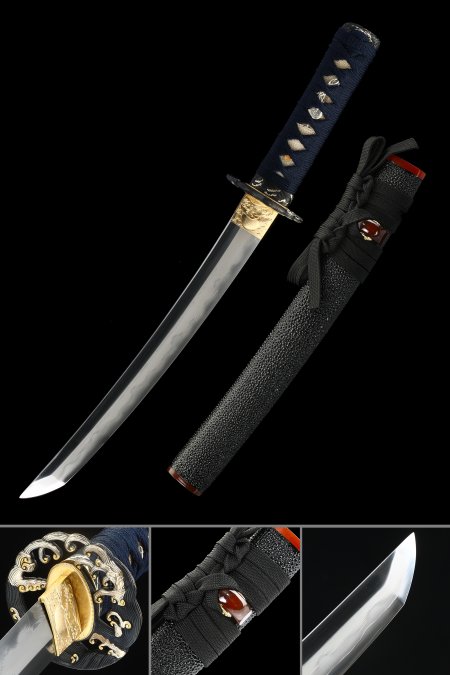
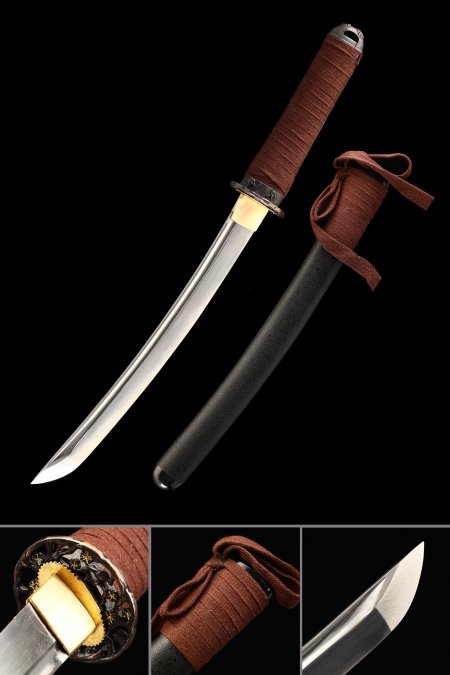
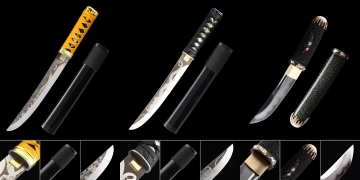
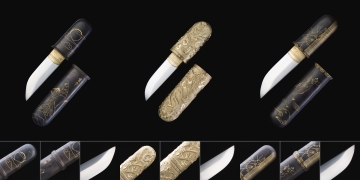
The Black Gold Tsuba Tanto collection brings together meticulously hand-forged tanto blades paired with striking black-and-gold tsuba, creating display pieces that balance traditional Japanese aesthetics with bold visual contrast. Each collectible features full-tang construction, hand-wrapped ito, and lacquered hardwood saya sourced from premium materials including T10 clay-tempered carbon steel, Sanmai laminate, and high manganese steel. Free standard shipping is included on every order, and hassle-free returns ensure your collecting experience is as refined as the pieces themselves.
Related Collections
Frequently Asked Questions
What steel types are used in Black Gold Tsuba Tanto blades?
How do Black Gold Tsuba Tanto differ from standard tanto collectibles?
What does full-tang construction mean on a collectible tanto?
How should I care for a lacquered saya on a display tanto?
Are these tanto a good gift choice for Japanese sword collectors?
Customer Reviews
I thought my product was made in Japan… Looks like made in China… good thing blade sharp display doesn’t look bad except handle has wood piece that’s light brown that doesn’t match black they could’ve dyed it. Def worth more around $50-$90 not $150. The little wood part on sword handle bothers me they should’ve dyed it black to blend it in. Other than that honestly it’s just okay and don’t think it was worth the $150
 |
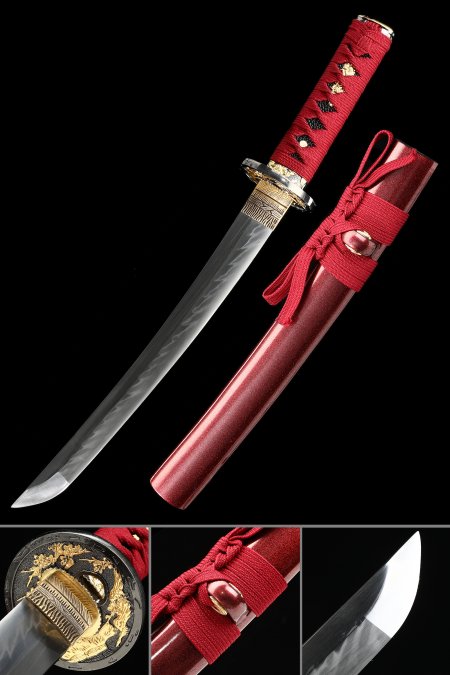
T10 Clay Tempered Tanto Sword with Real Hamon in Red Saya - Gold Floral Tsuba Collectible |
Nicer than I thought! I’m going to try to sharpen it a little better. From what I understand…one should be able to cleanly cut a piece of paper. It’s not sharp enough to do that
 |
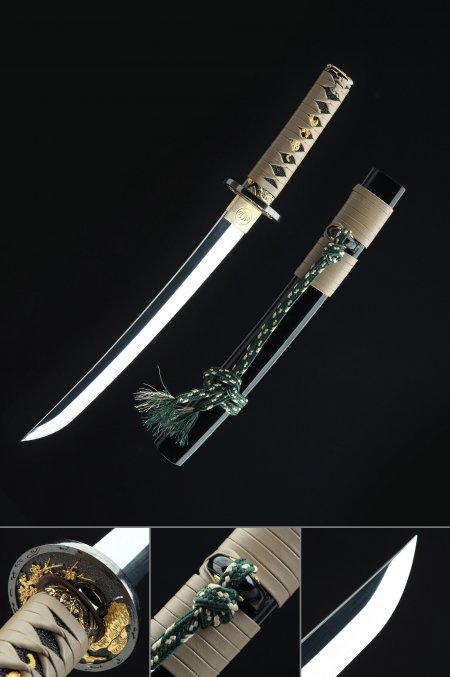
Manganese Steel Tanto with Beige Cord Handle, Gold Dragon Tsuba & Black Saya - Japanese Replica |
Sword was shipped & delivered in a styrofoam coccoon, happy w/ the quality of the blade & workmanship overall. Badass!!!
|
T10 Clay Tempered Tanto Sword with Real Hamon in Red Saya - Gold Floral Tsuba Collectible |
I can't believe how beautiful this sword is. Excellent work. I'm very happy I chose this one. But will be buying the others I was deciding on after the holidays. Excellent swords and service.
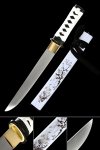 |
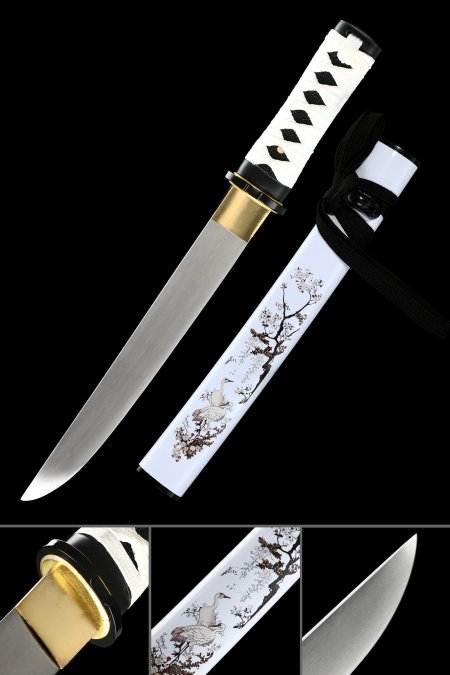
Manganese Steel Japanese Tanto with Crane and Plum Blossom Hand-Painted White Saya in Full Tang Design |
Bonjour à l'équipe de TRUE KATANA, mon sabre TANTO est de très belle qualité , et var
Compléter avec succès ma collection. r
Le transport est parfois compliqué pour arriver chez moi .r
Mais je suis satisfait de ma commande .r
r
Je vous souhaite une excellente journée .
|
T10 Clay Tempered Tanto Sword with Real Hamon in Red Saya - Gold Floral Tsuba Collectible |
It’s my Birthday present, but can’t open it till September!!!
|
T10 Clay Tempered Tanto Sword with Real Hamon in Red Saya - Gold Floral Tsuba Collectible |
I've ordered 6 swords from Truekatana. This picture represents a Chinese Straight Sword and Chinese Broadsword I purchsed. I'm not a metalurgist, forgemaster or swordmaster. I learned a little Shao lin and wu shu broadsword in my youth, but that's about it. All that said these swords are truly functional, beautifully balanced and of exquisite workmanship. Besides being weapons they are beautiful works of art. I like to collect swords of all types and these two are among the most expensive I've bought, both being in the $1000 range. They are also, by far, the nicest.
I've also bought two katanas and two wakizashi. Though I did not venture into the same price range, they are truly viable weapons and beautiful art pieces.
Truekatana has truly exceptional pieces, fully functional as well as beautiful to behold. They are worth every penny and if you wait for a sale you will likely find something you like at a better than fair price.
|
T10 Clay Tempered Tanto Sword with Real Hamon in Red Saya - Gold Floral Tsuba Collectible |
Much better than expected! Heavy, sharp out of the box, and absolutley beautiful!
|
T10 Clay Tempered Tanto Sword with Real Hamon in Red Saya - Gold Floral Tsuba Collectible |