Black T10 Carbon Steel Tachi Swords
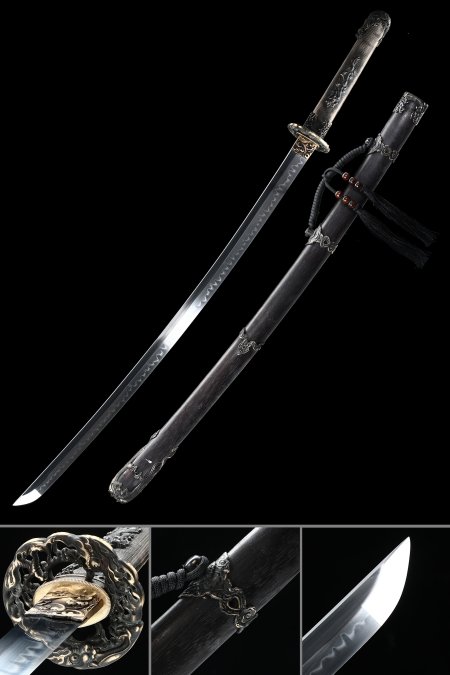
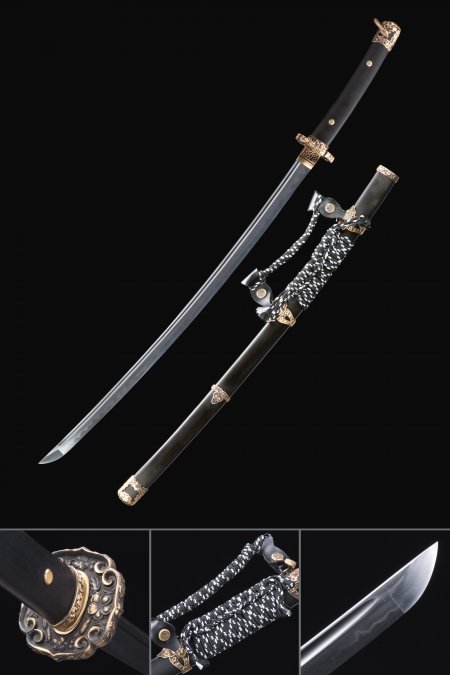
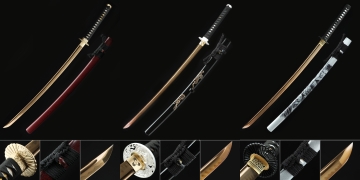
Black T10 Carbon Steel Tachi Swords bring together the ancient elegance of tachi geometry and the proven performance of high-carbon T10 tool steel, finished with deep black lacquer sayas and authentic hamon temper lines for collectors who demand both visual drama and metallurgical integrity. Each piece is hand-forged and full-tang constructed, reflecting the classical curved profile that Japanese cavalry officers once wore suspended edge-down from the hip. Enjoy free standard shipping on your order, backed by our hassle-free return policy.
Related Collections

Frequently Asked Questions
What makes T10 steel a preferred choice for tachi collectibles?
T10 is a high-carbon tool steel with roughly 1.0% carbon content and trace silicon additions that refine its grain structure during forging. For display and collectible tachi, its primary appeal lies in how dramatically it responds to differential clay tempering: the smith coats the spine in clay before the quench, causing the edge and spine to harden at different rates and producing a visible hamon temper line. T10's grain characteristics make this hamon especially active and detailed compared to simpler carbon steels, giving each blade a unique surface pattern that collectors value as proof of hand-forged, traditional craftsmanship. The steel also takes a bright polish well, creating strong visual contrast against the black lacquer saya.
How does a tachi differ from a katana in design and display?
The tachi predates the katana by several centuries and features a deeper, more continuous curvature along the blade length, typically measuring 70 cm or longer. Historically, the tachi was worn suspended edge-down from the hip using a specific mounting called a tachi koshirae, in contrast to the katana's edge-up thrust through the obi. This difference in carry orientation influenced the geometry of fittings, the angle of the tsuba, and the curvature of the saya. For display purposes, tachi are traditionally mounted horizontally with the edge facing downward, which means wall racks and display stands designed for katana may need adjustment. Collectors setting up themed displays should account for this orientation difference to present the piece authentically.
Are the hamon lines on these tachi natural or artificially etched?
The hamon on T10 tachi produced through proper clay tempering is a genuine metallurgical boundary formed during the quench process - not an acid-etched or wire-brushed simulation. You can distinguish a real hamon by its depth: when examined under raking light or a strong flashlight, an authentic hamon shows a three-dimensional transition zone called the nie and nioi, which appear as a misty or crystalline boundary rather than a flat surface line. Artificially etched hamon, common on lower-end decorative pieces, appear as a uniform dark band without this internal luminosity. Every tachi in this Black T10 collection is differentially clay-tempered, so the hamon you receive is structurally inherent to the blade itself.
How should I care for and store a black lacquer saya long-term?
Black lacquer sayas are durable but sensitive to two specific conditions: prolonged direct sunlight and rapid humidity swings. UV exposure will gradually fade or chalk the lacquer finish over months, so display positioning away from windows or under UV-filtering acrylic is advisable. Sudden humidity changes can cause the underlying wood to expand or contract faster than the lacquer layer, eventually leading to hairline cracking. Store or display the saya in a space with relatively stable humidity - ideally 45-60% RH. For cleaning, a soft dry cloth is sufficient for dust; avoid solvent-based cleaners entirely. If the lacquer develops a minor dull patch, a single drop of camellia oil buffed gently with a microfiber cloth can restore surface sheen without damaging the finish.
Do these tachi make good gifts for Japanese history enthusiasts?
A hand-forged T10 tachi with a distinctive tsuba design - particularly the dragon or floral motifs featured in this collection - is a compelling gift for collectors interested in Japanese history, classical armor aesthetics, or East Asian decorative arts. The pieces arrive with the saya and fittings assembled, requiring no additional accessories to display immediately. For gifting purposes, pairing a tachi with a complementary wall mounting rack elevates the presentation significantly. If the recipient already owns katana-format pieces, a tachi adds meaningful historical context to their collection by representing an earlier period of Japanese sword development. The black lacquer finish and ornate tsuba also make these pieces visually accessible to enthusiasts who appreciate the aesthetic even without deep technical knowledge of metallurgy.