FAST SHIP
21 Reviews
ON SALE 15% OFF
$149.00$179.00

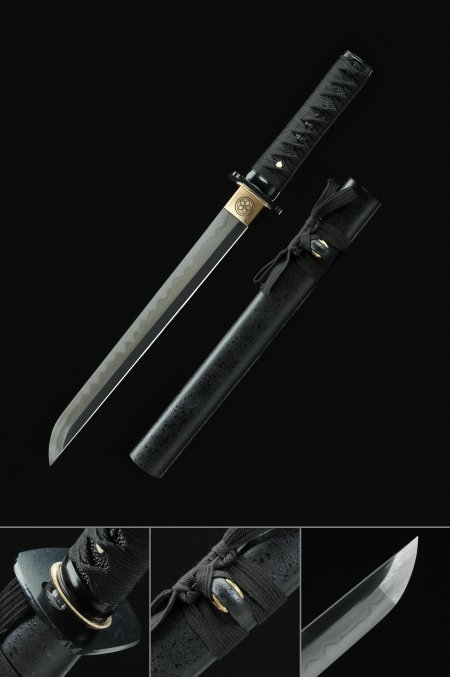
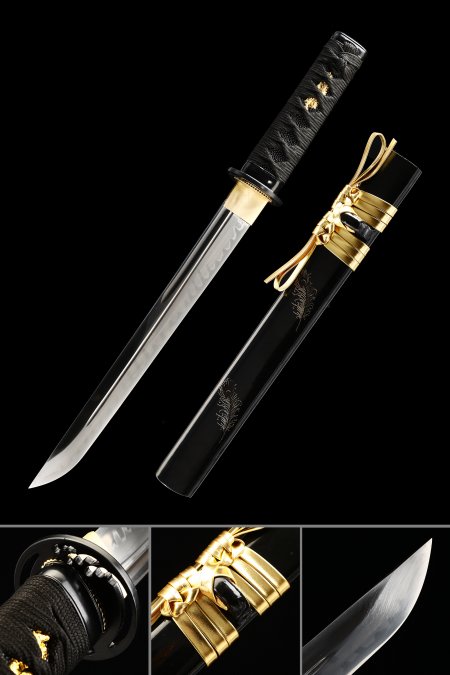
Crafted from high-carbon T10 steel with a genuine hamon temper line, each Black T10 Carbon Steel Hamidashi in this collection represents the refined artistry of traditional tanto forging. The distinctive hamidashi tsuba - smaller than a standard guard yet elegantly proportioned - frames the blade's bold black-lacquer aesthetic with gold-tone fittings that reward close inspection. These pieces are hand-finished collectibles built for display, appreciation, and the discerning eye of a serious collector. Every order ships free with hassle-free returns.
It is amazing and thats coming from a blacksmith it is a great blade i do plan on buying 2 more in the future i am very pleased
 |
T10 Carbon Steel Hamidashi Tanto with Real Hamon in Black Piano Lacquer Saya - Gold Habaki Accent |
The Tanto is BEEFY. Like a Crow Bar with a sharp edge. Nicely made T10, clay tempered, glossy black sheath. VERY nice.r
r
The Damascus was BEAUTIFUL with an AMAZING Folded Pattern on the blade. SHARP and ready. I like it so much I bought another as a gift for a friend.r
r
VERY happy!!!!!!!
|
T10 Carbon Steel Hamidashi Tanto with Real Hamon in Black Piano Lacquer Saya - Gold Habaki Accent |
Great authentic product! Second time buying from TrueKatana.
|
T10 Carbon Steel Hamidashi Tanto with Real Hamon in Black Piano Lacquer Saya - Gold Habaki Accent |
Beautiful blade. I’m very happy with my purchase. My only minor inconveniences are that the very tip of the blade is ever so slightly bent, and the sheath has very small damage (most likely from shipping). Other than those two things, everything about the piece is well made and aesthetically pleasing to look at and hold.
|
T10 Carbon Steel Hamidashi Tanto with Real Hamon in Black Piano Lacquer Saya - Gold Habaki Accent |
Great Sword,Great Quality,Fast Shipping, Highly Recommend..
 |
T10 Carbon Steel Hamidashi Tanto with Real Hamon - Black Piano Lacquer Saya and Gold-Tone Fittings |
A fantastic Tanto! The craftsmanship is really great on everything, handle, scabbard, and blade, (which is very sharp by the way). This is my third order from truekatana and they’ve knocked it out of the park each and every time!! Highly recommended!
|
T10 Carbon Steel Hamidashi Tanto with Real Hamon in Black Piano Lacquer Saya - Gold Habaki Accent |
Quality Quality Quality well built and great looking at the same time. The feel of the Hamidashi Tanto sword has you hold it is remarkable , very impressive product.
|
T10 Carbon Steel Hamidashi Tanto with Real Hamon in Black Piano Lacquer Saya - Gold Habaki Accent |
Excellent quality and great price. Razor sharp as advertised
|
T10 Carbon Steel Hamidashi Tanto with Real Hamon - Black Piano Lacquer Saya and Gold-Tone Fittings |