
Olive T10 Carbon Steel Katana
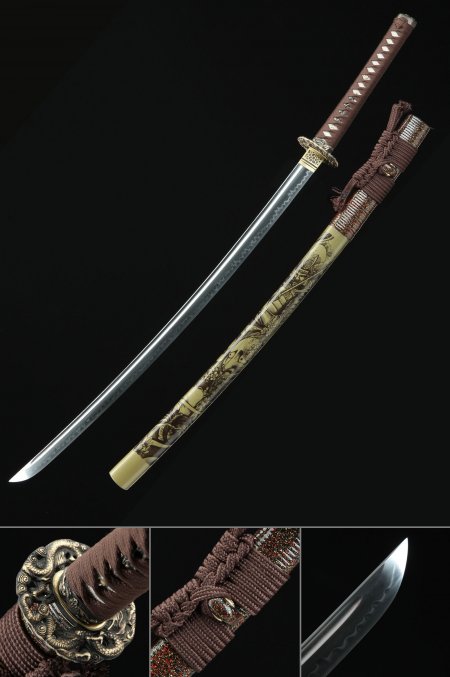
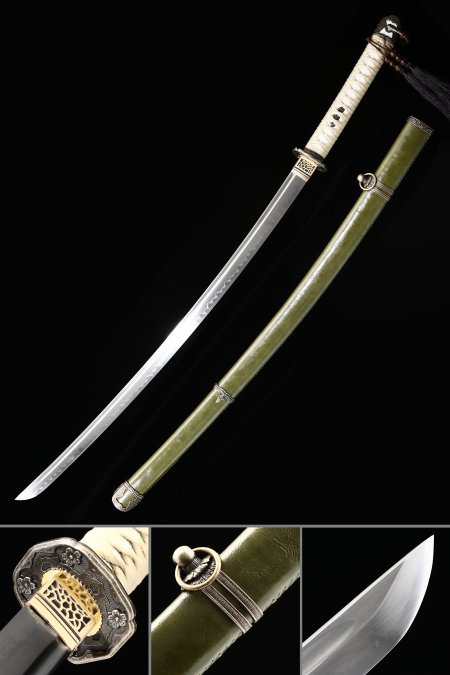
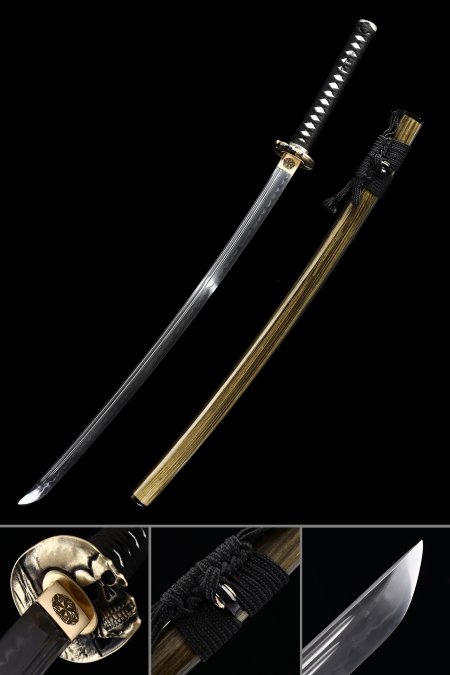
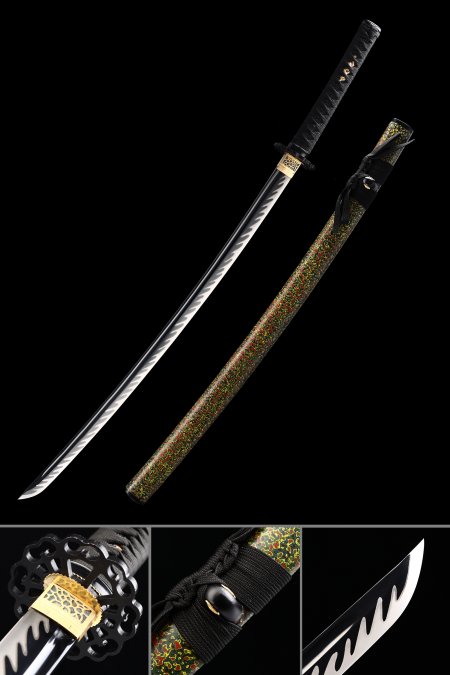
The Olive T10 Carbon Steel Katana collection brings together hand-forged blades crafted from high-carbon T10 tool steel, renowned for its exceptional edge retention and fine grain structure after clay tempering. Each sword is individually assembled with period-authentic fittings - from floral lacquer saya to copper dragon tsuba - making every piece a distinctive display collectible rather than a mass-produced replica. Free standard shipping is included on all orders, and we stand behind every sword with a straightforward return policy for your peace of mind.
Free Shipping
219.00 USD
Free Shipping
259.00 USD
Related Collections
Frequently Asked Questions
What makes T10 steel different from 1060 or 1095?
T10 is a tungsten-alloyed tool steel, typically containing around 0.9% carbon and a small percentage of tungsten - an element absent in standard 1060 or 1095 high-carbon steels. That tungsten addition refines the carbide grain structure during heat treatment, resulting in improved wear resistance at the edge and a finer, more consistent surface finish after polishing. For collectors, this means T10 blades tend to display crisper hamon definition and hold their polish longer under display conditions. By contrast, 1060 offers more flexibility and forgiveness during forging, making it common in production swords, while 1095 provides a harder edge but can be more susceptible to corrosion. T10's combination of hardness, wear resistance, and polishability places it firmly in the collector-grade category.
Is the hamon on these katana real or acid-etched?
Every katana in this collection features a genuine, clay-tempered hamon produced through differential hardening - not an acid-etched simulation. During forging, a clay mixture is applied along the spine of the blade before quenching, insulating that area and creating a slower cooling rate. The edge, left with minimal clay, cools rapidly and achieves a higher hardness, while the spine remains relatively tough and ductile. The boundary between these two zones forms the visible hamon line. Under proper lighting, a real hamon will reveal microscopic crystalline activity - referred to as nie and nioi in traditional appraisal - that no chemical etching can replicate. This structural detail is one of the primary markers collectors use to assess a blade's authenticity and quality tier.
How should I store a T10 carbon steel katana long-term?
T10 carbon steel is not stainless and will oxidize if left unprotected. For long-term display or storage, apply a thin, even coat of choji oil or pharmaceutical-grade mineral oil to the bare blade every two to three months - or monthly in coastal or high-humidity environments. Always handle the blade with cotton gloves, as fingerprint acids accelerate surface oxidation. Store the assembled katana horizontally with the edge facing upward inside the saya, and keep the assembly in a paulownia wood box or a padded sword bag to protect the lacquered scabbard from chips and dust. Avoid storing near heating vents or in areas with significant temperature swings, as repeated expansion and contraction can stress the lacquer finish on the saya over time.
What does the WWII Type 98 Shin Gunto style mean for collectors?
The Type 98 Shin Gunto was the standard officer's sword issued by the Imperial Japanese Army from 1938 through the end of World War II. Its defining features include a distinctive olive-drab or brown leather-wrapped saya secured with a metal locket and drag, military-regulation brass fittings, and a grip assembly closer in profile to traditional tachi mounts than civilian katana. For collectors, the Shin Gunto configuration holds significant historical documentation value and is frequently collected alongside WWII militaria. A T10 clay tempered blade housed in an authentic Type 98-style mount combines historical aesthetic integrity with collector-grade metallurgy - making it a strong centerpiece for either a military history display or a broader Japanese sword collection.
How does an Olive T10 katana compare to a standard folded steel sword?
Folded steel construction involves repeatedly forge-welding the steel back upon itself - traditionally to remove slag inclusions from tamahagane - producing a layered grain pattern visible as a wood-grain surface texture called jihada. Some swords in this collection combine T10 steel with folded construction, delivering both the tungsten-enhanced wear resistance of T10 and the aesthetic surface character of folded layers. A non-folded T10 blade, by contrast, will have a cleaner, more uniform surface but equally strong metallurgical properties derived from the steel's inherent composition. For display collectors, the folded variant provides additional visual storytelling and craftsmanship detail, while the non-folded T10 presents a more classically refined polish - both are valid collecting directions depending on your display priorities.
Customer Reviews
Timothy Wright
Texas, United States
Very happy, looks great, came very sharp. I will likely buy more products
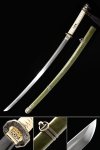 |
WWII Type 98 Shin Gunto Officer Katana - T10 Clay Tempered Steel with Olive Green Leather Saya |
Carlos Martinez
Texas, United States
Love it ,love it, love it. 100% worth the cost and just a cool sword to own
|
WWII Type 98 Shin Gunto Officer Katana - T10 Clay Tempered Steel with Olive Green Leather Saya |
Richard Avalaz Junior
Colorado, United States
The katana was better than standards. I really take liking to it and may come back to this website in the future for more.
|
WWII Type 98 Shin Gunto Officer Katana - T10 Clay Tempered Steel with Olive Green Leather Saya |
Joseph Willis
Alabama, United States
This is my second Katana from Truekatana, exceptional craftsmanship,excellent customer service and quick shipping. Thanks for the satisfaction once again!!
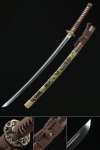 |
Dragon Katana T10 Folded Clay Tempered Steel with Real Hamon in Manga-Themed Saya and Copper Dragon Tsuba |
Jeramy Gadberry
California, United States
Nice looking katana but soft steel, and bendable by hand. Definitely a wall-hanger. If this really is made of T10 then there's something wrong with the hardening/tempering process. I wouldn't recommend using it for cutting or sparring, etc.
|
WWII Type 98 Shin Gunto Officer Katana - T10 Clay Tempered Steel with Olive Green Leather Saya |
Phillip Dowell
Virginia, United States
The handle is on too tight for me to remove so I can’t see the tang But overall I love it cuts great
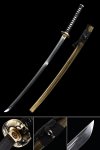 |
T10 Carbon Steel Katana with Real Hamon - Natural Wood Saya, Gold Skull Tsuba, Black Wrap |
Stuart P Sagraves
Florida, United States
The sword is beautiful. The tip of my handle is lose and I thought it would be “razor sharp” as advertised but it’s not even sharp. I’m really pissed of about that.
|
WWII Type 98 Shin Gunto Officer Katana - T10 Clay Tempered Steel with Olive Green Leather Saya |