FAST SHIP
Free Shipping
219.00 USD
ON SALE! 20% OFF
Was: 269.00 USD

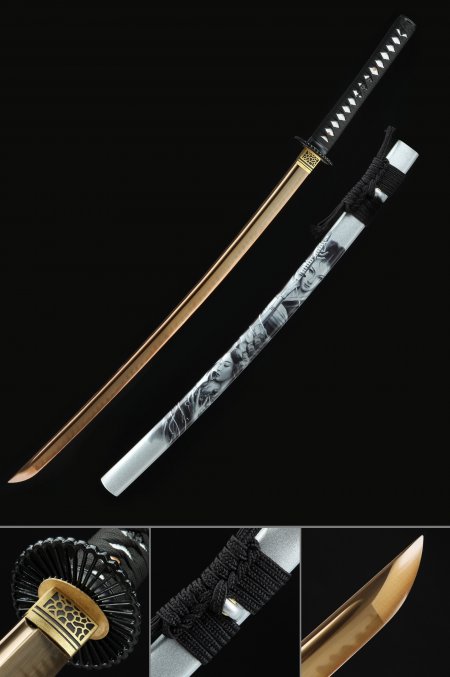
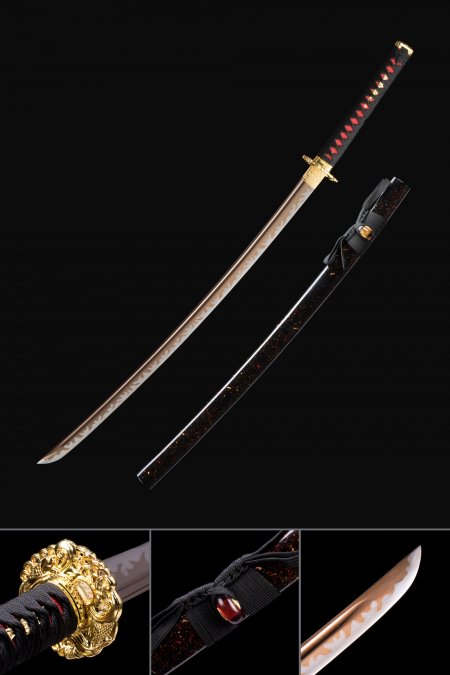
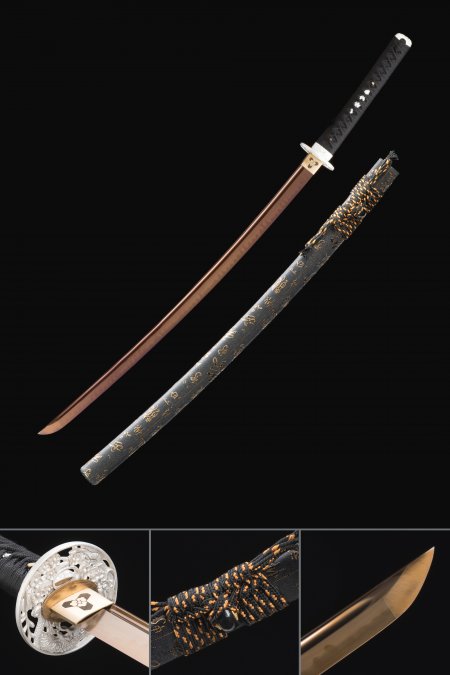
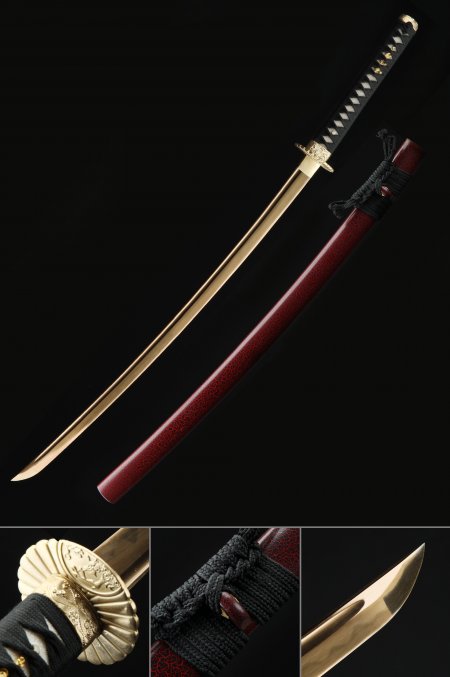
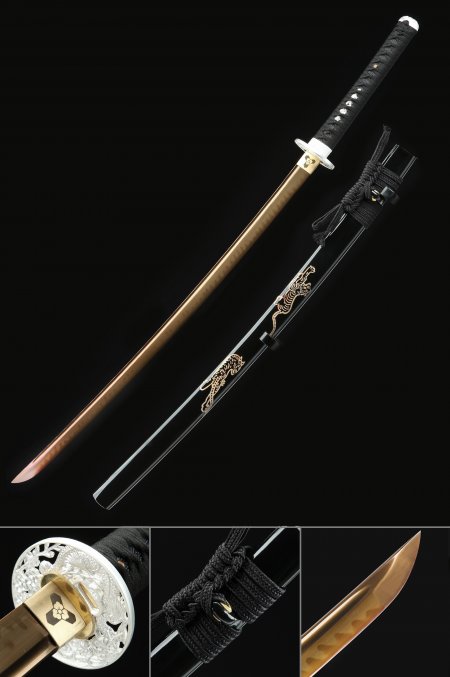
Each piece in this collection pairs T10 high-carbon steel - a fine-grained tool steel prized for its wear resistance and ability to hold a refined edge - with a hand-applied gold or rose-gold blade finish that transforms every sword into a genuine display centerpiece. Clay tempering draws out a natural hamon along the length of the blade, a mark of traditional craftsmanship that collectors immediately recognize. All orders ship free with hassle-free returns, so adding one of these distinctive pieces to your collection is completely risk-free.
Loves the katana currently have it displayed above my desk and love how it looks. Came in with a oily substance in the blade but nothing a microfibre rag can’t get off. Would recommend and will be buying from this company in the future.
 |
T10 Carbon Steel Katana with Rose Gold Clay Tempered Blade in Black Tiger-Engraved Saya with Dragon Tsuba |
Fast shipping, good build for the price. The materials used outside of the blade itself are light (inexpensive) so the sword feels light. But I didn’t purchase a $8000-$12000 katana, so I’m happy with this sword for its price. Would buy again from TrueKatana.
|
T10 Carbon Steel Katana with Rose Gold Clay Tempered Blade in Black Tiger-Engraved Saya with Dragon Tsuba |
On the truekatana pictures the blade looks golden. In real life it is much more a brown metalic. I made the paper test to see how sharp the blade is. And it was not really sharp. Otherwise it is a nice sword.
 |
T10 Folded Clay Tempered Katana with Golden Blade and Flower Tsuba in Red Crackle Saya |
Bought as a gift for my son and he loves it. well made and great service.
 |
T10 Folded Carbon Steel Katana with Golden Blade and Real Hamon - Manga Art Silver Saya Collectible Sword |
Sword was such a work of art I ordered another the day it arrived
|
T10 Carbon Steel Katana with Rose Gold Clay Tempered Blade in Black Tiger-Engraved Saya with Dragon Tsuba |
Excellent sword for the money. It is the 2nd one I have purchased.
|
T10 Folded Clay Tempered Katana with Golden Blade and Flower Tsuba in Red Crackle Saya |
2nd sword ordered love them both the quality is exceptional
|
T10 Folded Clay Tempered Katana with Golden Blade and Flower Tsuba in Red Crackle Saya |
Awesome sword, surprisingly sharp and beautiful for the price!! Girlfriend loves it!
|
T10 Folded Carbon Steel Katana with Golden Blade and Real Hamon - Manga Art Silver Saya Collectible Sword |