Gold T10 Carbon Steel Katana

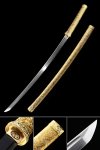
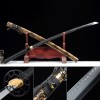
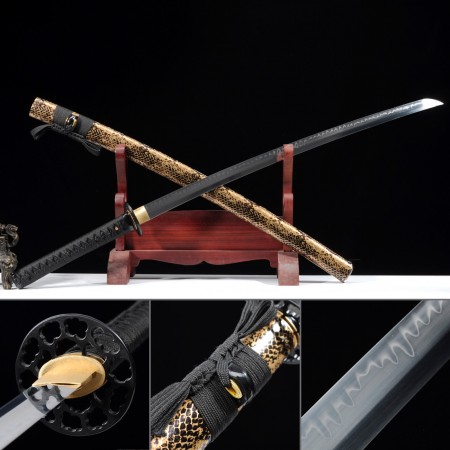
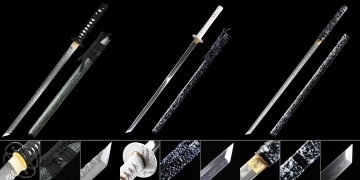
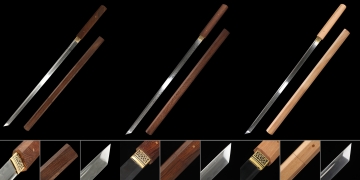
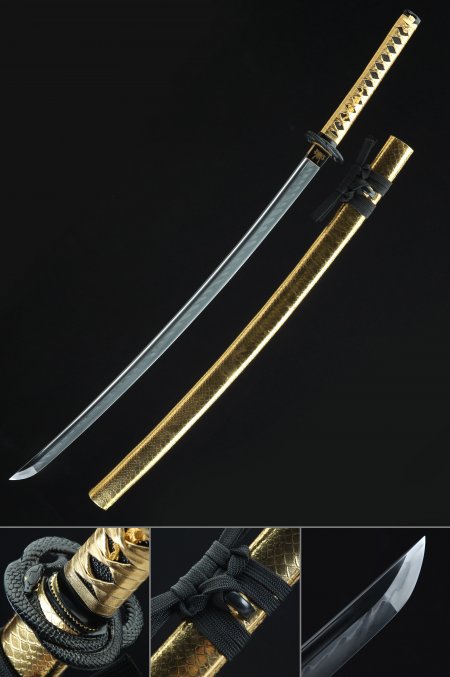
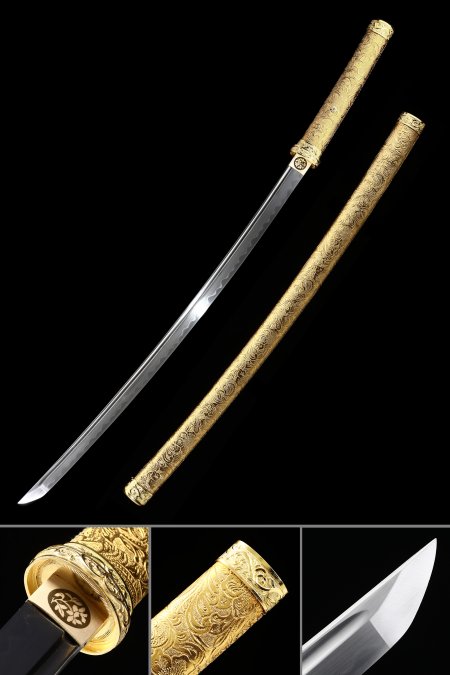
For collectors who refuse to compromise on either aesthetics or craftsmanship, our Gold T10 Carbon Steel Katana collection delivers exactly that balance. Each piece is hand-forged from high-carbon T10 tool steel, clay tempered to produce an authentic hamon, and finished with ornate gold-accented fittings and intricately wrapped ito handles - making every sword as visually striking as it is precisely constructed. These katana are ideal as display centerpieces, collector's acquisitions, or meaningful gifts for enthusiasts who appreciate genuine Japanese sword-making tradition. Enjoy free standard shipping on your order, and shop with confidence knowing returns are always straightforward.
Showing 3 Products

Frequently Asked Questions

What makes T10 steel different from 1045 or 1060 carbon steel?
T10 is a tungsten-alloyed high-carbon tool steel, typically containing around 0.95-1.05% carbon alongside a small percentage of tungsten. That tungsten addition improves wear resistance and allows the steel to maintain its hardness characteristics even after repeated thermal cycles - a meaningful advantage during the clay tempering process. By comparison, 1045 steel sits at roughly 0.45% carbon, making it softer and more forgiving but less capable of holding a refined edge geometry over time. 1060 occupies a middle ground. For collectors prioritizing authentic hamon formation and the visual grain structure that serious enthusiasts look for, T10's higher carbon content produces a more pronounced and naturally varied temper line - the kind of detail that reads as genuine craftsmanship rather than a surface finish applied after the fact.
How is the hamon formed on these T10 katana?
The hamon on these katana is produced through traditional clay tempering - not etching or acid treatment, which are common shortcuts in lower-grade production. During forging, a layer of clay paste is applied along the blade's spine, leaving the edge exposed. When the blade is quenched in water or oil, the unprotected edge cools rapidly and hardens into a fine martensitic grain structure, while the clay-insulated spine cools more slowly and remains tougher and more flexible. The boundary between these two zones becomes the visible hamon. Because the clay application is done by hand, no two hamon lines are identical - each katana in this collection carries a naturally unique temper pattern, which is precisely what distinguishes hand-forged pieces from factory-produced alternatives.
Are the gold-accented saya lacquered or painted?
The scabbards in this collection use a lacquer and resin finishing process rather than simple paint application. The python-scale saya, for example, involve genuine or synthetic reptile-pattern material adhered to a wood core, then sealed with a protective lacquer coat that accounts for the gold luster and surface depth you see in product photographs. Engraved saya feature carved wooden or composite surfaces with gold-toned inlay or gilding sealed beneath a clear protective layer. This approach is significantly more durable than painted finishes - lacquered saya resist chipping, minor abrasion, and humidity fluctuation far better than bare paint, which matters for pieces intended for long-term display. The finish should be kept away from prolonged direct sunlight to prevent gradual tonal shift in the gold coloring.
What display setup works best for a katana with an ornate scabbard?
For katana with decorative saya like those in this collection, a horizontal wall mount or two-tier tabletop stand both work well - though each has trade-offs. A wall-mounted katana display shows the full length of the piece and keeps the saya visible as part of the overall composition, which is particularly worthwhile when the scabbard is as visually detailed as the ones here. A tabletop stand allows easier rotation for guests and simpler access for periodic maintenance. In either case, avoid positioning directly above or near a heat source, which can dry out lacquered saya surfaces over time. If displaying the sword unsheathed alongside the saya, consider a three-piece stand that supports blade, tsuka, and scabbard independently - it's the format commonly used in formal Japanese sword exhibitions.
Is a Gold T10 Katana a good gift for a Japanese sword enthusiast?
For a recipient who already has some familiarity with Japanese sword collecting, a T10 clay-tempered katana with ornate gold fittings occupies a meaningful tier - above decorative wall-hangers but within reach of a collector who values authentic construction details. The combination of a genuine hamon, hand-wrapped ito, and a visually distinctive gold-accented saya gives the piece immediate display presence alongside technical credibility. If you are unsure of the recipient's existing collection, the gold aesthetic tends to read as a deliberate statement piece rather than a utility acquisition, which makes it suitable as a standalone display item. Pairing it with a quality cleaning and maintenance kit - uchiko powder, choji oil, and a soft nuguigami cloth - is a practical complement that experienced collectors genuinely appreciate.

Customer Reviews