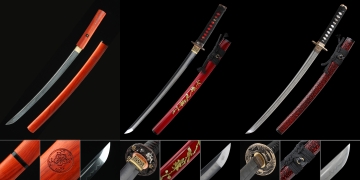
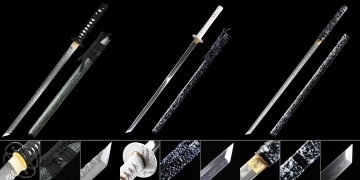
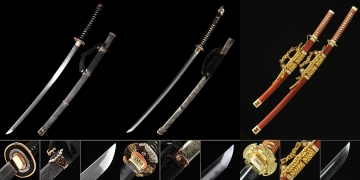
What makes T10 steel ideal for a collectible katana?
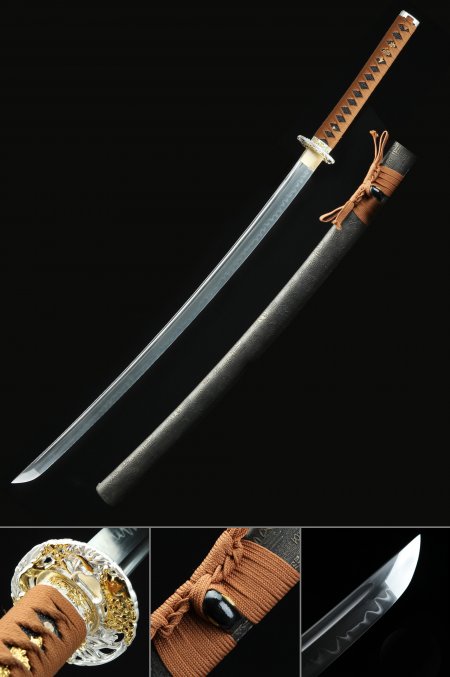
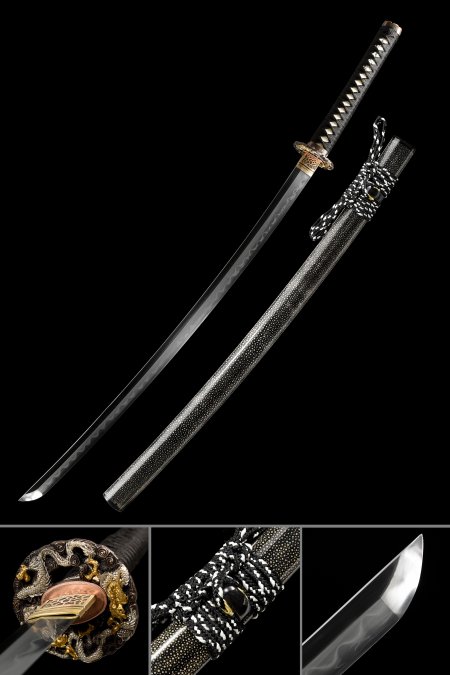
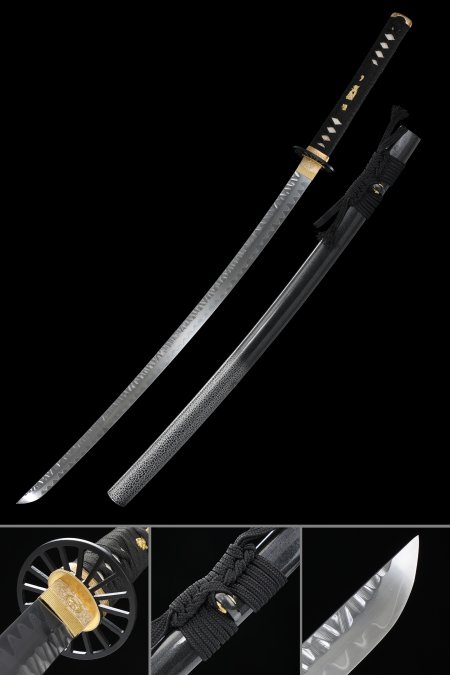
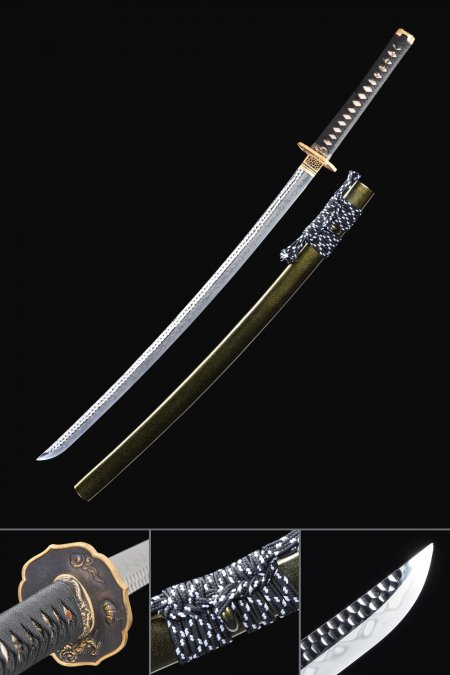
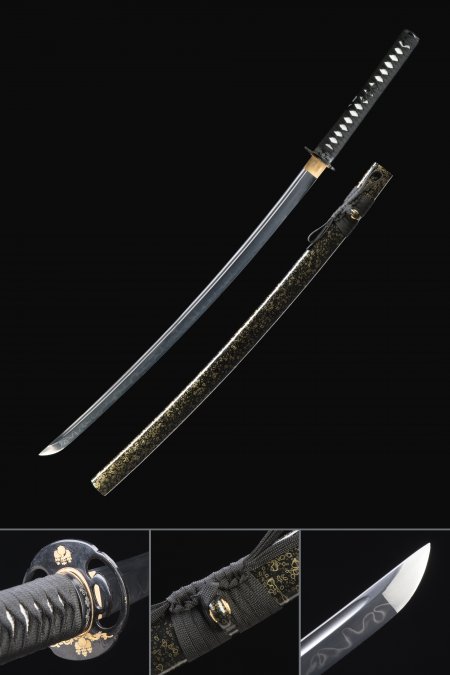
T10 tool steel contains approximately 1.0% carbon along with trace amounts of silicon, which refines the grain structure and improves edge stability compared to simpler high-carbon alloys. When clay-tempered, T10 responds with strong hamon activity - producing a vivid, well-defined transition line between the hardened edge and the softer spine. The combination of high hardness at the edge, a tough spine, and reliable hamon visibility makes T10 one of the most sought-after steels for collectors who value both metallurgical authenticity and visual impact in a display piece.
How is a real hamon formed on a T10 katana?
A genuine hamon is the direct result of differential clay tempering, not surface etching or acid treatment. The swordsmith coats the spine and sides of the blade with a thick layer of refractory clay, leaving the edge area exposed or thinly coated. The blade is then heated to critical temperature and quenched in water or oil. The clay-insulated spine cools slowly, forming soft pearlite, while the bare edge cools rapidly into hard martensite. The boundary between these two zones is the hamon. On a properly clay-tempered T10 blade, the hamon displays natural activity - small formations called nie and nioi that scatter light differently at various angles, confirming its authenticity.
How does T10 steel compare to 1095 in a katana?
Both T10 and 1095 are high-carbon steels well suited to traditional katana forging, but their characters differ in meaningful ways. T10 has a slightly higher carbon content and benefits from trace silicon, which yields a finer grain and a harder, more wear-resistant edge. This also tends to produce more pronounced hamon activity under clay tempering. By contrast, 1095 has a marginally lower carbon level that results in a tougher, more flexible blade - a quality appreciated by collectors who also practice test cutting. For pure display and collection purposes, T10 is generally preferred for its richer visual hamon and finer polish potential.
What do bronze fittings add to a katana's collectible value?
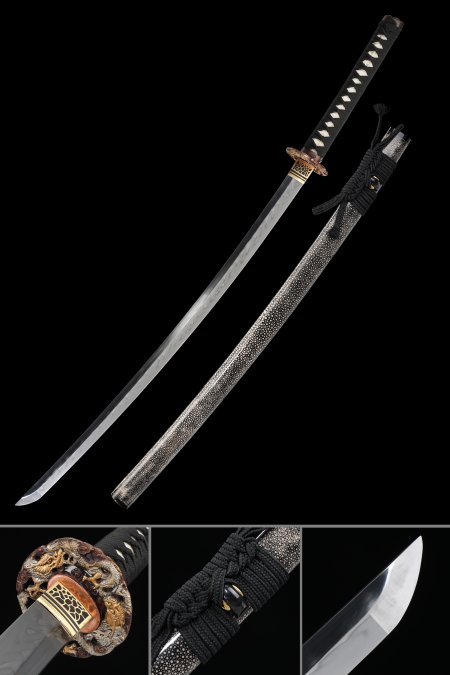
Bronze koshirae - including the fuchi, kashira, habaki, and seppa - contribute both aesthetic and historical authenticity to a mounted katana. Unlike iron or zinc alloy fittings, bronze develops a living patina over time that deepens from a bright warm gold toward amber and chocolate brown, adding character without requiring special treatment. Bronze also holds fine engraved or cast detail exceptionally well, which is why kanji inscriptions and dragon motifs appear with sharper definition on bronze tsuba and fittings than on many modern alternatives. For collectors focused on long-term display quality, bronze-accented koshirae ages gracefully and maintains its visual distinction across decades.
What is the right way to store a T10 katana long-term?
For long-term preservation, store your T10 katana horizontally on a sword stand or inside a padded sword bag, preferably within its saya. Before storing, wipe the blade thoroughly with a clean soft cloth to remove oils transferred from handling, then apply a very thin, even coat of choji oil or food-grade mineral oil using a small patch of silk or flannel. This protective oil layer prevents oxidation on the high-carbon surface. Keep the storage area at stable, moderate humidity - ideally between 40% and 55% relative humidity. Avoid locations near heating vents, windows with direct sunlight, or damp basements, as temperature and humidity swings accelerate both blade oxidation and deterioration of the ito wrap and lacquered saya.