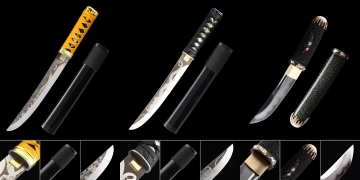
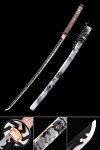
What defines a black and white tsuba on a katana?
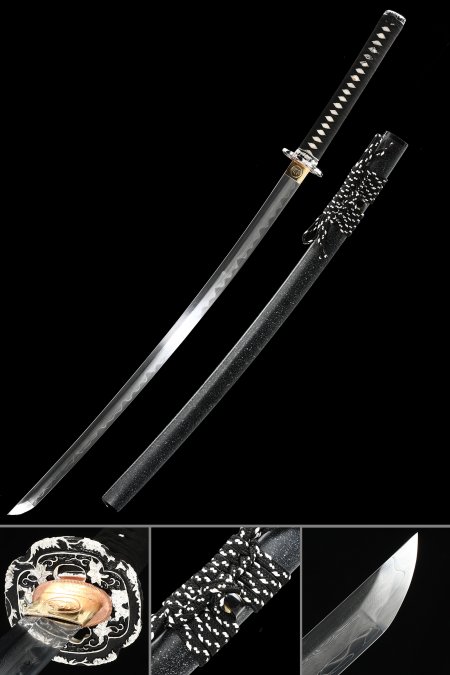
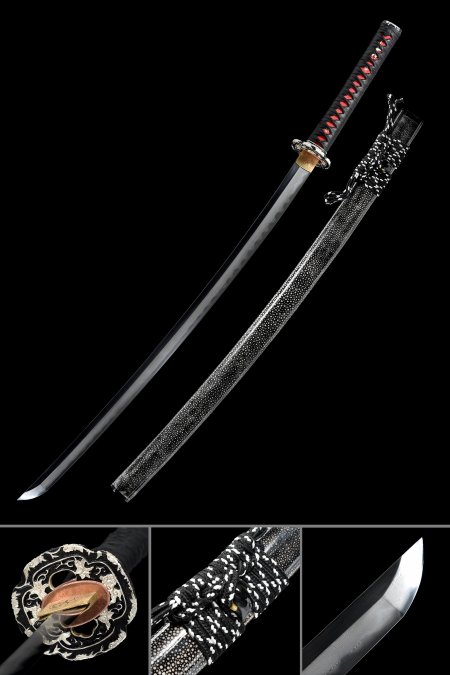
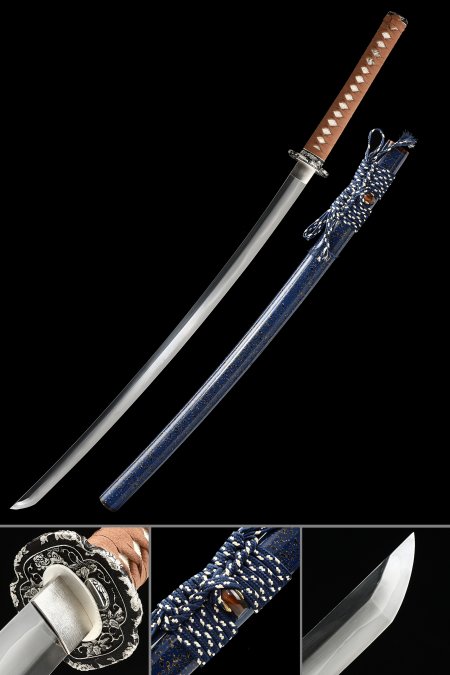
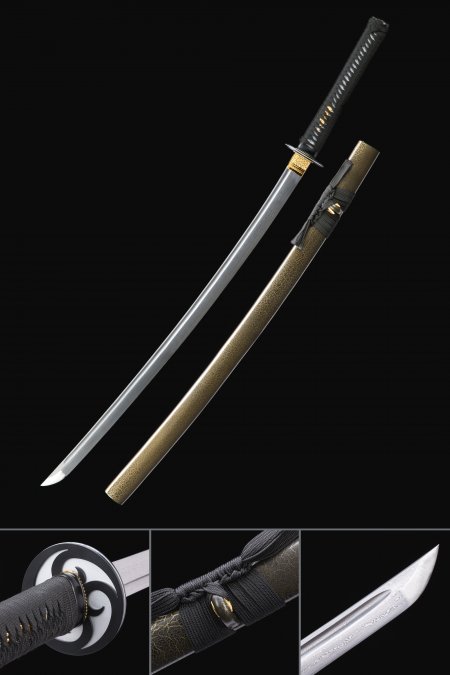
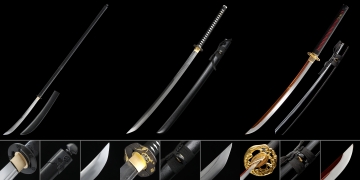
A black and white tsuba is a sword guard designed around high-contrast tonal pairing - typically a dark iron or alloy base set against inlaid, etched, or open-worked motifs that read as white or silver-toned. Common approaches include pierced negative-space designs (sukashi), where the cutout pattern creates light-against-dark geometry, and applied silver or white-metal overlays on a blackened iron ground. In this collection, floral cutwork guards and scrollwork designs follow this visual principle, making them a natural complement to black lacquer sayas. The contrast is not merely decorative - it reflects a deliberate aesthetic tradition in Japanese fittings that used opposing tones to guide the eye and signal a maker's regional style.
How does T10 steel differ from Damascus in these katana collectibles?
T10 is a high-carbon tool steel with a small tungsten addition that refines grain size and supports a genuine differentially tempered hamon - the wavy activity line visible along the blade's edge. Each T10 blade produces a unique hamon pattern, which many collectors consider a mark of authenticity and craft. Damascus steel, by contrast, is created by forge-welding layers of high- and low-carbon steel together, then acid-etching the surface to reveal flowing, wood-grain-like patterning across the entire blade face. Damascus collectibles are prized for their surface visual complexity, while T10 pieces are valued for the hamon's organic character. Neither is superior - the choice depends on whether you are drawn to surface pattern or to the tempering line as the blade's defining feature.
What should I know about caring for a lacquer saya?
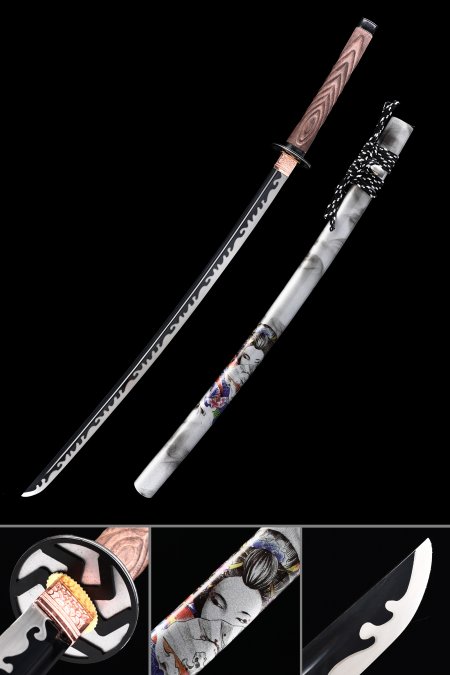
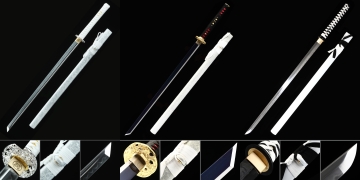
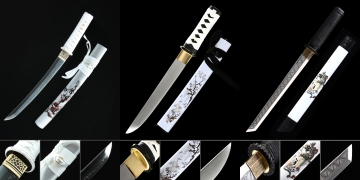
Lacquer sayas - whether black hardwood or painted designs like a geisha-illustrated white saya - require more attentive storage than plain wood sheaths. Lacquer is sensitive to rapid humidity changes, which can cause micro-cracking or surface clouding over time. Store the piece horizontally in a padded case or display cabinet away from direct sunlight and heating vents. Avoid wiping lacquer with alcohol-based cleaners; a barely damp microfiber cloth handles light dust safely. The blade itself should be lightly oiled with choji or mineral oil before sheathing, which also prevents moisture from being trapped against the steel inside the saya. Check the fit of the koiguchi (saya opening) periodically - a loose fit can allow the blade to shift and scratch the interior lacquer.
Are these katana pieces suitable as display gifts for sword collectors?
Yes - black and white tsuba katana pieces make a strong gifting choice for collectors precisely because the high-contrast mountings photograph and display exceptionally well. The visual clarity of a dark lacquer saya paired with a white-motif tsuba reads clearly on a wall rack or in a display case without requiring elaborate lighting. For a first-time recipient, a T10 or manganese steel piece with a distinctive hamon provides an accessible entry point into appreciating blade craft. For an experienced collector, a Damascus variant with a scrollwork or dragon tsuba adds a thematically distinct piece to an existing grouping. Including a maintenance kit - choji oil, a soft nuguigami cleaning cloth - alongside the collectible makes the gift immediately practical.
Does the tsuba style affect how a katana fits into a display collection?
Significantly, yes. Tsuba style is one of the primary visual anchors of any katana display, and thoughtful curation around guard motifs creates thematic coherence. Floral or geometric black-and-white guards tend to read as elegant and restrained, pairing well with natural wood or understated lacquer sayas in a classical Japanese aesthetic. Dragon alloy or ornate scroll tsuba introduce a more dramatic, high-detail visual register that suits displays built around boldly decorated mountings. If you are assembling a multi-piece display, varying the guard silhouette - round, lobed, square-cornered - while maintaining the black-and-white color language creates visual rhythm without visual chaos. The tsuba also affects the balance feel of the mounted piece in hand, since guard mass and thickness shift where weight distributes between blade and handle.