Bronze Wakizashi

Bronze Wakizashi at TrueKatana brings together the refined artistry of traditional Japanese swordsmithing with the warm, antique character of bronze-accented fittings and ornamentation. Each piece in this collection is crafted for serious collectors who appreciate the harmony between forged steel blades and richly detailed mountings - from engraved saya to sculpted tsuba with gemstone or metalwork inlays. Every order ships free with hassle-free returns, so building your collection is always a confident experience.
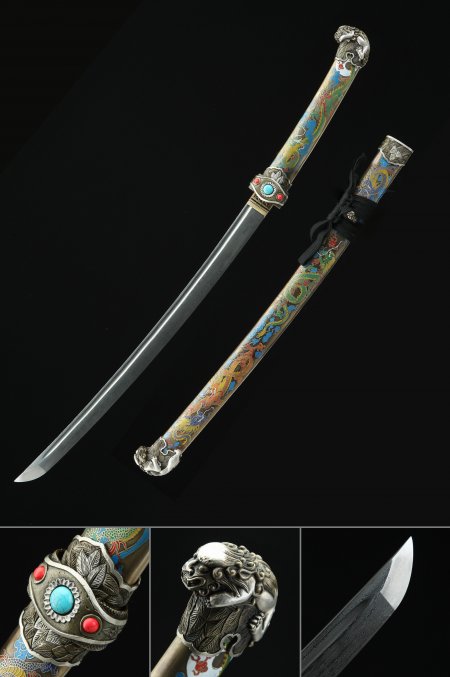
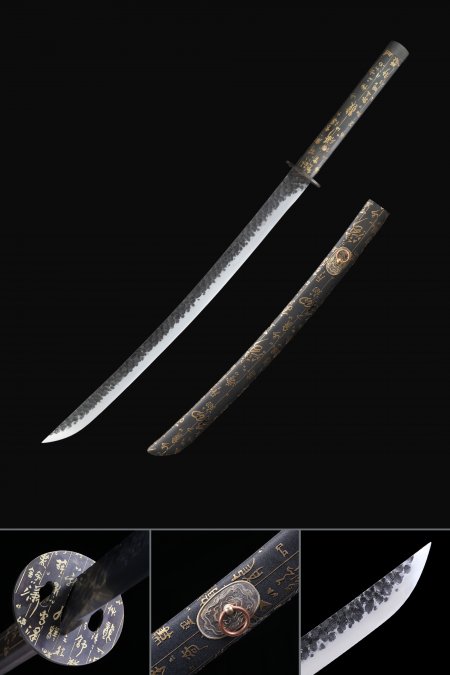
Showing 3 Products

Frequently Asked Questions

What makes bronze fittings distinctive on a wakizashi?
Bronze and bronze-toned fittings bring a warm, antiqued character to a wakizashi that polished silver or plain iron hardware simply cannot replicate. The alloy's natural golden-brown hue ages gracefully and creates a visual contrast against a darkened saya or a Damascus patterned blade. Historically, Japanese sword fittings - including the tsuba, fuchi, and kashira - were crafted from a range of metals, and bronze alloys were prized for their workability and surface richness. On a collector piece, bronze accents signal an attention to tonal harmony across the entire mounting, treating the sword as a unified art object rather than a blade with interchangeable hardware.
How does Damascus pattern steel differ from folded steel?
Damascus pattern steel and traditionally folded steel are often discussed together but are technically distinct. Traditional Japanese folded steel - tamahagane-based - was folded to refine carbon distribution and eliminate impurities, producing a blade with a subtle, directional grain. Modern Damascus pattern steel, as seen in several pieces in this collection, is created by forge-welding two or more steel alloys with differing carbon content, then manipulating the billet through twisting and drawing to produce visible layered or flowing surface patterns. The result is a striking aesthetic effect - each blade's pattern is unique - while also producing a blade with differential hardness characteristics suited for collector display. The visual grain on Damascus steel is far more dramatic and immediately readable than the subtle hada of traditionally worked steel.
How should I store a wakizashi to preserve its fittings?
Proper storage protects both the blade and the metalwork fittings from humidity and oxidation. For display, keep the wakizashi in a low-humidity environment - ideally below 60% relative humidity - away from direct sunlight, which can fade lacquered saya finishes over time. If storing horizontally in a saya, ensure the blade is lightly coated with a neutral blade oil such as choji oil before fitting it into the scabbard. Bronze and copper fittings benefit from occasional light buffing with a dry microfiber cloth to remove fingerprint oils, which are mildly acidic and can dull patina over time. Avoid abrasive polishes on decorative surfaces, as they can remove intentional antique finishes that contribute to the piece's aesthetic value.
What is a real hamon and why does it matter for collectors?
A real hamon - also called a natural hamon - is the transition line that appears along the blade edge as a result of differential hardening, a process in which clay is applied to the blade before heat treatment to control where rapid quenching occurs. The edge, exposed to quenching, becomes harder martensitic steel, while the spine retains a softer, more resilient structure. The boundary between these two zones appears as a misty, cloud-like line called the hamon, whose shape and activity are influenced by the clay pattern applied by the smith. An acid-etched hamon, by contrast, is a surface treatment applied to any blade regardless of its hardening process. For collectors, a real hamon represents genuine craft knowledge and a blade with authentic metallurgical structure - details that remain visible and verifiable over the lifetime of the piece.
Can a bronze wakizashi be paired with a katana for daisho display?
Yes - and for many collectors, this pairing is the ultimate goal. A daisho is the matched set of katana and wakizashi that became central to samurai identity during the Edo period, and presenting the two together as a display ensemble requires careful attention to visual cohesion. Bronze-accented wakizashi pair most naturally with katana that share similar saya finishes - black lacquer with gold engraving, for example - and fittings in the same metal family. Matching tsuba material, whether copper, brass-tone, or gemstone-inlaid, across both blades creates the unified composition that makes a daisho display read as intentional rather than assembled from mismatched parts. Explore our Katana collection for compatible full-size blades suited to daisho presentation.

Customer Reviews

De'andre Evans Colorado, United States

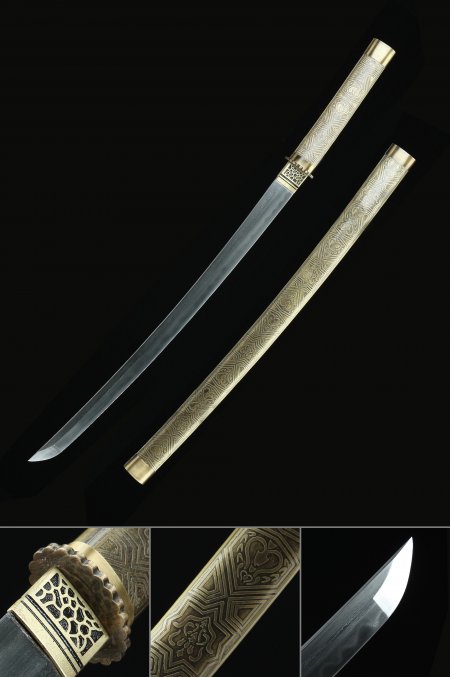
This sword is beyond gorgeous. The craftsmanship is absolutely impeccable!! It’s a sleek well balanced blade and razor sharp! The detail on the full bronze metal tsuka and saya is gorgeous! I am so happy with my purchase and will be returning for more. I highly recommend truekatana as they were fast to reply and very helpful! Thank you!
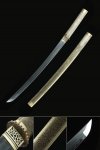
Damascus Steel Wakizashi with Real Hamon in Gold Engraved Saya and Geometric Gold Tsuba Damascus Steel Wakizashi with Real Hamon in Gold Engraved Saya and Geometric Gold Tsuba