Damascus Steel Yari
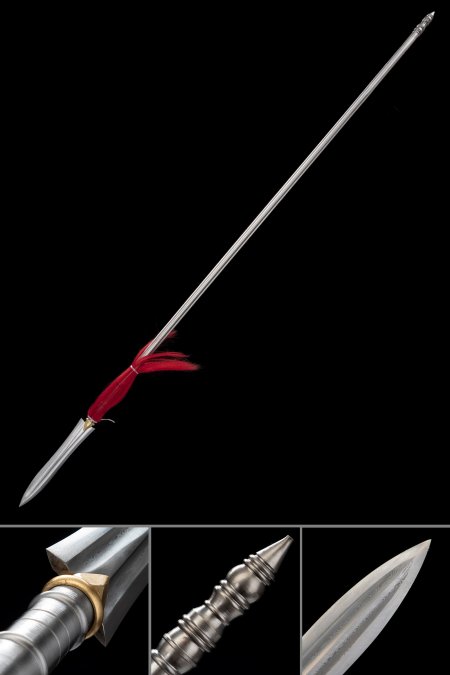
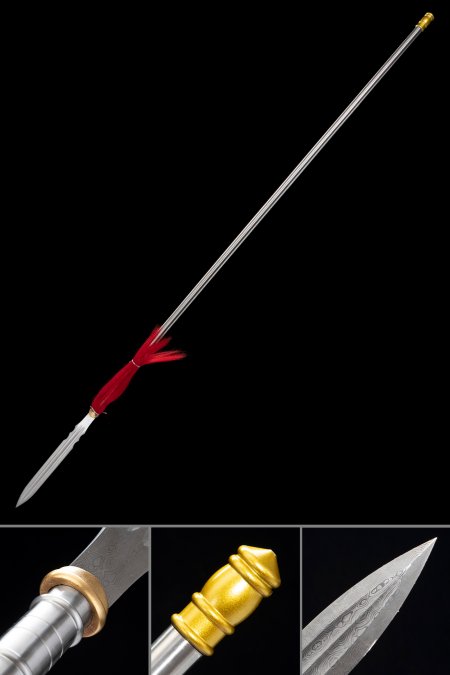
Damascus Steel Yari brings together the fluid pattern-welded layers of Damascus construction and the clean, thrusting geometry of Japan's iconic pole-mounted spearhead. Each piece is hand-forged and assembled for collectors who value both visual drama and authentic craftsmanship. Shipping is free, and returns are handled with the same care we put into every order.
Related Collections
Frequently Asked Questions
What makes Damascus steel yari different from standard yari spears?
The core distinction lies in the spearhead's construction. A standard yari spearhead is typically forged from a single alloy — mono-steel — giving it a uniform surface finish. A Damascus yari spearhead is built from multiple layers of steel alloys, folded and worked together until the surface reveals flowing grain patterns embedded through the full depth of the metal. Because the yari's narrow, straight geometry keeps the entire blade face unobstructed, those Damascus layers remain visible from tip to socket with no curvature interrupting the visual flow. This makes the Damascus variant a more visually dynamic collectible compared to its mono-steel equivalent, and the layering means each piece carries a surface pattern that is genuinely unrepeatable.
How long is a full-scale display yari, and does size affect display options?
Collectible Damascus yari in this range run approximately 80 to 82 inches in overall length, which reflects proportions documented for historical Japanese battlefield spears. At that scale, floor-standing display is impractical without a dedicated vertical stand, so most collectors opt for horizontal wall mounting using padded bracket sets. Many pieces in this category are designed as two-part assemblies — the staff breaks down into two sections that thread or pin together — making transport and storage far easier without affecting the finished appearance. When mounted horizontally, a full-length yari of this size creates one of the most commanding visual statements available in Japanese pole-weapon collectibles.
How should I maintain a Damascus spearhead on a display piece?
Damascus pattern-welded surfaces are more susceptible to oxidation than polished mono-steel because the etching or acid treatment used to reveal the grain slightly opens the surface texture. For display pieces kept indoors, a light application of camellia oil or a general-purpose blade oil every few months is sufficient to protect the patterned surface and maintain its depth of contrast. Avoid touching the spearhead directly with bare hands, as skin oils accelerate surface tarnishing over time. If the piece is displayed in a room with variable humidity — near a window or exterior wall — consider a silica gel pack inside the display enclosure. The staff sections should be checked at the joint periodically to ensure the connection remains snug and the alignment stays true.
Is a Damascus yari a good centerpiece gift for a Japanese history collector?
For a collector focused on Japanese feudal history, a Damascus yari occupies a category that most gift-givers overlook. Katana and tanto receive most of the attention in Japanese collectible gifting, but the yari was arguably more central to large-scale engagements of the Sengoku period, when formations of spear-bearing infantry defined battlefield outcomes. Gifting a full-scale Damascus yari acknowledges that broader historical context in a way that a blade alone does not. The Damascus patterning adds a level of visual distinction that elevates it beyond a generic replica, while the extended staff length makes it a genuine display statement rather than a shelf piece. It suits collectors who already own curved-blade pieces and are looking to expand into polearm forms.
What does the two-part staff design mean for long-term storage?
A two-part staff assembly means the pole breaks down at a midpoint joint, reducing the overall storage length by roughly half. This is particularly practical for yari in the 80-plus-inch range, which would otherwise require purpose-built storage solutions. The joint is typically secured by a threaded collar, a friction-fit pin, or a combination of both, and when assembled correctly it creates no visible gap or misalignment. For long-term storage, wrapping each staff section in a soft cloth sleeve prevents surface scratching and keeps the finish in display-ready condition. The spearhead section should be stored with its protective wrapping intact and the Damascus surface lightly oiled before any extended period off-display.