Free U.S. Shipping

Demon Slayer Sword

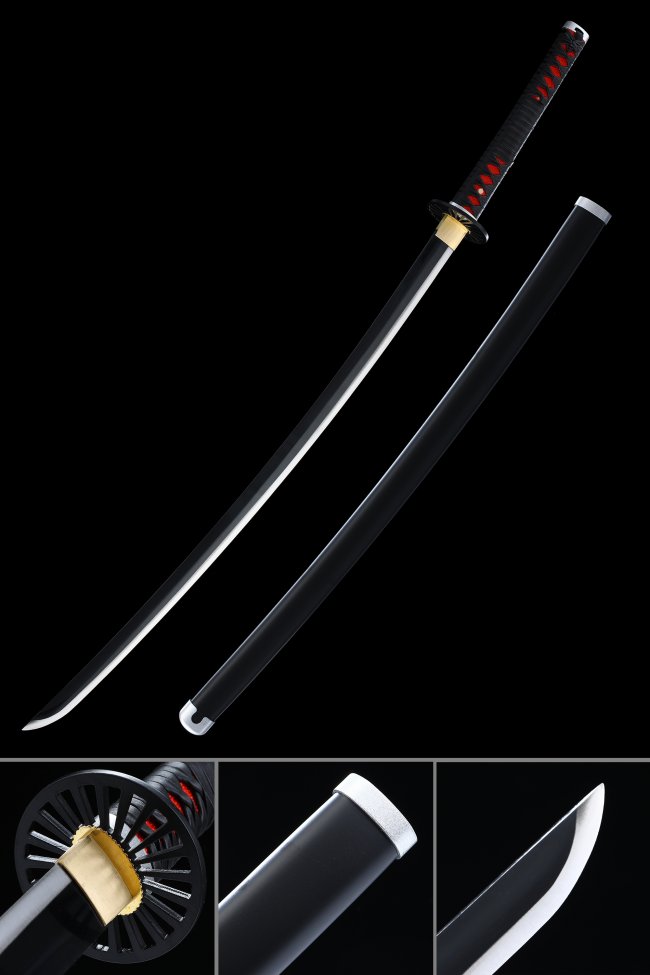
Every Nichirin blade in Demon Slayer has a personality — and so does every sword we carry. These aren't wall hangers or convention props. Each Demon Slayer katana here is hand-forged from 1045 carbon steel, tough enough to hold an edge and balanced enough to actually move with, not just look good on a shelf. The steel goes through a real heat treatment process, so the hamon line you see isn't painted on — it's there because the blade earned it. Whether you're hunting for Tanjiro's black blade, done with plastic cosplay replicas, or just want something that feels like the real thing in your hands, take a look at what we've got below.
Showing 12 Products

Related Collections

Frequently Asked Questions

What are the swords in Demon Slayer called?

The swords in Demon Slayer are called Nichirin Swords — 日輪刀, or "Sun Blade" in Japanese. In the story, they're forged from a rare ore that absorbs sunlight, which happens to be the one thing demons can't survive. What makes them stand out beyond that is the color system: every blade changes color the first time its owner draws it, shaped by their personality and breathing style. That detail is part of why these swords feel personal rather than interchangeable. Our replicas at TrueKatana are built around those specific character designs — real 1045 carbon steel, hand-forged, not a painted plastic prop.

What is the meaning of the engraving 悪鬼滅殺 on the sword?

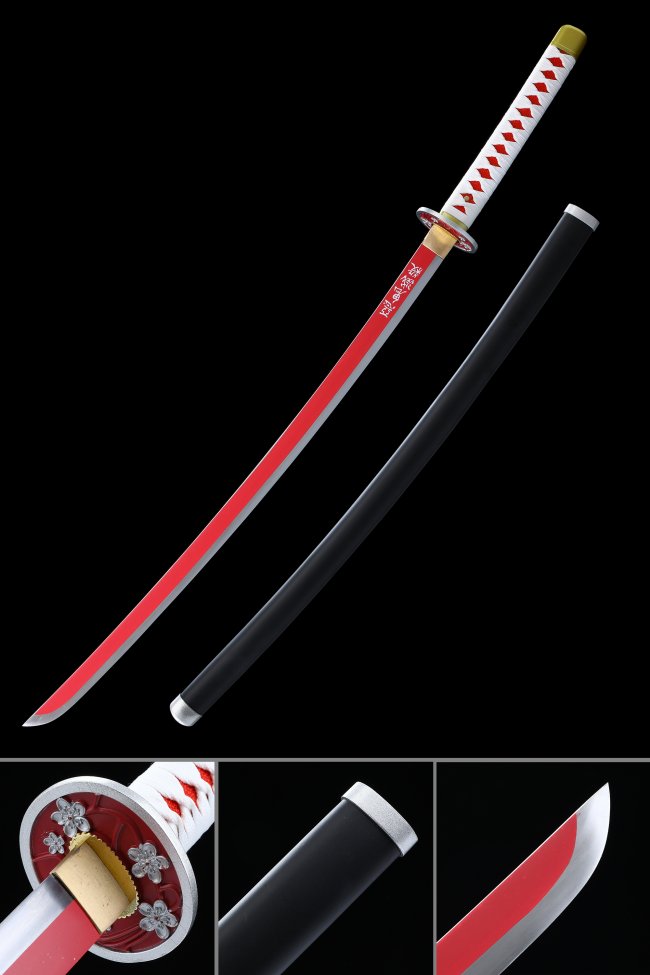
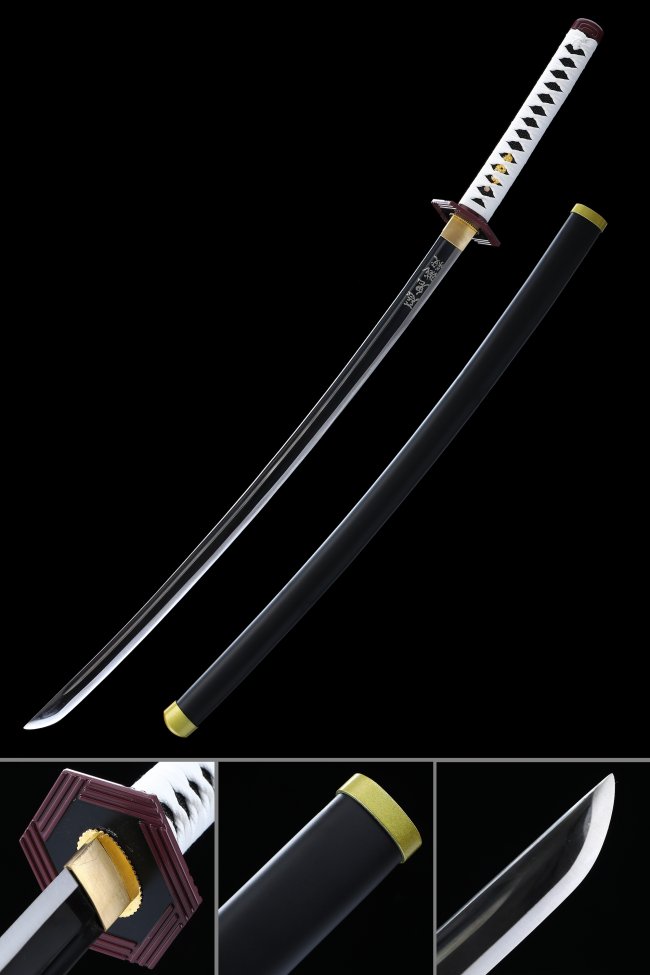
It reads "Akki Messatsu" — roughly translated as "Destroyer of Demons." In the anime, this engraving appears on the blades of Hashira-rank slayers, the most elite fighters in the Corps. Rengoku's sword is probably the most recognized example. On TrueKatana replicas, it's hand-etched directly into the blade — not a decal, not a print. If that detail matters to you as a collector, it's worth knowing the difference before you buy.

Why do different characters have different colored swords?

Each Nichirin blade takes on its color the first time the owner draws it — reflecting their personality, breathing style, and fighting instincts. Red for Flame Breathing like Rengoku. Yellow for Thunder Breathing like Zenitsu. Blue for Water Breathing like Giyu. Green for Wind, white for Mist, pink for Love. Tanjiro's black blade is the exception that the story deliberately leaves unexplained for most of its run. That color system is one of the reasons Demon Slayer sword collecting works so well — each blade is tied to a specific character in a way that generic anime merch usually isn't. At TrueKatana, every replica is designed around the character's actual blade, not a one-size-fits-all mold with different paint.

Are Demon Slayer swords real katanas?

The short answer is: they're inspired by real katanas, but they're not historically accurate ones. The anime's Nichirin blades use fictional materials with color-changing properties — none of that exists in real metallurgy. What does exist is the underlying structure: curved single-edged blade, full tang construction, wooden saya, traditional geometry. TrueKatana replicas are hand-forged carbon steel swords built on that real katana foundation, with character-specific fittings, blade colors, and engravings layered on top. Think of them as the overlap between traditional Japanese swordsmithing and anime design — not a costume prop, not a historical replica, something in between that does both reasonably well.

Which Demon Slayer sword is the most popular / best to buy?

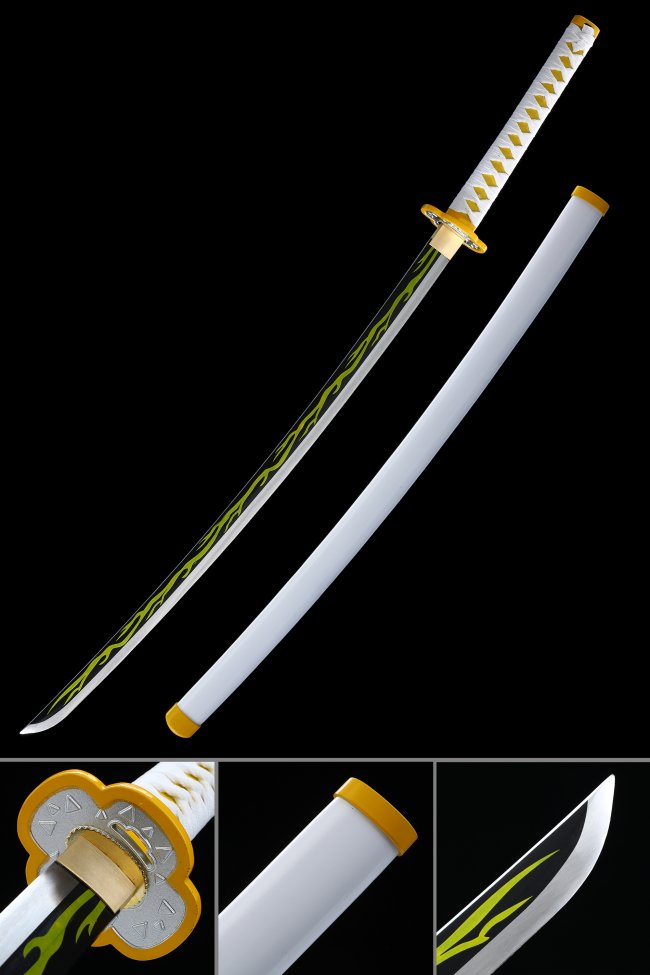
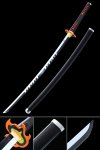
Tanjiro's black blade and Rengoku's flame sword are the top two by a clear margin. Tanjiro's is the obvious choice for anyone who followed the main story — the black blade is iconic and immediately recognizable. Rengoku's got a big boost from the Mugen Train arc; that movie turned him into one of the most loved characters in the series, and his sword design is striking enough to work even for people who just want something visually bold. Zenitsu's yellow thunder blade is a consistent third — the lightning pattern etched into the blade makes it one of the more distinctive-looking pieces in the collection. Beyond those three, it usually comes down to who your favorite character is. The personal connection is most of what makes these worth owning.

Can I bring a real metal Demon Slayer sword to an anime convention?

Check the convention's weapons policy before you pack anything. Most major North American conventions — Anime Expo, Otakon, Anime NYC — don't allow real metal swords on the floor, sharpened or not. The ones that do allow real-steel props almost always require peace bonding: a visible zip tie or ribbon attached from the hilt to the scabbard, confirming the weapon's been inspected and can't be quickly drawn. If you're not sure, email the convention's prop check desk before the event. Getting turned away at the door with a sword you drove four hours to show off is a bad situation. For conventions where metal is restricted, we carry bamboo and unsharpened display versions that pass most prop checks without issue.

Can I get a custom engraving on a Demon Slayer sword?

Custom engraving options are available on select TrueKatana Demon Slayer swords. Many fans choose to add their name, a meaningful phrase, or additional kanji to personalize their blade alongside the standard "悪鬼滅殺" engraving. Custom engravings make these swords exceptional gifts — especially for milestones like birthdays, graduations, or anniversaries. Check the individual product pages for engraving availability, or contact our team to discuss custom options for specific models. Engraved swords typically require a slightly longer production and shipping window to accommodate the customization.

What does a black sword mean in Demon Slayer?

Black is the rarest Nichirin color in the series, and for most of the story, even the swordsmiths who forge it can't explain what it means. The old belief was that black blade users had short, unlucky careers — which turned out to be more superstition than reality, probably because so few people had ever wielded one long enough to find out.

What the black blade actually represents becomes clearer toward the end of the series: it's connected to Sun Breathing, the original and most powerful technique in the Demon Slayer Corps. Tanjiro's blade reflects his potential before he's fully realized it — undefined, unclassified, outside the normal system. That ambiguity is deliberate. Most Nichirin colors map cleanly to a breathing style. Black doesn't, which is part of what makes it interesting both as a story device and as a collectible.

What are Demon Slayer swords made of?

In the anime, Nichirin blades are forged from a fictional ore called Scarlet Crimson Iron Sand and Scarlet Crimson Ore, mined from mountain peaks that are constantly exposed to sunlight. That sun absorption is what makes the blades lethal to demons — it's essentially weaponized sunlight in metal form. The ore doesn't exist in real life, but the forging process described in the series borrows heavily from traditional Japanese swordsmithing methods.

In the real world, Demon Slayer sword replicas are made from carbon steel or stainless steel. Carbon steel — 1045, 1095, or T10 depending on the grade — is the better choice if you want something that behaves like an actual sword: it takes a real edge, develops a genuine hamon through heat treatment, and ages the way steel is supposed to. Stainless steel is more rust-resistant but harder to sharpen and typically used on lower-cost decorative pieces. TrueKatana's replicas use 1045 carbon steel as the standard, with higher-grade options available for collectors who want more from the blade.

What are the swords called in Demon Slayer?

The swords in Demon Slayer are called Nichirin Swords — 日輪刀 in Japanese, which translates literally to "Sun Blade." They're the standard weapon of the Demon Slayer Corps, forged specifically to kill demons. Regular blades don't work against demons because their bodies regenerate too fast. Nichirin steel, having absorbed sunlight through the ore it's forged from, carries the one thing demons can't heal through.

They're also sometimes called "Color Changing Katanas" — because every blade takes on a unique color the first time its owner draws it, shaped by the wielder's personality and breathing style. That color-locking moment is one of the more memorable visual devices in the series. Beyond the general term, individual swords are usually referred to by character: Tanjiro's Nichirin blade, Rengoku's flame sword, Zenitsu's thunder blade, and so on.

What does a red sword mean in Demon Slayer?

Red appears in two different contexts in the series, and they mean different things depending on who's holding the blade.

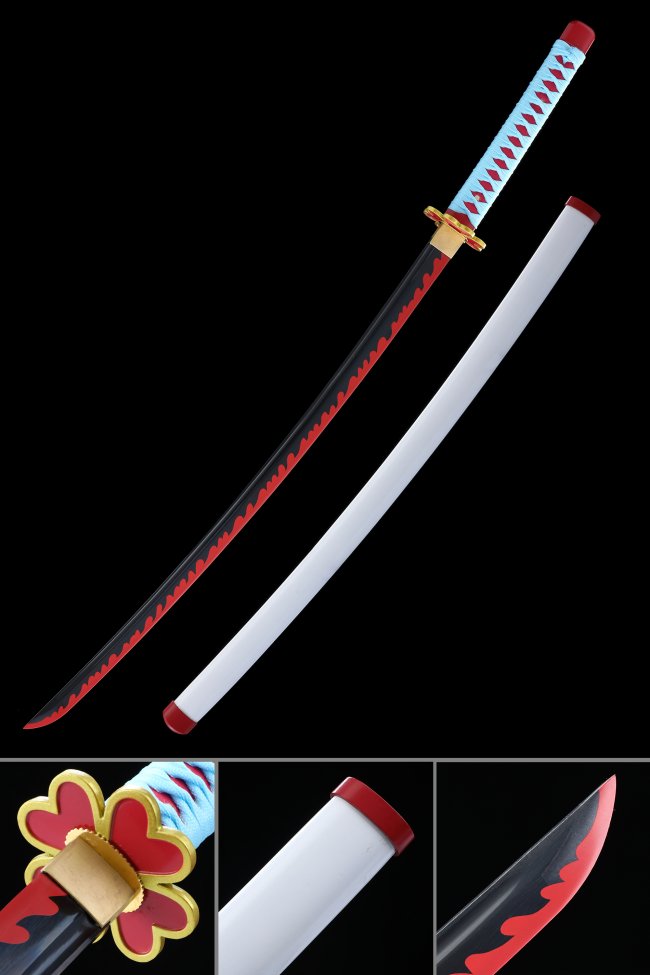
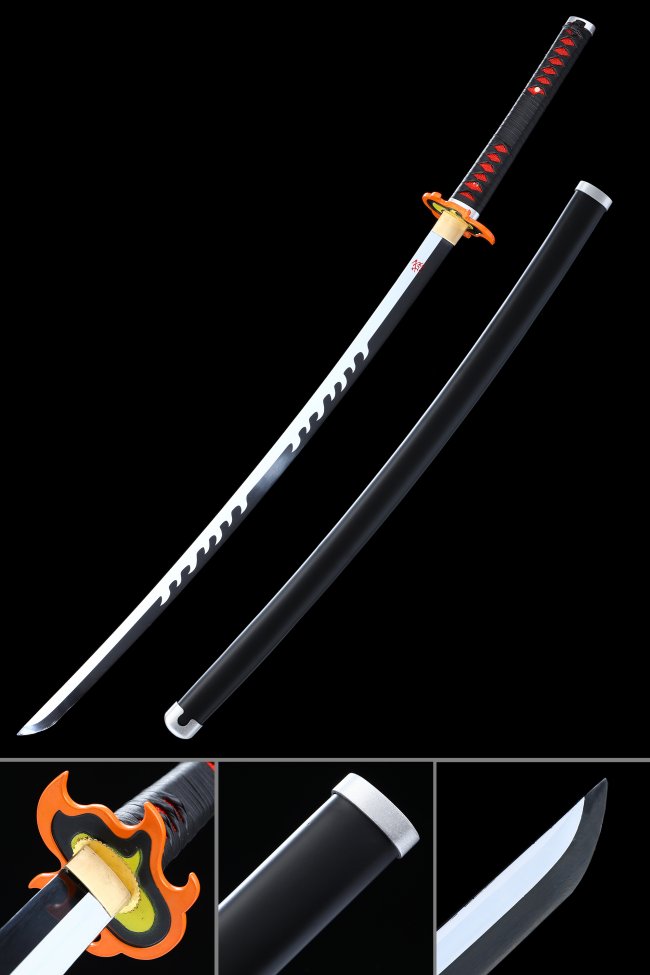
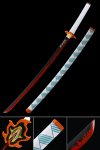
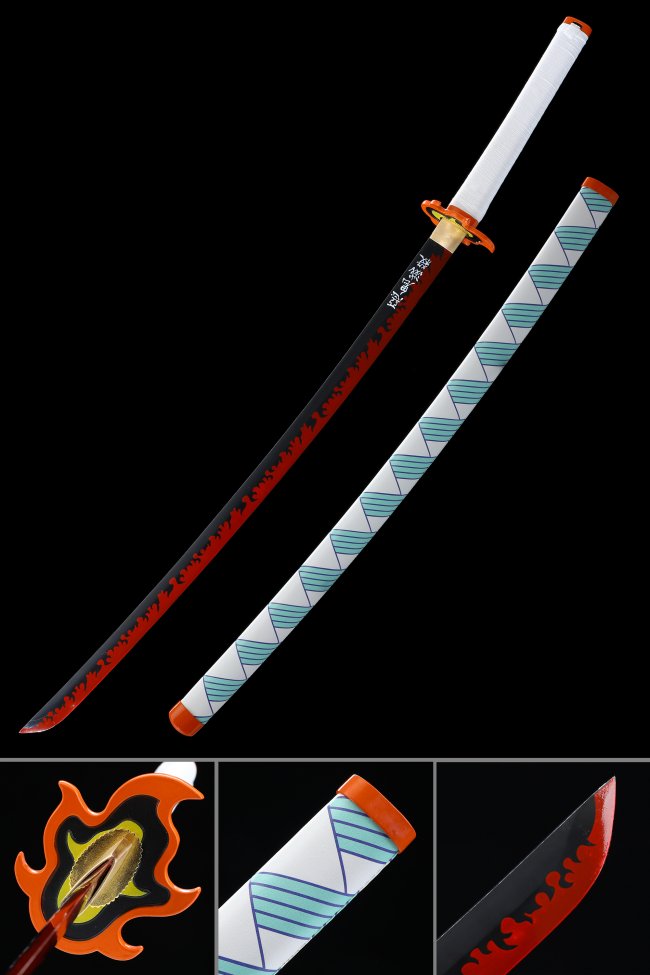
For Kyojuro Rengoku and other Flame Breathing users, the red or flame-patterned Nichirin blade is a straightforward reflection of their breathing style — fire, heat, forward momentum. Rengoku's sword is probably the most recognized red blade in the series, and the flame-shaped tsuba adds to that visual identity.

The second context is more significant. When a Nichirin blade turns a deep, vivid red through the application of extreme pressure — as seen with Yoriichi Tsugikuni and, briefly, with Tanjiro — it represents a blade performing at its maximum potential. In that state, the sword can suppress a demon's regeneration entirely, not just wound them. Yoriichi's blade held that color naturally, which reflects his standing as the strongest Demon Slayer in the history of the Corps. For Tanjiro, reaching that state is one of the defining moments of his arc.

Who makes the swords in Demon Slayer?

Nichirin blades are made by a specialized group called the Swordsmith Village — a hidden community of craftsmen who've spent generations forging weapons for the Demon Slayer Corps. Their location is kept secret because they're an obvious target: no swordsmiths, no new blades, no Corps.

The swordsmiths work with the specific ore — Scarlet Crimson Iron Sand and Scarlet Crimson Ore — that gives Nichirin blades their demon-killing properties. After a Demon Slayer passes Final Selection, they're brought to choose their ore, and a swordsmith is assigned to forge their blade. The smith then delivers the finished sword personally. It's a relationship that continues throughout the slayer's career: if a blade breaks, the swordsmith is expected to repair or replace it, which creates an ongoing connection between maker and wielder that runs through several character arcs in the series.

The most notable swordsmith in the story is Haganezuka, who forges Tanjiro's blades — and who takes it personally every time Tanjiro destroys one.

What do sword colors mean in Demon Slayer?

Each Nichirin blade changes color the first time it's drawn, reflecting the wielder's personality and the breathing style they're most suited to. Here's what the main colors represent:

Black — Sun Breathing. Rare, unexplained for most of the series, associated with unlimited potential. Tanjiro's blade.

Red / Flame — Flame Breathing. Heat, intensity, forward momentum. Rengoku's blade. A deeper, brighter red achieved through pressure also indicates a blade at maximum performance.

Yellow — Thunder Breathing. Speed, precision, explosive strikes. Zenitsu's blade.

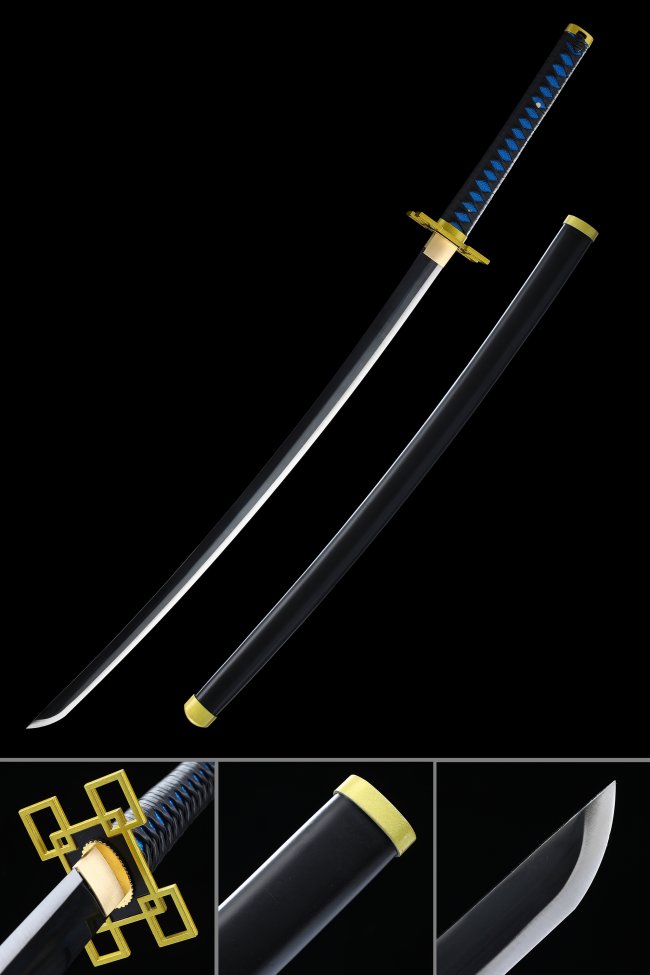
Blue — Water Breathing. Fluid, controlled, adaptive. Giyu's blade.

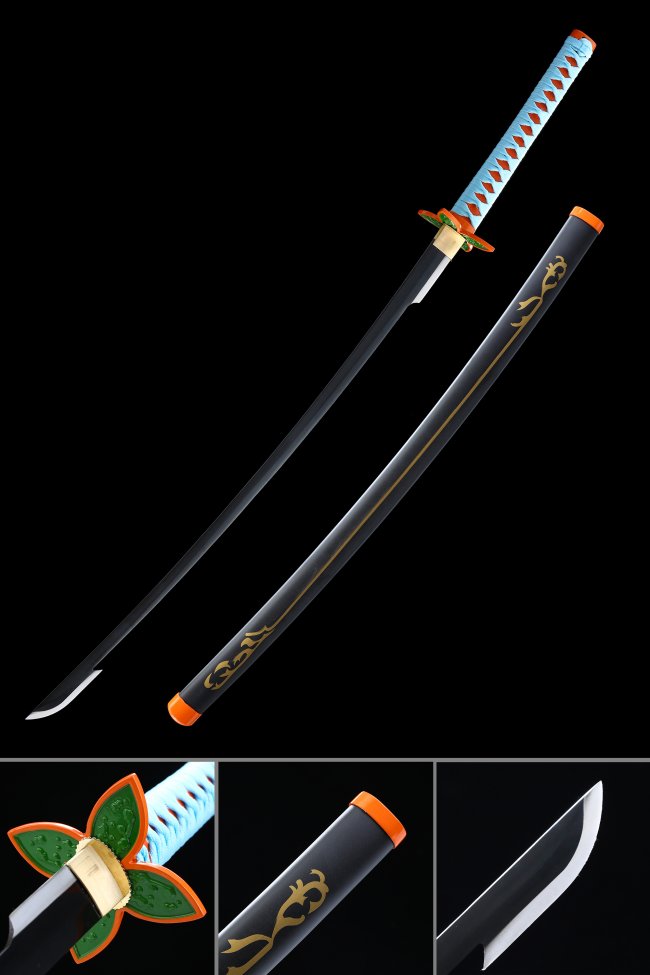
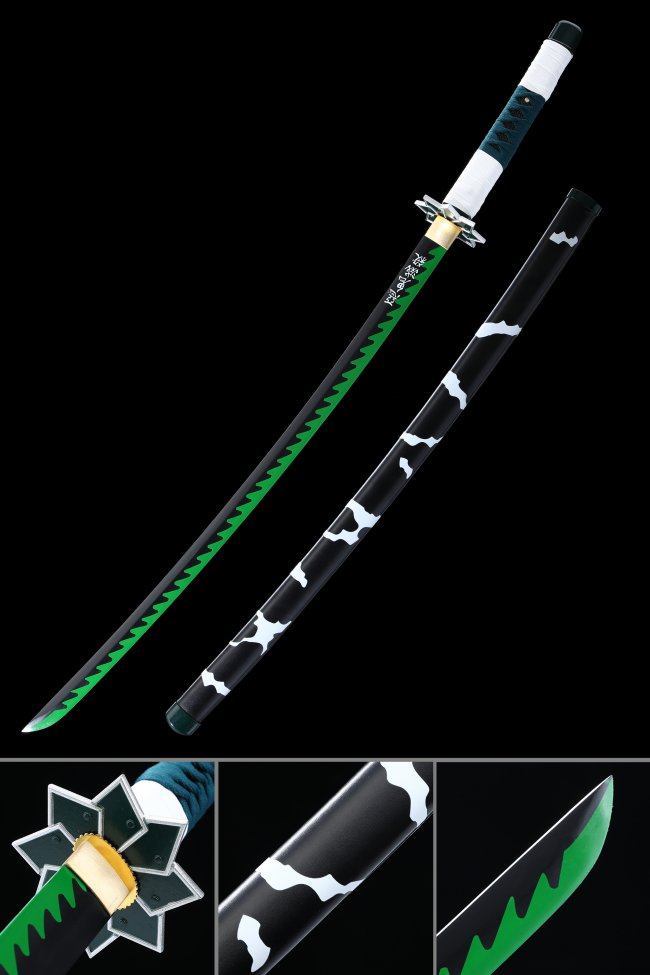
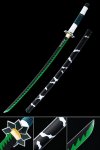
Green — Wind Breathing. Relentless, aggressive, unpredictable. Sanemi's blade.

White — Mist Breathing. Subtle, deceptive, hard to read. Muichiro's blade.

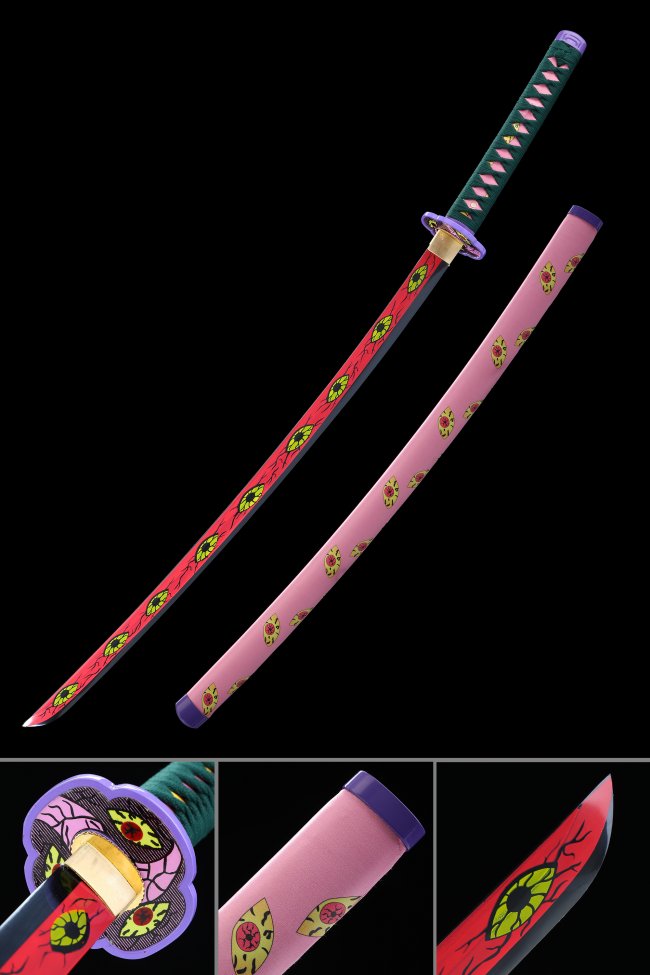
Pink — Love Breathing. Graceful and deceptively powerful. Mitsuri's blade.

Gray — Stone Breathing. Steady, immovable, brute force. Gyomei's blade.

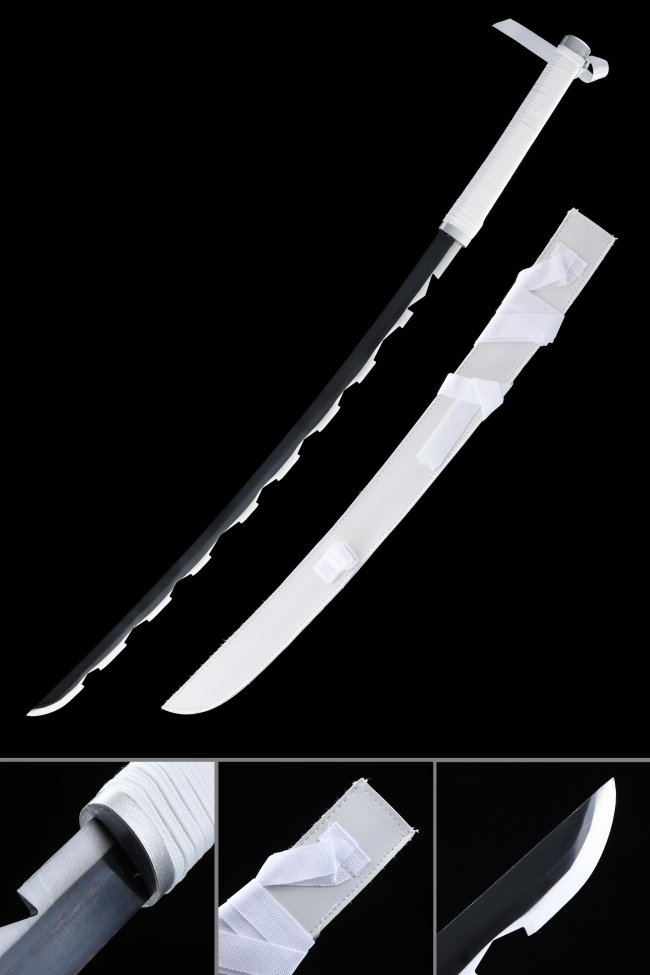
Indigo-gray — Beast Breathing. Instinct-driven, chaotic, self-taught. Inosuke's blades — which he chips himself to make more effective.

The system isn't perfectly rigid — some characters develop their own breathing styles, and the blade color reflects where their natural aptitude lies rather than a strict assignment.

Are the sword effects in Demon Slayer real?

The visual effects — the water waves from Giyu's Water Breathing, the flames from Rengoku's strikes, the lightning around Zenitsu's sword — are not real. They're animation techniques used to visualize what the breathing styles feel like rather than literal physical phenomena. In the world of the series, breathing techniques enhance physical performance: speed, strength, precision, endurance. The elemental visuals are how the animators communicate that intensity to the viewer.

What is real in the series is the physical outcome: cuts that would be impossible for an ordinary person, speeds that can't be tracked with the naked eye, and the ability to behead demons cleanly enough that the Nichirin steel can do its job. The effects are metaphor rendered visually. Ufotable — the studio behind the anime — is particularly good at making those visuals feel kinetic rather than decorative, which is a significant part of why the fight sequences in Demon Slayer hit the way they do.

How many Demon Slayer swords are there?

In terms of named, character-specific blades that appear meaningfully in the story, the count depends on how broadly you define "Demon Slayer sword." If you're counting every Hashira plus the main trio and key supporting characters, you're looking at somewhere between 12 and 15 distinct blade designs.

The core ones: Tanjiro (black), Rengoku (flame/red), Zenitsu (yellow), Inosuke (dual indigo-gray), Giyu (blue), Shinobu (pale lavender, needle-thin), Muichiro (white), Mitsuri (pink, whip-like), Sanemi (green), Gyomei (gray, flail rather than katana), Obanai (twisted serpentine blade), Tengen Uzui (dual cleavers), Yoriichi (red), and Kokushibo (crescent-shaped moon blade, six-eyed).

Beyond the main cast, background Demon Slayer Corps members carry Nichirin blades that go largely unnamed. For collecting purposes, the 12–14 named character designs are what most replica makers — including TrueKatana — build their lineup around.

How much does a Demon Slayer sword cost?

It depends almost entirely on what you're actually buying.

Plastic and foam replicas run $25–$60. They work for kids and low-stakes cosplay, but they're not swords in any meaningful sense — they're props.

Entry-level real-steel replicas using carbon steel start around $80–$120. At this price point you're getting a hand-forged blade, full tang construction, and character-accurate fittings. That's TrueKatana's core range, and it's where most buyers land.

Mid-range collector pieces — 1095 carbon steel, clay-tempered, with more refined fittings and finishing — typically run $150–$250. The difference is mostly in blade performance and detail work rather than the overall design.

High-end functional swords using T10 tool steel, genuine rayskin handles, and hand-polished finishes can reach $300–$500 or more. These are built for people who care as much about the sword as they do about the character.

Above $500, you're generally looking at custom work or limited production pieces from specialist smiths.For most Demon Slayer fans who want something real to display or give as a gift, the $80–$150 range hits the right balance between quality and value. You get a sword that actually feels like a sword, not a prop — without spending collector money on a display piece.

What is the difference between a Demon Slayer sword and a Nichirin sword?

A Nichirin sword is the in-universe name for the special swords used by Demon Slayers in Kimetsu no Yaiba. So in the anime, a “Demon Slayer sword” usually means a Nichirin sword. These blades are forged from sunlight-absorbing materials and are used by the Demon Slayer Corps to fight demons.

In shopping and SEO terms, though, “Demon Slayer sword” is a broader phrase. Buyers may use it to describe any sword replica inspired by the anime, including Tanjiro’s sword, Rengoku’s sword, Zenitsu’s sword, Shinobu’s sword, or other character weapons. “Nichirin sword” is more specific and closer to the story’s official weapon name.

Customer Reviews

I had to order a gift last minute (12/16) and was super nervous but Truekatana pulled through, was true to their advertising and delivered as promised. My gift arrived on 12/23 and it is exactly what I expected/ordered, perfect. Thank you! My only critique, to show fairness is that I didn't receive a shipping confirmation (adding to the super nervousness). Considering the whole experience I will still give 5 stars and order from them in the future.

Inosuke Sword - Kimetsu No Yaiba Beast Hashira Nichirin Replica, 1045 Carbon Steel, Jagged Edge Inosuke Sword - Kimetsu No Yaiba Beast Hashira Nichirin Replica, 1045 Carbon Steel, Jagged Edge Verified Purchase
Loading more reviews...

Subscribe to our emails

GET 20% OFF TODAY

Subscribe to our emails to receive the latest special offers and private events. We'll send a coupon code to your email shortly.

Get Coupon Code