What is a sageo, and why does gold matter on a tachi?
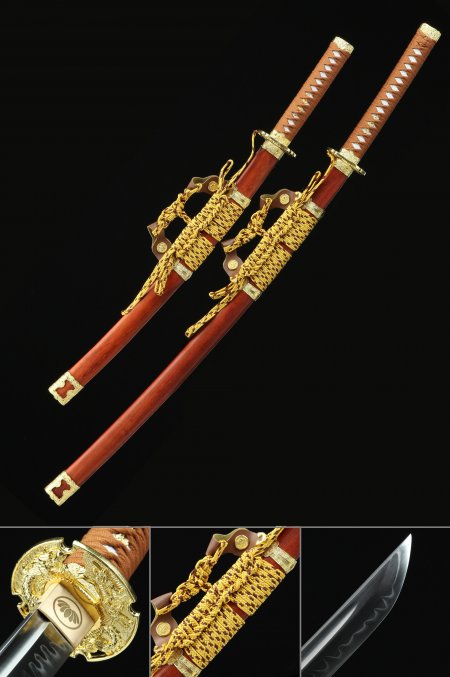
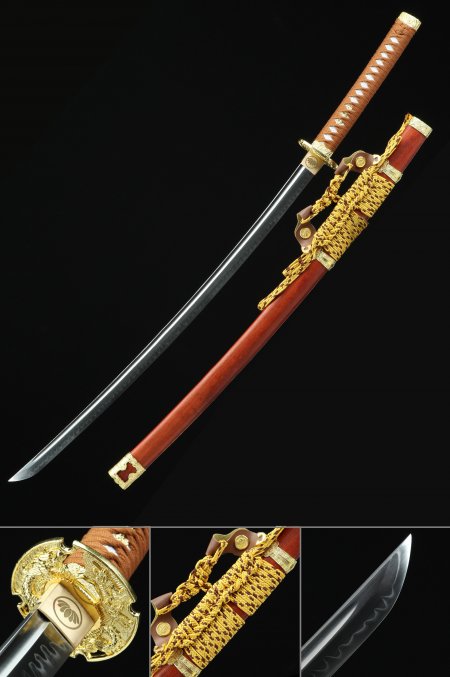
The sageo is a braided silk or synthetic cord threaded through the kurigata - a small knob on the saya - and used to secure the scabbard to the wearer's obi. On a katana, the sageo is often understated because the sword rides edge-upward and the saya faces inward. On a tachi, which is suspended edge-downward with the saya prominently exposed, the sageo becomes a visible design element seen by everyone nearby. Gold was historically associated with court rank and warrior aristocracy, making a gold sageo a clear statement of prestige in period contexts. For today's collector, a gold sageo anchors the color palette of the entire piece, coordinating with gilded tsuba, gold-wrapped ito, and lacquered saya in a way that reads as intentional and refined rather than incidental.
How does a tachi differ from a katana in blade geometry?
The most measurable difference is curvature and length. A tachi typically carries a deeper sori - the arc from the mune-machi to the tip - and a longer nagasa, often 70 cm or more along the cutting edge. This curvature was optimized for a drawing motion performed on horseback, where the sword needed to clear the scabbard in a sweeping arc rather than a rapid upward pull. The tachi also tends to position its widest point of curvature closer to the middle of the blade rather than near the habaki, giving it a more fluid, crescent-like silhouette. These geometric differences are not cosmetic - they change how the sword balances in the hand and how it reads visually on a display stand. Collectors who place a tachi and katana side by side immediately notice that the tachi commands more presence due to its pronounced sweep and extended profile.
Is Damascus steel or high-carbon steel better for a display tachi?
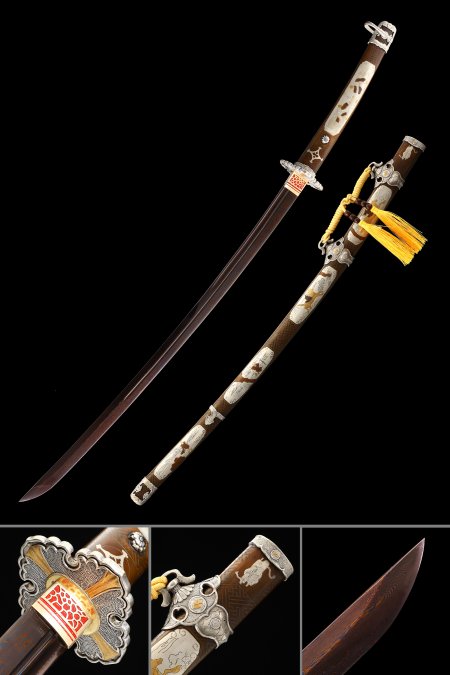
Neither is objectively superior - they offer different visual and tactile experiences that suit different collector preferences. Damascus-forged blades are distinguished by a flowing hada pattern created through repeated folding and forge-welding of two or more steel types. This pattern is unique to every blade and gives the surface a textured, almost painterly quality that rewards examination under directional lighting. High-carbon steels like T10 and 1060, by contrast, are valued for their hamon - the temper line produced by clay differential hardening. T10 in particular contains trace tungsten that supports a crisp, well-defined hamon with visible activity in the nioi. For display purposes, Damascus blades photograph dramatically and suit spotlight or accent lighting, while hamon-bearing high-carbon blades reveal their detail best under raking natural light. Many serious collectors eventually acquire both types to represent different traditions of the craft.
How should I store a tachi to preserve the saya and fittings?
Long-term storage of a tachi requires attention to three factors: humidity, orientation, and metal maintenance. Humidity should be kept between 40-60%; levels above this accelerate rust on the blade and can cause lacquered saya to crack or bubble as the wood substrate expands and contracts. A silica gel packet placed inside the display case or storage bag manages ambient moisture effectively. For orientation, a tachi should be stored edge-downward on a purpose-built rack - the same suspension direction it was historically carried - which keeps the blade's weight evenly distributed along the curve and prevents the habaki from pressing unevenly against the koiguchi over time. Regarding the metal, apply a light coat of choji oil or mineral oil to the blade every 3-6 months using a soft cloth, being careful not to over-saturate. Avoid touching the blade surface with bare hands, as skin oils accelerate oxidation. Gold-tone fittings can be wiped gently with a dry microfiber cloth to remove dust without scratching.
Are these tachi appropriate as display pieces or gifts for collectors?
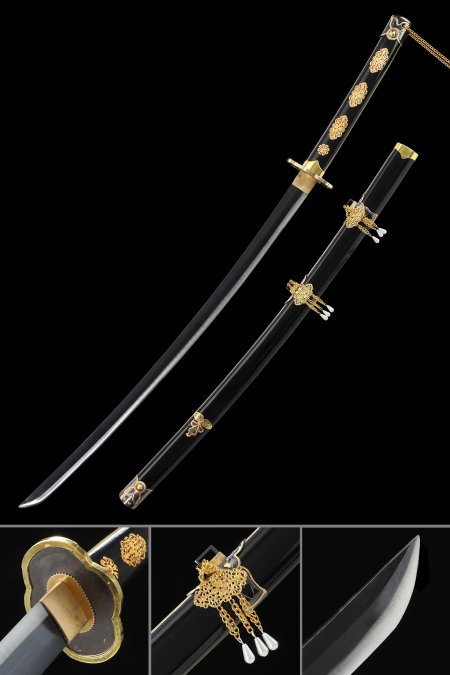
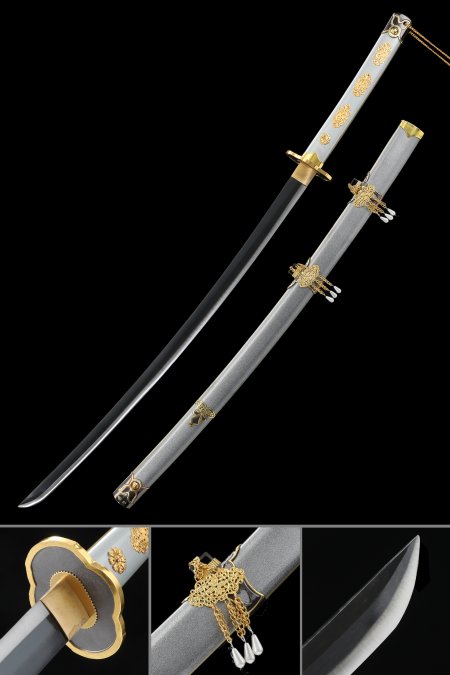
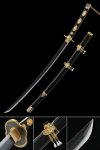
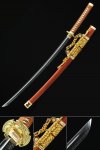
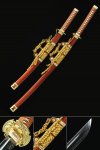
These pieces are designed and sold as collectibles and display items, making them well-suited for both personal collections and considered gifts. For display, the combination of a gold sageo, ornate tsuba, and lacquered saya means the sword presents beautifully on a horizontal stand, a wall mount, or inside a glass display case without requiring additional styling. As a gift, the Touken Ranbu-themed Tsurumaru Kuninaga replicas carry cultural narrative that fans of the franchise will recognize immediately, while the Damascus and T10 pieces appeal to collectors who prioritize craftsmanship over thematic reference. When gifting, a matching sword stand or a maintenance kit with choji oil and a soft cleaning cloth makes a thoughtful addition that signals awareness of the care these pieces deserve.