What makes a hamidashi guard different from a standard tsuba?
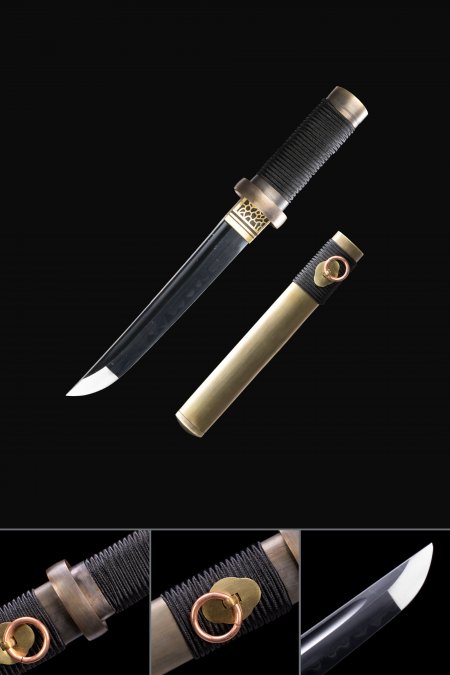
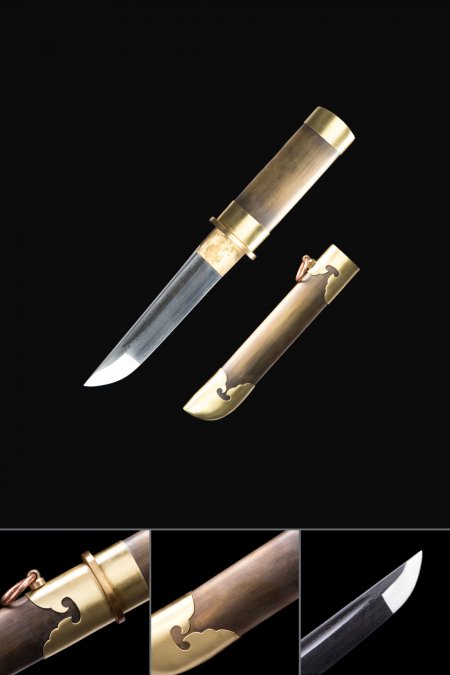
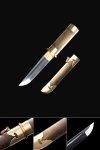
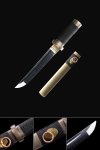
A standard tsuba is a full circular or shaped guard that extends well beyond the handle's width, providing a clear visual break between hilt and blade. A hamidashi guard, by contrast, is dramatically reduced in size — often little more than a thin disc that barely protrudes past the handle's profile. This minimalist design was a deliberate stylistic tradition in Japanese tanto fittings, conveying elegance through restraint rather than ornamentation. The result is a blade that appears longer and more unified in silhouette, making it a favorite among collectors who appreciate classical Japanese aesthetics. The hamidashi style is relatively rare compared to full-tsuba configurations, which adds to its appeal as a collectible display piece.
Why is the saya finished in gold on these tanto collectibles?
The gold lacquer finish on the saya is rooted in Japanese koshirae tradition, where scabbard color and finish were used to signal rank, taste, and artisan patronage. Gold-finished saya were associated with high-status presentation pieces and ceremonial mounts rather than everyday carry. On a modern collectible tanto, the gold saya serves a similar purpose — it elevates the entire assembly into a display-focused piece where visual harmony between scabbard, fittings, and blade is the primary consideration. Brass habaki and menuki components in the same warm tonal family create a cohesive look that makes these tantos particularly striking when displayed on a stand or mounted in a case.
How does T10 carbon steel differ from folded Damascus in these tantos?
T10 carbon steel is a high-carbon tool steel known for its fine, consistent grain structure. In a collectible tanto, a T10 blade can be finished with a dark or blackened polish that creates sharp tonal contrast against gold fittings and saya — a bold, graphic display aesthetic. Folded Damascus steel, on the other hand, is prized for its visible layered patterning produced through repeated forge-welding. Each Damascus blade carries a unique organic surface pattern, making it a one-of-a-kind display object. Where T10 rewards a clean, minimalist presentation, Damascus invites close inspection and rewards the viewer who spends time studying the surface detail. Both are valid choices depending on whether a collector prioritizes bold contrast or intricate surface character.
How should I store and maintain a gold saya tanto display piece?
For long-term display care, store the tanto horizontally or on a dedicated stand away from direct sunlight, which can fade lacquer finishes over time. The blade should be lightly coated with a neutral blade oil — choji oil is traditional, though mineral oil works well — and wiped clean before reinserting into the saya to prevent moisture transfer to the interior. Inspect the saya interior periodically for any trapped humidity, especially in climates with seasonal moisture fluctuations. The gold lacquer surface of the saya can be gently wiped with a soft, dry cloth; avoid chemical cleaners that can strip the finish. Brass fittings will develop a natural patina over time, which many collectors consider an enhancement rather than a flaw.
Is a Gold Saya Hamidashi tanto a good gift for a Japanese culture enthusiast?
It is an excellent choice for someone who appreciates Japanese craft history and aesthetic traditions. The combination of a rare guard style, a visually striking gold scabbard, and a hand-forged blade makes this type of tanto a meaningful display piece rather than a generic decorative item. It suits collectors at any level — the hamidashi guard style offers an immediate conversation point for someone new to Japanese sword fittings, while the koshirae details reward more experienced collectors who will recognize and appreciate the traditional assembly. Pairing it with a quality display stand enhances the gift considerably and allows the recipient to showcase it properly from day one.