What makes hamidashi different from a standard tanto guard?
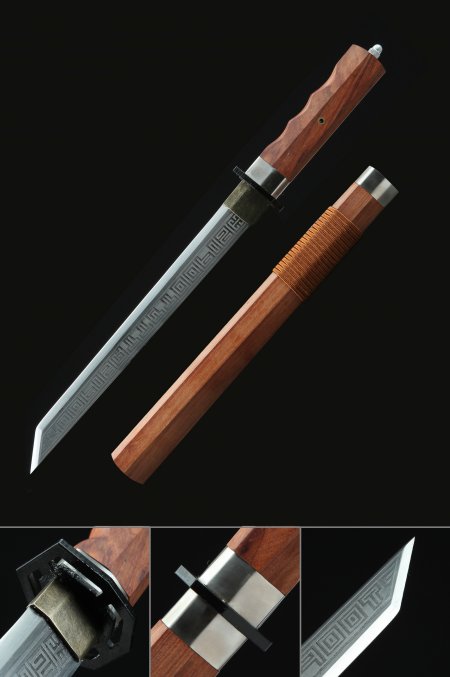
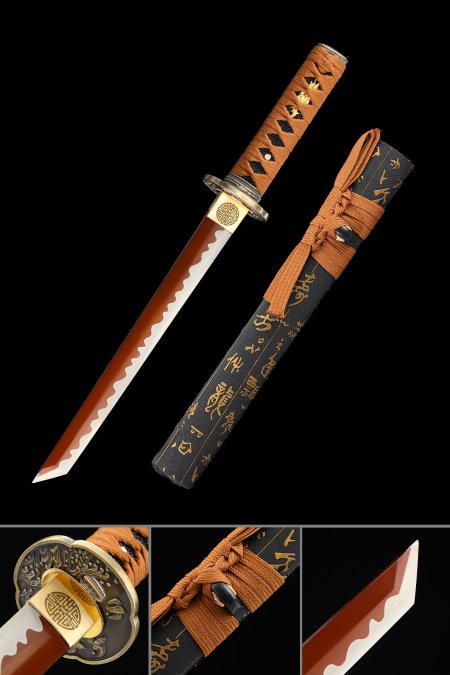
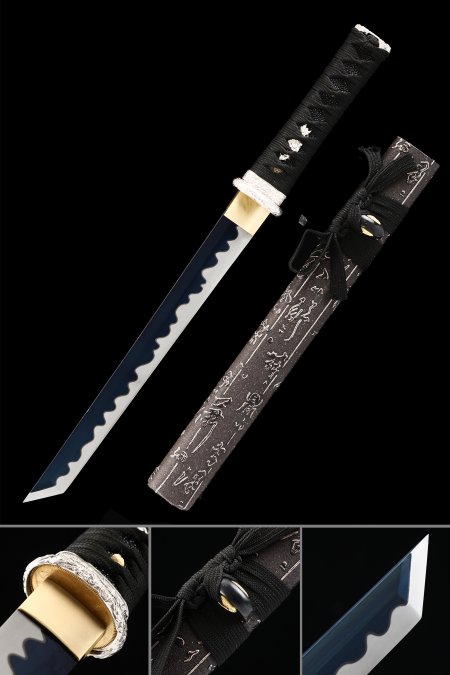
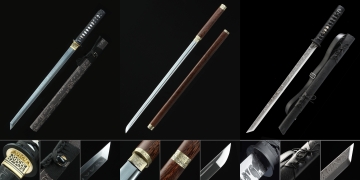
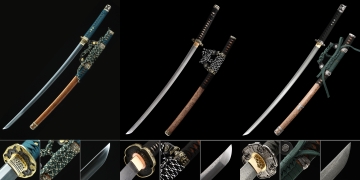
A standard tanto typically features either no tsuba (a style called aikuchi) or a full circular guard. The hamidashi occupies the middle ground — its tsuba is present but extends only minimally beyond the handle profile, creating a low-profile oval or rounded-square shape that barely clears the tsuka. This design was historically favored for close-quarters civilian carry because it allowed faster, less obstructed drawing. From a collector's standpoint, the hamidashi form gives the tanto a sleek, uninterrupted silhouette that lets the saya, tsuka wrap, and blade finish carry the visual weight rather than a dominant guard.
How does T10 clay-tempered steel differ from manganese steel in a tanto?
T10 is a high-carbon tool steel with roughly 1.0% carbon content, and when clay-tempered it undergoes differential hardening — the edge reaches a higher Rockwell hardness than the spine, mimicking the traditional Japanese tamahagane process. This produces a visible hamon (temper line) on the blade surface, which is a genuine metallurgical feature, not an etched decoration. Manganese steel, by contrast, uses manganese as an alloying element to improve toughness and wear resistance at moderate carbon levels. It does not produce a natural hamon but offers excellent structural resilience and is less sensitive to humidity — an advantage for long-term display in varying climates. For collectors who prioritize visual authenticity and traditional craft markers, T10 clay-tempered is the higher-prestige choice. For those who value durability and lower maintenance demands, manganese steel is a practical and still visually impressive option.
What should I use to maintain a brown saya and keep it looking its best?
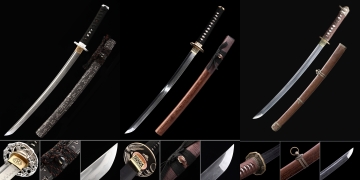
Brown saya finishes — whether lacquered hardwood or oil-rubbed rosewood — benefit from minimal but consistent care. For lacquered saya, wipe the surface periodically with a soft, dry microfiber cloth to remove dust and fingerprint oils. Avoid petroleum-based polishes, which can cloud lacquer over time. For natural wood saya with matte or oiled finishes, a very light application of camellia oil (the same oil used on the blade) on a clean cloth can restore warmth to the grain without leaving a greasy residue. The blade itself should be cleaned with a soft cloth, lightly oiled with camellia or mineral oil, and stored with the edge facing upward inside the saya to prevent oil from pooling on the lacquer floor. Store horizontally in a low-humidity environment away from direct sunlight to prevent the wood grain from warping or the lacquer from yellowing prematurely.
Are brown hamidashi tanto good as display gifts for collectors?
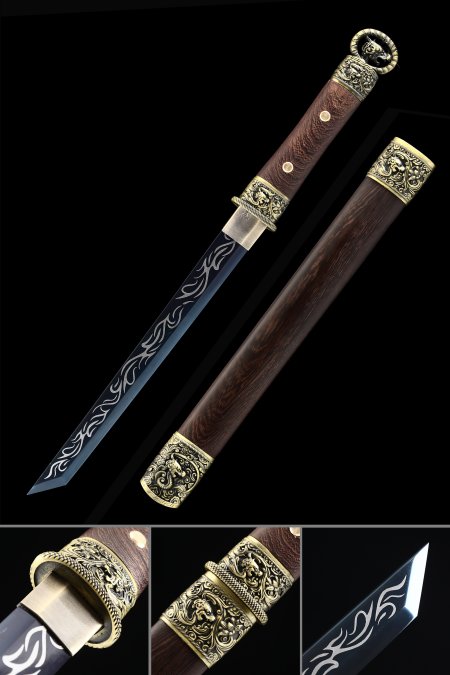
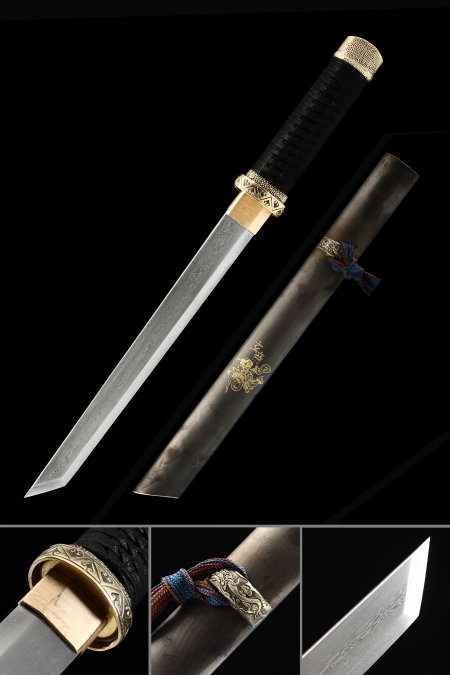
Brown hamidashi tanto make genuinely considered gifts for collectors precisely because the color palette and form factor feel intentional rather than generic. The warm brown saya tones coordinate naturally with wooden display stands and wall mounts, meaning the recipient can incorporate the piece into an existing display without a color conflict. Full-tang construction and quality steel materials also signal that the piece was selected for its craft merit, not just surface aesthetics. If the recipient collects thematically — by blade finish, hardware style, or historical period — a hamidashi tanto with engraved fittings, dragon-theme brass hardware, or a clay-tempered hamon blade gives them a conversation-worthy piece with genuine technical details to appreciate over time.
How does a brown hamidashi compare visually to a blue or black hamidashi?
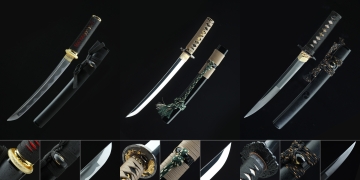
The three colorways serve very different display personalities. Blue hamidashi tend to feature chemically etched or acid-treated blades with cool, high-contrast visuals — they read as modern and dramatic on a display wall. Black hamidashi typically use deep lacquer saya and darkened fittings for a monochrome, minimalist aesthetic that references the formal restraint of samurai court attire. Brown hamidashi occupy a warmer, more naturalistic middle ground — the rosewood, hardwood, and amber-toned lacquer finishes evoke aged materials and traditional workshop aesthetics. Collectors building a diverse display often find that a brown hamidashi provides visual balance between the cooler and darker colorways, anchoring an arrangement without competing for attention.