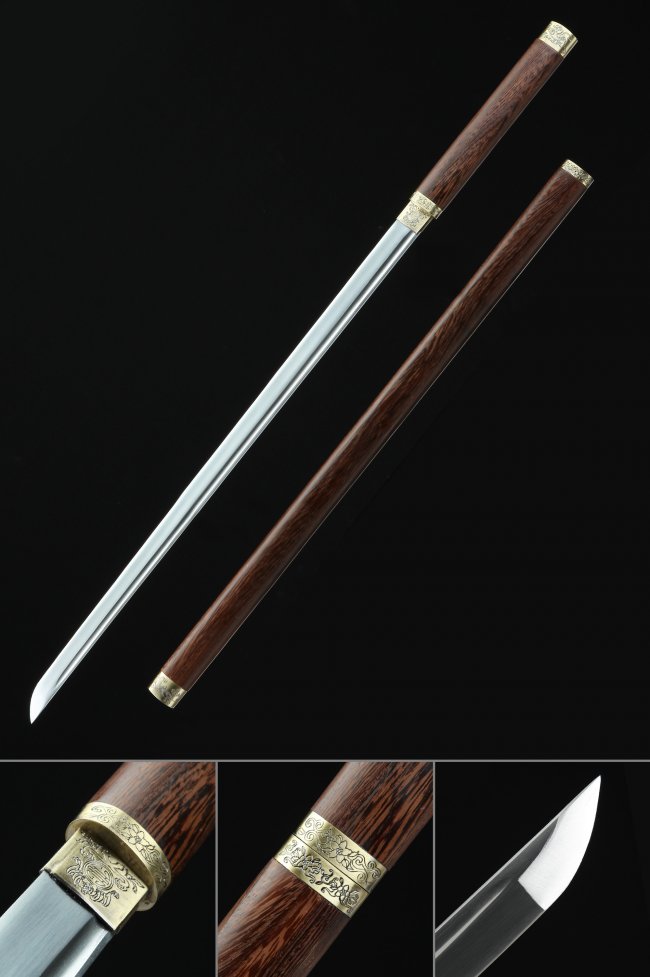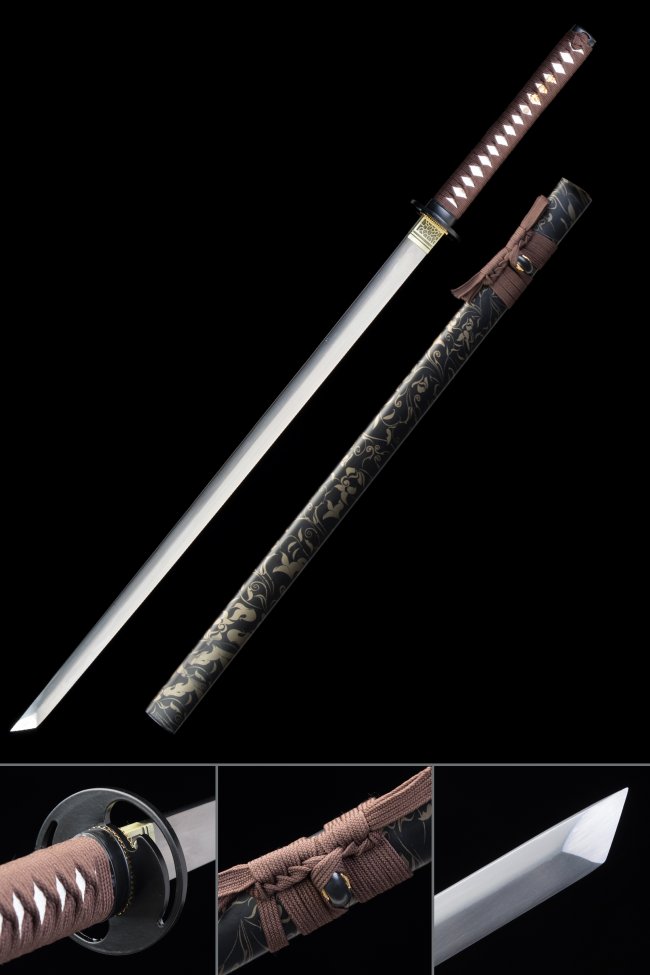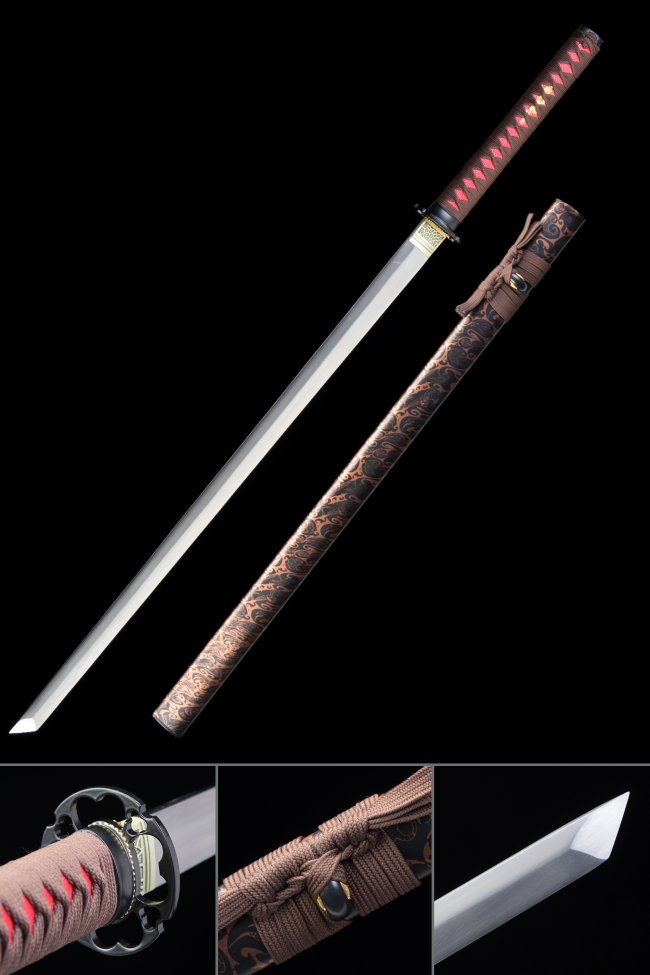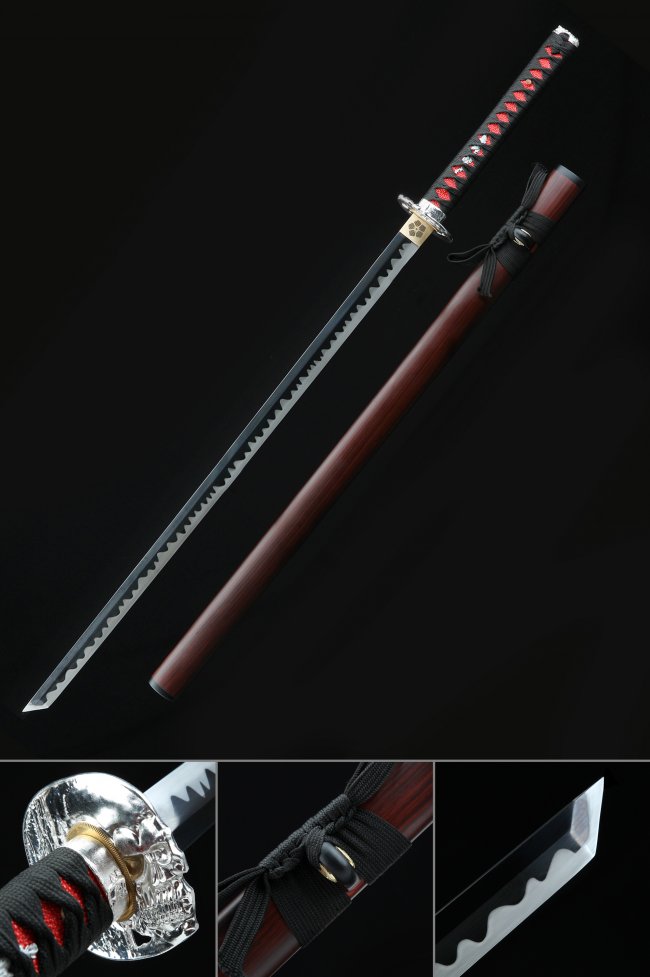
Brown Ninjato

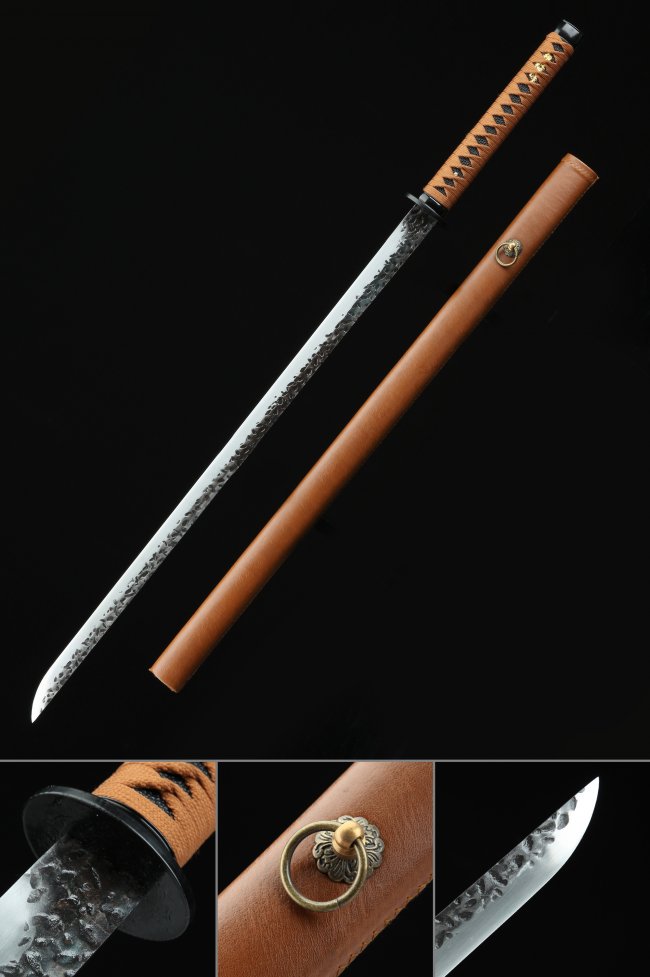
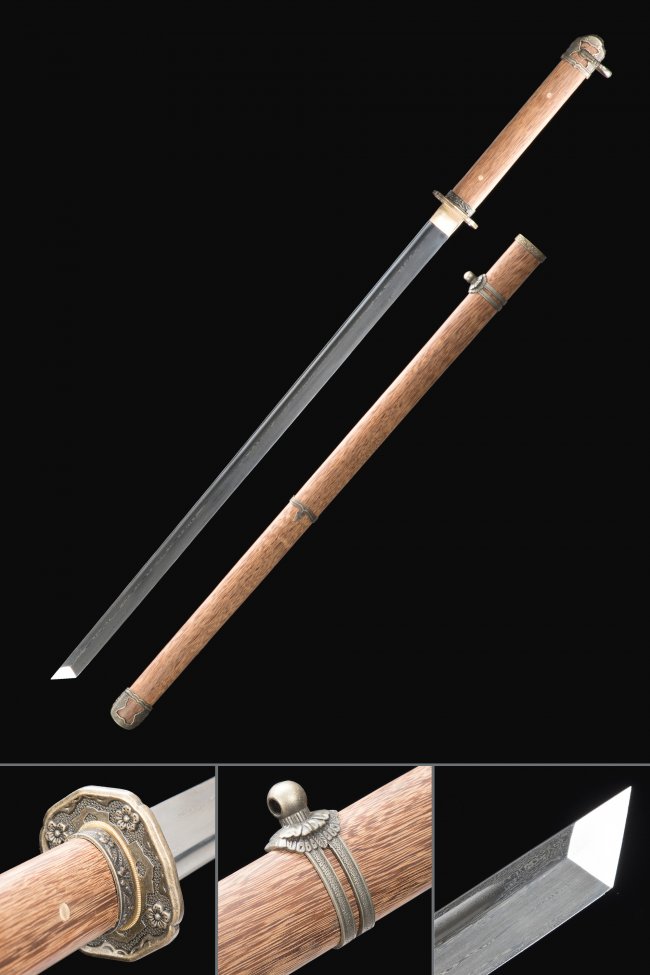
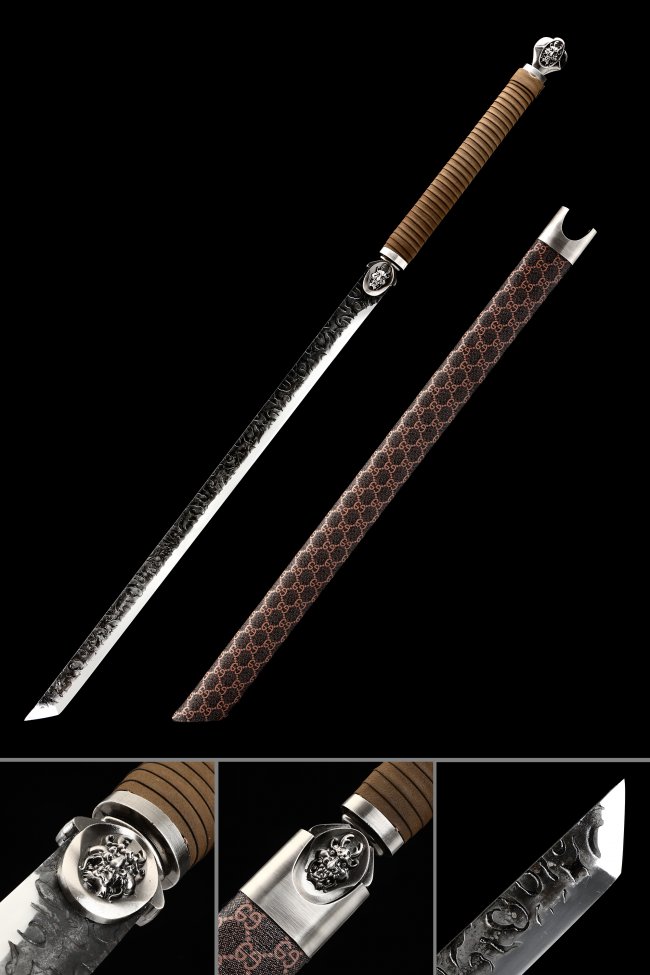
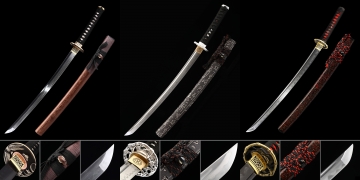
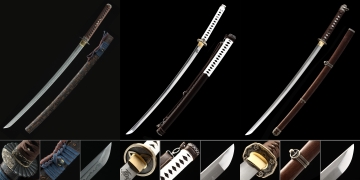
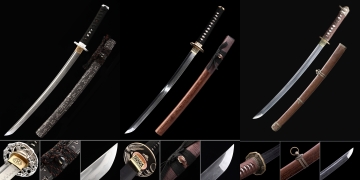
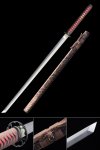
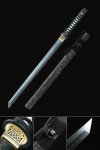
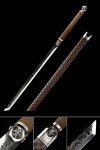
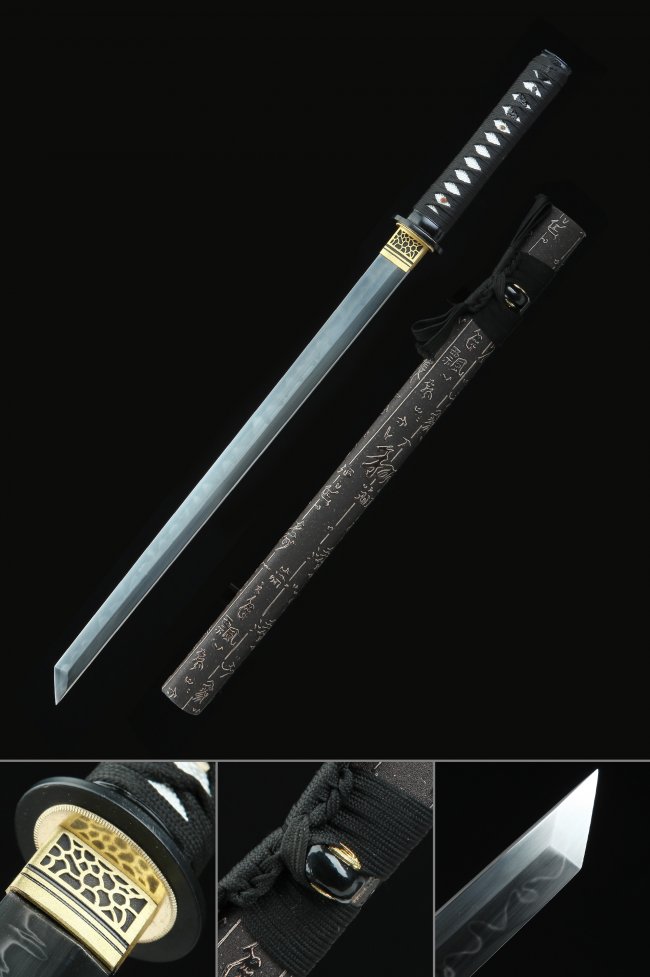
A brown ninjato carries something the flashier finishes never quite capture - a quiet confidence rooted in earth tones and honest craftsmanship. Each piece in this collection pairs hand-forged blades in 1045 carbon steel, T10 steel, or manganese steel with warm brown sayas, cord wrappings, and richly detailed fittings that reward a close look. Built on full-tang construction for structural integrity and finished with collector-grade koshirae, these ninjato are made to be displayed with pride. Every order ships free with hassle-free returns.

Showing 8 Products

Related Collections

Frequently Asked Questions

What steel types are used in brown ninjato blades?
The brown ninjato pieces in this collection use three distinct steel types, each with different characteristics worth knowing. Manganese steel is high in manganese content, which improves toughness and surface hardness - it holds engraved patterns well and resists chipping, making it a practical choice for detailed decorative work. 1045 carbon steel is a mid-range carbon steel (approximately 0.45% carbon) that balances workability with durability and takes polishing and fittings cleanly. T10 tool steel has a higher carbon content and is typically clay-tempered, a process that creates differential hardness along the blade and produces a visible hamon - the temper line collectors look for as a sign of authentic heat-treatment technique. Each steel type suits a different collecting priority: manganese for visual impact, 1045 for classic form, and T10 for metallurgical authenticity.
How does a ninjato differ from a katana in construction?
The most immediately visible difference is blade geometry. A katana features a pronounced curved blade optimized for drawing cuts, while a ninjato is characteristically straight or only slightly curved, with a shorter overall length. The ninjato also tends to have a more squared tsuba (guard) compared to the round or oval guards common on katana, and the saya is typically straight rather than curved to accommodate the blade profile. From a construction standpoint, both can be built full-tang - meaning the steel extends continuously through the handle - but the ninjato's handle-to-blade ratio and the tsuka (handle) geometry differ from katana standards. For collectors, this means a ninjato and a katana displayed together offer genuine visual contrast in silhouette, profile, and fittings, making them natural companions in a themed arrangement rather than redundant duplicates.
What does clay tempering do, and why do collectors value it?
Clay tempering - known as tsuchioki in Japanese blade tradition - involves coating the blade spine with a clay mixture before the final quench in water or oil. The clay insulates the spine, causing it to cool more slowly than the exposed edge. This differential cooling creates two zones of hardness in a single blade: a harder, more resilient edge and a tougher, more flexible spine. The boundary between these zones becomes the hamon, the wavy or irregular temper line visible along the blade. For collectors, the hamon is significant because it cannot be faked through acid etching with the same visual complexity that a genuine clay-temper produces - it's a direct record of the metallurgical process. T10 steel clay-tempered ninjato in this collection carry that authentic production detail, which is why they're often highlighted as the higher-end collectible tier within the brown ninjato category.
How should I store and maintain a display ninjato long-term?
Proper storage significantly extends the life of both the blade and the fittings. For blades - especially carbon steel types like 1045 and T10 - apply a thin coat of choji oil or mineral oil every few months to prevent oxidation. Use a soft, lint-free cloth and apply lightly; excess oil can attract dust and degrade handle wrapping over time. Store the ninjato horizontally or at a low angle with the edge facing upward if on a rack - this keeps oil from pooling unevenly. Avoid storing in leather saya for extended periods, as untreated leather can trap moisture. Humidity is the primary enemy of carbon steel blades: aim for a stable environment between 40-55% relative humidity. If displaying in a case, consider placing silica gel packets nearby. Periodically check that the tsuka (handle) remains firmly fitted, as wood can shift slightly with seasonal humidity changes.
Is a brown ninjato a good choice as a gift for a collector?
A brown ninjato works particularly well as a gift when the recipient already has an interest in Japanese blade tradition or is building a display collection with an earthy, cohesive aesthetic. The warm brown tones - appearing across the saya, cord wrapping, and sometimes the blade finish itself - make these pieces visually distinctive in a way that standard black-finished ninjato are not. For a first-time collector, a manganese steel piece with detailed engraving and a leather saya offers strong visual impact at an approachable level. For someone more experienced, a T10 clay-tempered ninjato with a visible hamon is a more technically meaningful choice that signals you understand the craft. Pairing a ninjato with a coordinating piece - such as a brown sageo tanto - creates a natural two-piece display set that elevates the gift from a single item to a cohesive collecting moment.

Customer Reviews