Blue Hamidashi
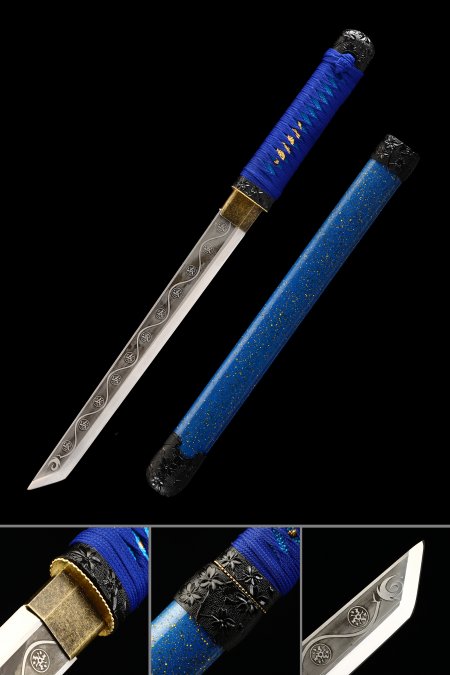
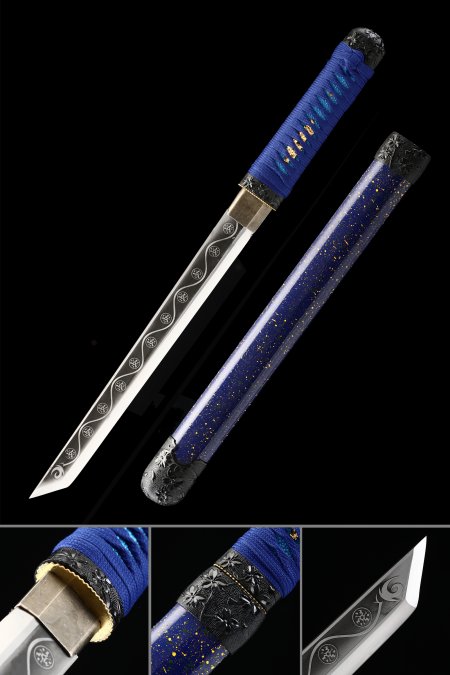
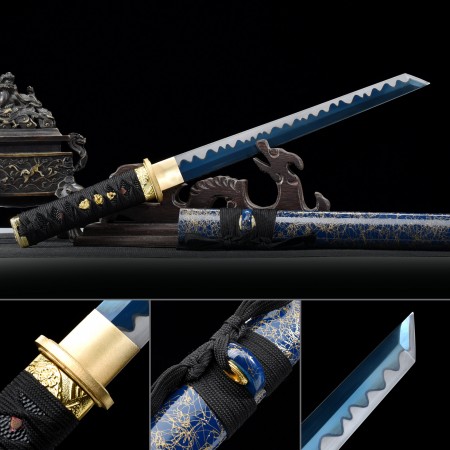
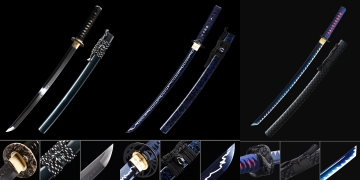
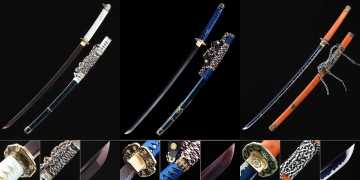
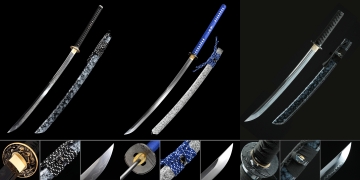
The Blue Hamidashi collection brings together tanto-length blades dressed in rich blue lacquer saya, cord-wrapped handles, and ornate tsuba - each piece a study in traditional Japanese aesthetic sensibility. Crafted from carbon and manganese steel with hand-engraved blade details, these collectibles honor centuries of Japanese smithing tradition while making a bold visual statement on any display stand or shadow box. Every order ships free with hassle-free returns, so adding a standout piece to your collection is entirely risk-free.
Related Collections
Frequently Asked Questions
What defines a hamidashi compared to a standard tanto?
A hamidashi is distinguished by its ko-tsuba - a small guard that sits flush with or just barely beyond the habaki (blade collar). A conventional tanto is often assembled without any tsuba at all, giving it a more austere, utilitarian appearance. The hamidashi's guard, even though compact, signals a higher degree of formal presentation. In a collection context, this makes the hamidashi a more visually complete display piece: the guard frames the transition between handle and blade, drawing the eye along the full length of the assembly. The blue hamidashi takes this a step further by coordinating tsuba finish - gold chrysanthemum or geometric designs - with the lacquered saya and wrapped handle, creating a unified aesthetic that a bare tanto simply cannot achieve.
What is the difference between 1045 carbon steel and manganese steel in these collectibles?
1045 carbon steel contains roughly 0.45% carbon and is prized for its traditional grain character and matte finish that echoes historical Japanese blade aesthetics. It polishes to a warm, slightly grey tone that suits collectors drawn to historical authenticity. Manganese steel, by contrast, incorporates manganese as a primary alloying element, which increases surface hardness and makes it significantly more receptive to detailed engraving work. If the ornamental wave patterns or floral motifs on a blade are a priority for you, the manganese steel pieces in this collection deliver crisper, more durable surface detail. Neither material is superior in an absolute sense - they serve different collector preferences, and understanding the distinction helps you choose the piece that aligns with what you value most in a display collectible.
How should I store a blue lacquer saya to prevent damage?
Blue lacquer saya are finished with layered urushi-style coatings over a shaped wood core, and the two materials respond differently to environmental changes. The most common damage collectors encounter is micro-cracking in the lacquer surface caused by rapid humidity fluctuations. Aim to store your hamidashi in an environment with relative humidity between 45-55% - a sealed display case with a small silica gel humidity buffer works well. Avoid positioning the piece near air conditioning vents, heating registers, or south-facing windows where direct sunlight accelerates both lacquer fading and cord deterioration. Horizontal storage on a fitted stand distributes the weight evenly and prevents the saya from warping at the mouth over time. A quick visual inspection every few months catches any early surface changes before they develop further.
Does the blue ito cord wrap require any maintenance over time?
Blue ito - the cord used to wrap the tsuka (handle) - is typically made from cotton, silk, or synthetic fiber depending on the piece. Silk ito is the most visually refined but also the most sensitive: oils from handling can dull its sheen and gradually weaken the fibers at contact points. Cotton and synthetic ito are more forgiving but can loosen slightly over years if the handle is frequently handled. For display collectibles, the simplest maintenance practice is to minimize direct skin contact with the handle wrap and to wipe the tsuka lightly with a dry microfiber cloth to remove any dust that settles into the diamond-pattern gaps. If you display the piece in an open room rather than a sealed case, a UV-filtering display cover will slow the gradual color shift that all dyed cords experience under ambient light exposure.
How does a blue hamidashi pair with other collectibles for a themed display?
A blue hamidashi works beautifully as a chromatic anchor in a multi-piece Japanese blade display. Pairing it with pieces from the Black Tsuba Hamidashi or Brown Scabbard Hamidashi collections creates a tonal contrast study - cool cobalt against warm amber lacquer and matte black guard work - that draws the eye across the full arrangement rather than focusing on a single piece. For a thematically cohesive room setting, a Black Sake Set placed on the same display surface introduces complementary Japanese decorative objects without competing visually with the blades. Collectors who build displays around a consistent color narrative find that the blue hamidashi, with its unified saya-ito-tsuba palette, functions as an ideal focal point from which the rest of the arrangement can radiate.