Blue Manganese Steel Hamidashi
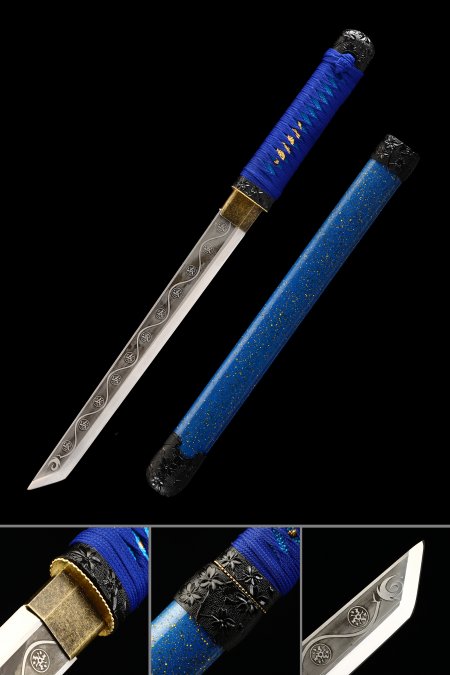
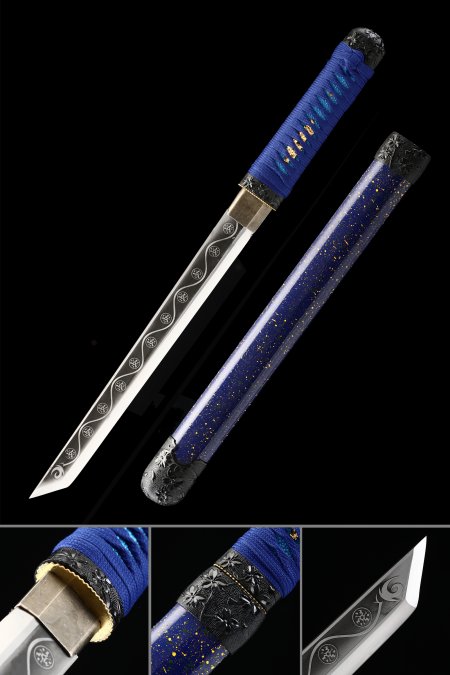
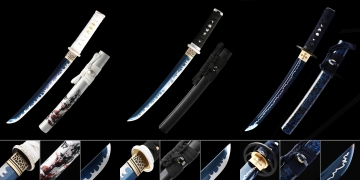
Blue manganese steel hamidashi represent a refined intersection of traditional Japanese short-blade craftsmanship and distinctive aesthetic character. Each piece in this collection features hand-forged manganese steel construction paired with richly lacquered blue saya and coordinated handle wrapping, making them compelling additions to any serious display collection. Enjoy free shipping on your order, backed by our straightforward return policy for complete peace of mind.
Related Collections
Frequently Asked Questions
What makes hamidashi different from a standard tanto?
The defining distinction is the guard. A standard tanto typically features either no tsuba at all or a full-sized guard comparable in style to a katana fitting. The hamidashi sits between these extremes — its tsuba is present but minimal, extending only slightly beyond the width of the tsuka. This gives the overall form a cleaner, more unified profile from handle to blade. In terms of blade geometry and construction, tanto and hamidashi are closely related; the difference is almost entirely in the fitting style and the visual impression it creates. For display collectors, this distinction matters because the hamidashi reads as a more streamlined object, which affects how it interacts with other pieces in a case or wall-mounted arrangement.
Why is manganese steel used instead of high-carbon steel?
Manganese steel alloys — typically containing 12 to 18 percent manganese — offer a different performance profile than conventional high-carbon steel. High-carbon steel prioritizes edge hardness and the ability to take a very fine edge geometry, which is why it dominates among hand-forged collectibles intended for test cutting. Manganese steel, by contrast, trades some of that peak hardness for exceptional toughness and resistance to surface deformation under impact stress. For display-focused collectibles, this means the blade surface and any engraved details maintain their crispness over years of display without the micro-distortion that softer alloys can exhibit. The material also holds a polish particularly well, which makes it well-suited to the decorative engraving seen on pieces in this collection.
How should I care for the blue lacquer saya long-term?
The layered lacquer finish on these saya is durable but benefits from a few straightforward precautions. Avoid prolonged direct sunlight, which can cause the indigo and navy tones to fade unevenly over several years. Keep the saya away from extreme temperature swings — the lacquer and the wooden core beneath it expand and contract at slightly different rates, and repeated cycling can cause hairline cracking over time. For cleaning, a soft dry cloth is all that’s needed for routine dust; never use solvent-based cleaners on lacquerwork. If you store the piece horizontally, use padded mounts rather than bare surfaces to prevent pressure indentations in the finish. With these habits, the lacquer should retain its depth and sheen for many years of display.
Do these hamidashi work well as display gifts?
They are particularly well-suited as gifts for collectors who already have an interest in Japanese edged art or East Asian decorative objects. The blue lacquer and coordinated cord wrapping give them strong visual presence out of the box, and the engraved blade details — wave patterns and chrysanthemum motifs — carry the kind of symbolic reference that makes a gift feel considered rather than generic. For recipients new to Japanese blade collecting, a hamidashi is often a more approachable entry point than a full-length piece: the compact form is easier to display in a smaller space, and the lower profile makes it less intimidating to handle and appreciate up close. Pairing one with a matching display stand completes the presentation.
How does blue hamidashi pair with other display pieces?
Blue lacquer saya tend to pair well with display arrangements that include either neutral tones — natural wood stands, white or gray mounting fabric — or other pieces with complementary cool-toned fittings. Within Japanese blade displays, a blue hamidashi works naturally alongside katana or wakizashi with silver or dark iron tsuba, where it anchors the lower end of the size range without competing for visual focus. Collectors who prefer a warmer, earthtone palette for their display cases might consider the Brown Hamidashi collection as an alternative or as a deliberate contrast piece. The compact form of the hamidashi also makes it effective as a foreground element when displayed on tiered mounts in front of longer blades.