FAST SHIP
25 Reviews
ON SALE 15% OFF
$169.00$199.00

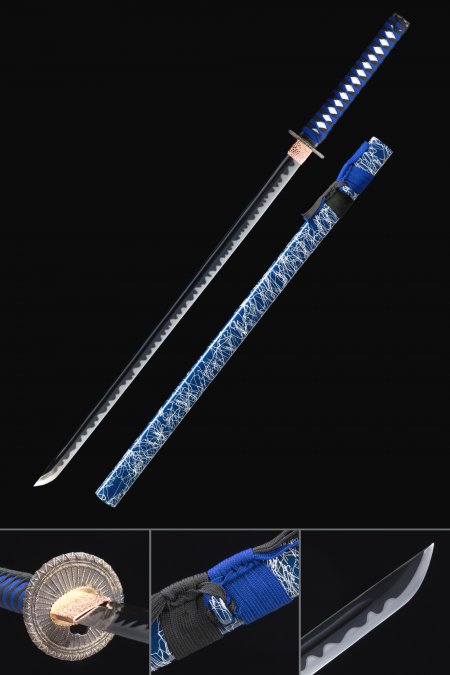
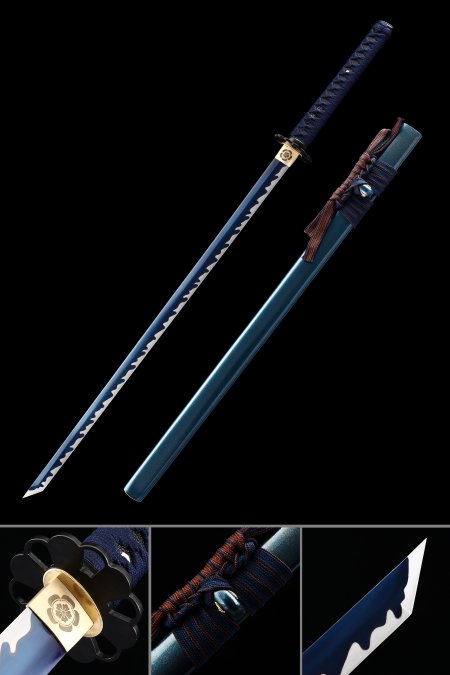
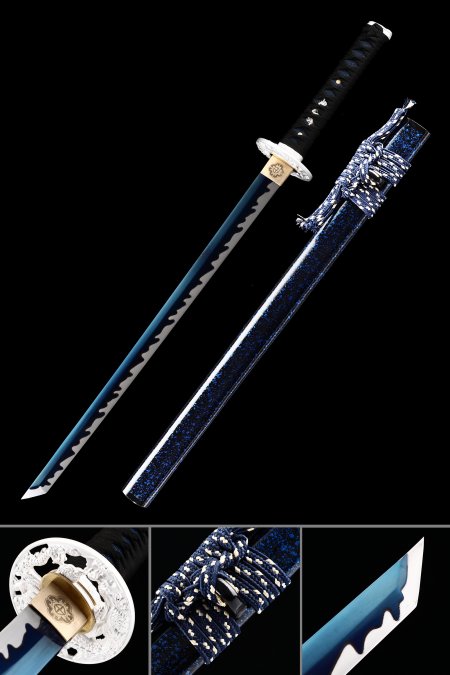
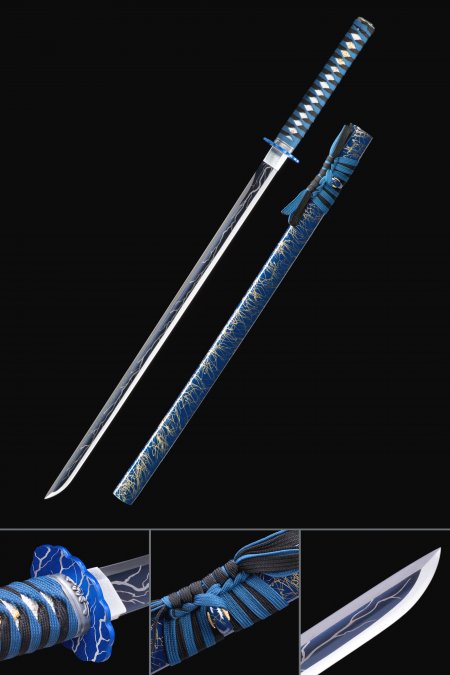
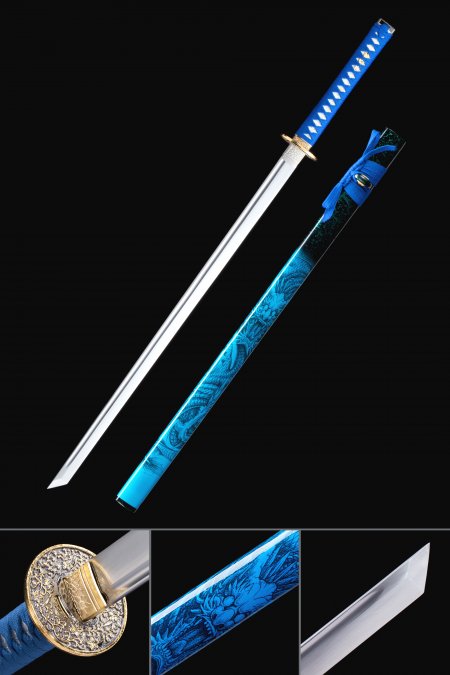
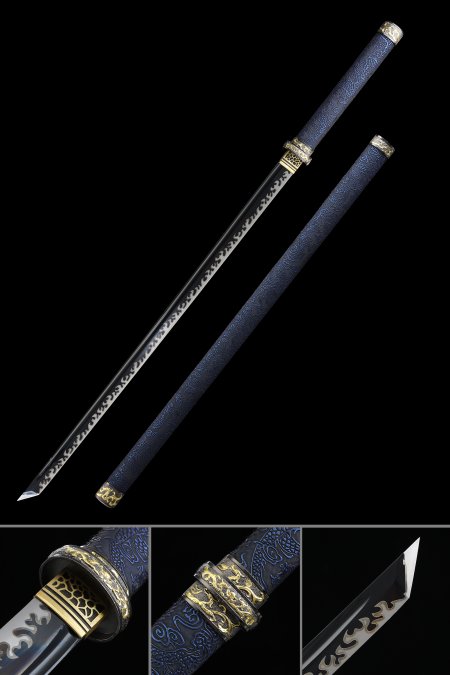
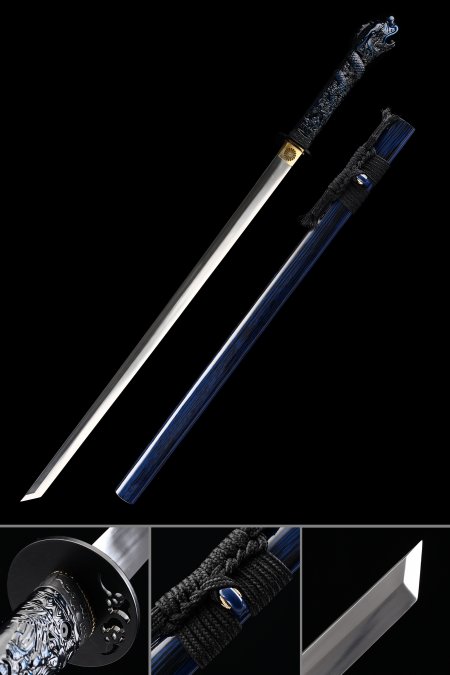
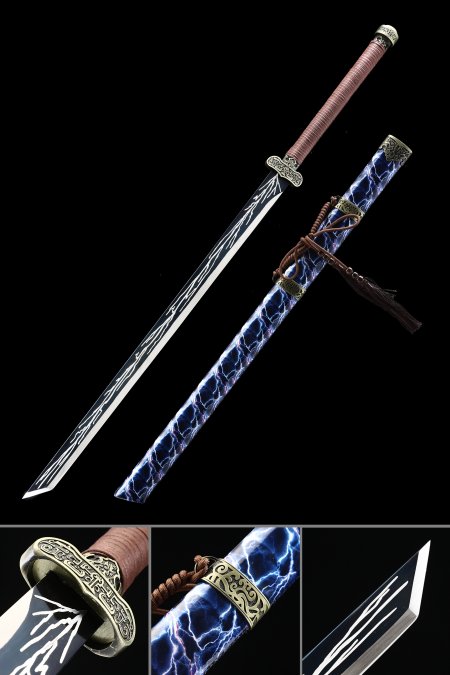
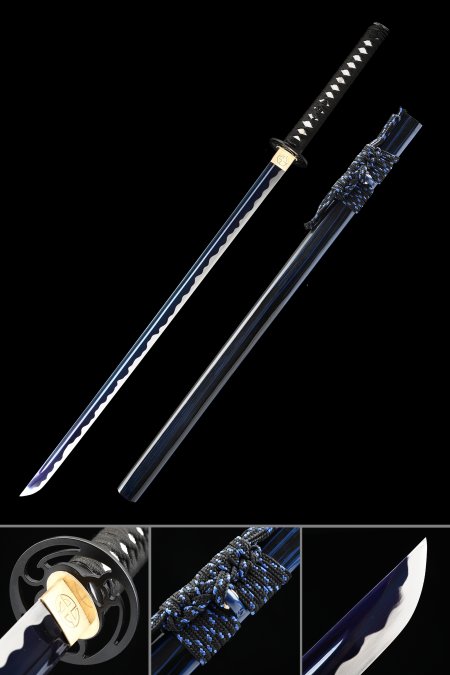
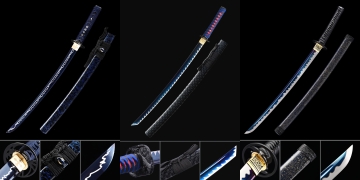
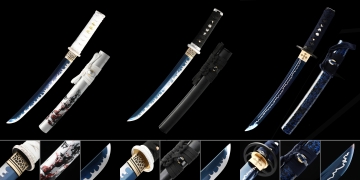
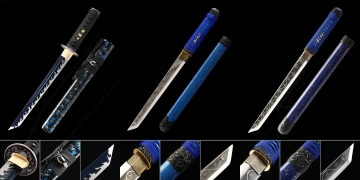
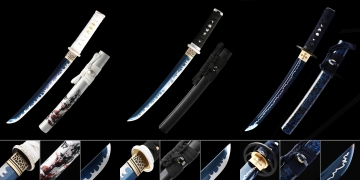
Each Blue Manganese Steel Ninjato in this collection is hand-forged from high-carbon manganese steel, finished with a distinctive blue-treated blade and paired with lacquered saya in coordinating colorways — from deep navy to dragon-motif artwork. Details such as iron tsuba, plum blossom fittings, and carved dragon handles reflect the thoughtful craftsmanship collectors expect from a display-grade piece. Every sword ships as a full-tang, fully assembled collectible ready for display or careful handling. Enjoy free shipping on your order, backed by our hassle-free return policy.
The ninjato and chokuto are both straight-bladed Japanese swords, but they come from entirely different historical contexts and carry distinct design philosophies. A chokuto is among the oldest Japanese sword types, dating back to the Kofun period before the eighth century, when Japanese bladesmiths had not yet developed the differential hardening and curvature techniques that would later define the tachi and katana. Early chokuto were heavily influenced by Chinese and Korean straight sword designs, and they were single-edged or double-edged blades used primarily for thrusting and hacking before mounted cavalry warfare drove the evolution toward curved blades. The ninjato, by contrast, is a modern concept associated with the shinobi tradition, characterized by a straight blade shorter than a katana, a square tsuba, and a design optimized for covert close-quarters use. In terms of blade profile, chokuto tend to have a wider range of shapes — some are leaf-shaped, some taper strongly toward the point, and some carry a ridge line similar to later katana — while ninjato almost universally follow a uniform-width straight blade with a simple angled or chisel-tipped kissaki. Functionally, chokuto were battlefield sidearms used by early Japanese warriors in open combat, whereas ninjato were supposedly tools of infiltration and ambush. For modern buyers, the distinction often blurs because both share the fundamental trait of a straight blade, and retailers sometimes use the terms interchangeably. The clearest way to distinguish them in a modern catalog is by fittings: a sword with a round or ornate tsuba and Kofun-period styling is marketed as a Japanese chokuto, while a sword with a square tsuba and plain black fittings reads as a ninjato. Many collectors own both to represent the full timeline of straight-blade development in Japanese sword making.
Outstanding craftsmanship and attention to detail, I am very pleased.
 |
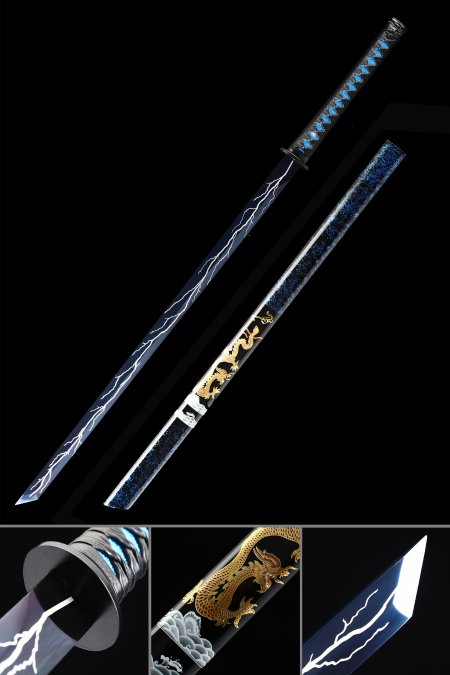
Chokuto Ninjato Straight Sword in Manganese Steel with Blue Lightning Blade and Dragon Saya |
This is another great addition to my collection all purchased from TrueKatana. The swords are beautifully crafted and the designs are remarkable. Highly recommended.
|
Chokuto Ninjato Straight Sword in Manganese Steel with Blue Lightning Blade and Dragon Saya |
I love this sword;the fact it came early on the Sabbath, I actually prayed over it and had it blessed. I love the color, the lightning, the sheath,the character of the blade overall regarding design, even the leather grip ,feels amazing.
It feels like a full tang in the blade, great weight for me and working on my forearms. Haven't done a cutting test quite yet but I felt the edge slide against my finger and I know for sure it's sharp, yet it didn't cut me to cause bleeding.
Awesome blade, I recommend.
|
Chokuto Ninjato Straight Sword in Manganese Steel with Blue Lightning Blade and Dragon Saya |
Simply amazing. Great craftsmanship. Beautiful pieces.
|
Chokuto Ninjato Straight Sword in Manganese Steel with Blue Lightning Blade and Dragon Saya |
Sword is not sharp, but otherwise has a great feel quality seems good so far.
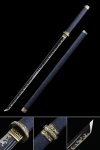 |
Chokuto Ninjato in Manganese Steel with Dark Blue Dragon Leather Saya - Gold Tsuba |
I love it fast shipping. I'm order again from them
|
Chokuto Ninjato Straight Sword in Manganese Steel with Blue Lightning Blade and Dragon Saya |
Great craft and sturd, solid and super light loving the detailed and received this pretty fast considering from Malaysia to Canada. It's sharp and like the fact the blade is oiled and also it was wrapped just n case of damage thru shipping but for me it's centre piece to add to my collection. Will be and have already picked out some 😄
|
Chokuto Ninjato in Manganese Steel with Dark Blue Dragon Leather Saya - Gold Tsuba |
Love the sword. It'll make a great Christmas present.
|
Chokuto Ninjato Straight Sword in Manganese Steel with Blue Lightning Blade and Dragon Saya |