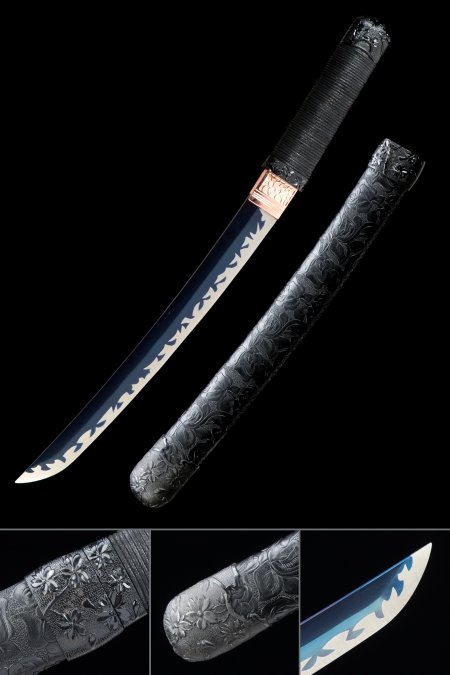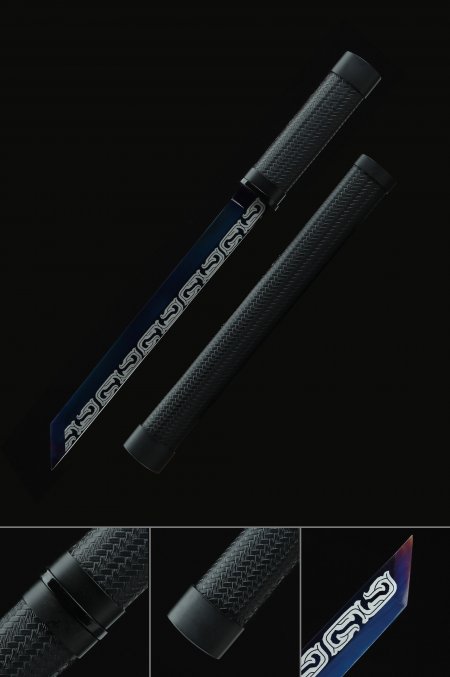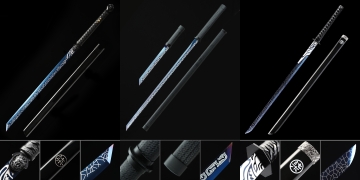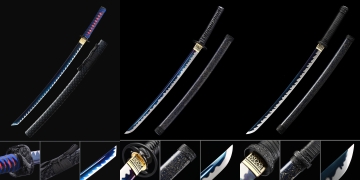
Blue Blade Manganese Steel Tanto

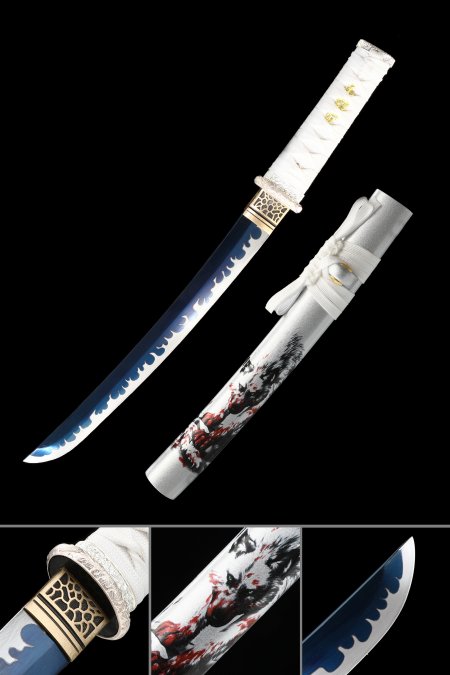
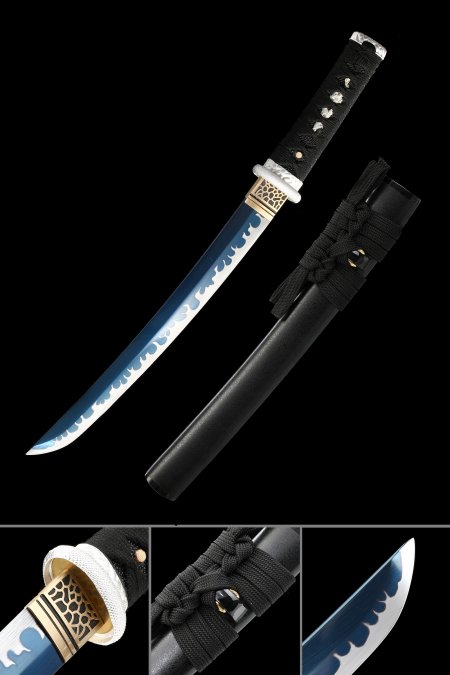
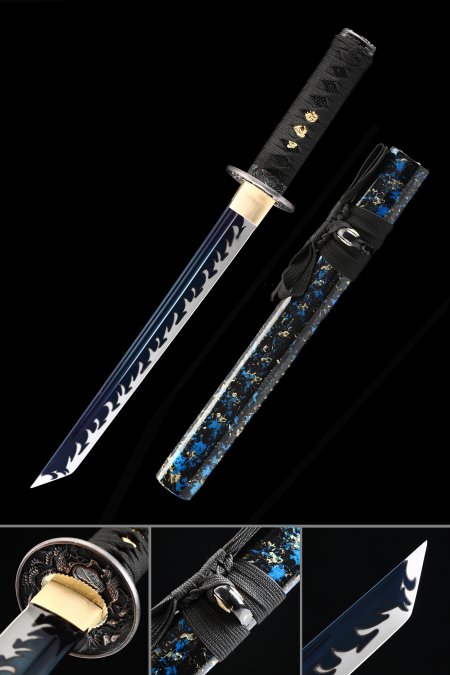
Each Blue Blade Manganese Steel Tanto in this collection is individually hand-forged, showcasing the striking blue flame hamon that makes these short blades instantly recognizable to serious collectors. Meticulous fittings - from carved saya to ornate tsuba - reflect the artisan attention to detail that elevates these pieces beyond the ordinary. Every order ships free, and we stand behind each tanto with a hassle-free return policy.
Showing 5 Products

Related Collections

Frequently Asked Questions

What gives the tanto blade its blue color?
The blue coloration on these tanto blades is a result of controlled thermal treatment applied to high-manganese steel during the forging process. When manganese steel is heated to specific temperatures and then allowed to cool in a controlled manner, the steel surface develops an oxide layer that refracts light across the blue spectrum - ranging from pale cobalt near the edge to deep indigo along the spine. This is fundamentally different from painted or powder-coated finishes, which sit on top of the steel. The blue here is integrated into the metal's surface chemistry, which means it does not chip or peel and tends to deepen slightly with age when properly maintained. Each blade emerges from the forge with a slightly unique pattern, so no two tantos in this collection are visually identical.
How does manganese steel compare to carbon steel for collectibles?
High-manganese steel and high-carbon steel serve different priorities for collectors. High-carbon steel (such as 1060 or 1095) is traditionally prized for its ability to take a very fine edge geometry and its well-documented history in Japanese sword-making. Manganese steel, by contrast, offers superior resistance to surface oxidation and responds exceptionally well to thermal coloring processes - which is precisely why it is the preferred material for blue and black flame-finished blades. For display-focused collectors, manganese steel's relative resistance to humidity-driven rust means less maintenance anxiety in everyday environments. The trade-off is that manganese steel has different grain characteristics than traditionally folded high-carbon steel, so the two materials occupy distinct niches in a well-rounded collection rather than competing directly.
Is full-tang construction important for a display tanto?
Yes, and for reasons beyond structural integrity. Full-tang construction - where the steel of the blade runs as a single continuous piece through the entire handle - is a recognized indicator of genuine craftsmanship in the collector community. A rat-tail tang or hollow handle assembly is a common shortcut in lower-quality decorative pieces. When knowledgeable collectors or appraisers examine a tanto, the tang style is one of the first things evaluated. Full-tang tantots also have a distinctly different weight distribution and balance point compared to partial-tang pieces, which is immediately perceptible when the tanto is held or displayed on an open stand. For anyone building a collection intended to hold or appreciate in display value, full-tang construction is a baseline quality requirement rather than an optional upgrade.
How should I care for the blue finish on a tanto blade?
The blue surface on a manganese steel tanto is durable but benefits from basic periodic care. Apply a very thin coat of choji oil or a neutral mineral oil to the blade surface every two to three months - use a soft, lint-free cloth and wipe in the direction of the grain, from spine to edge, to avoid micro-scratches. Avoid fingerprints on the blade during handling, as the oils and salts in skin contact can accelerate localized oxidation over time if left unaddressed. Store the tanto in a climate-controlled space away from salt air if possible. Do not store the blade sealed inside the saya for more than a few weeks without removing and inspecting it, as trapped condensation is the most common cause of surface spotting. A silica gel packet inside a display case significantly extends the interval between oiling sessions in humid climates.
Can these tantots be displayed alongside katanas as a matched set?
Absolutely - mixed-length displays are one of the most visually compelling ways to present a Japanese sword collection. A blue manganese steel tanto pairs naturally with pieces from the Blue Manganese Steel Katana collection, since both share the same blue flame hamon aesthetic and manganese steel base, creating a unified chromatic theme across different blade lengths. Tiered sword stands that hold three blades - katana, wakizashi length, and tanto - are the traditional daisho-inspired display format. Even without a strict historical daisho pairing, collectors frequently arrange blades by hamon style or saya color family to create visual coherence. The variety of saya finishes across this collection (lacquered black, carbon fiber weave, hand-painted white) gives enough flexibility to build displays around either a unified color story or a deliberate contrast theme.

Customer Reviews

Russell Noyes Alabama, United States

I love almost everything thing about this tanto blade. While I could nitpick over insignificant details, my only real complaint is that the blade could be sharper, but bare in mind, I've been a professional cook for nearly 30 years and I'm comparing the sharpness to culinary standards even though I have no intention of using it for cooking.
Blue Manganese Steel Hamidashi Tanto with Etched Pattern and Black Carbon Fiber Weave Saya Blue Manganese Steel Hamidashi Tanto with Etched Pattern and Black Carbon Fiber Weave Saya