What gives these wakizashi blades their blue color?
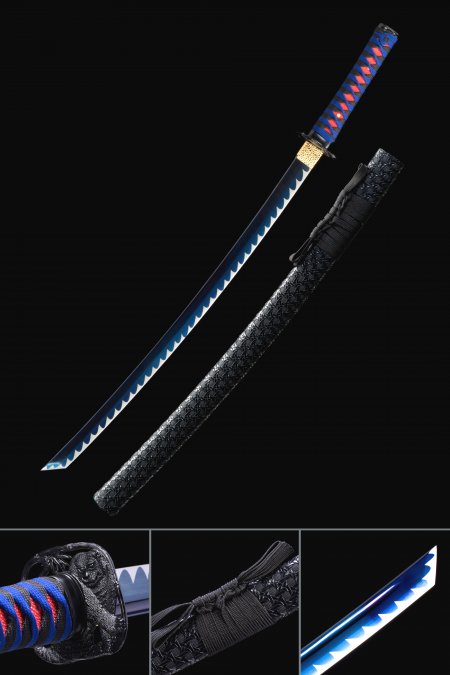
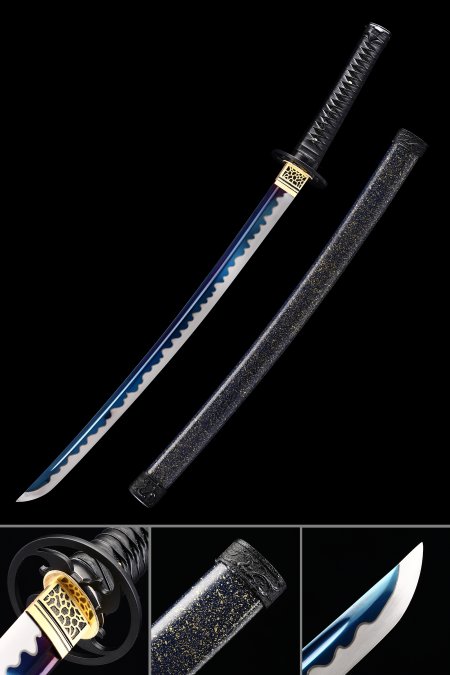
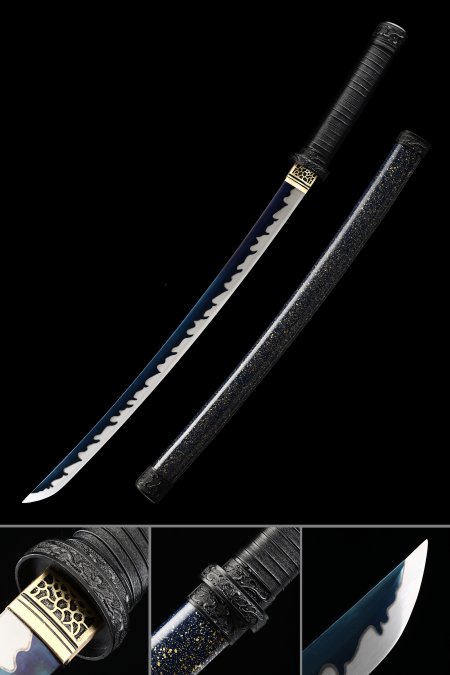
The blue finish on manganese steel wakizashi is produced through a controlled oxidation or heat patination process applied directly to the polished steel surface. Unlike paint or powder coating, this treatment chemically bonds an iron oxide layer to the blade, creating a color that penetrates rather than simply sits on top. The result ranges from deep indigo to cool blue-grey depending on viewing angle and light source. Because the finish is integral to the metal itself, it is far more durable than decorative coatings and will develop subtle tonal shifts as it matures with age — a characteristic that many collectors find adds to the piece’s long-term visual interest.
Why is manganese steel used for collectible wakizashi?
Manganese steel’s alloy composition — typically containing 12 to 14 percent manganese — gives it properties that make it well-suited for display-grade sword production. It forges cleanly, holds precise geometry through the shaping process, and responds exceptionally well to surface finishing treatments such as chemical blueing and patination. Compared to standard carbon steel at a similar price point, manganese steel typically shows fewer surface inconsistencies after finishing and accepts the blue patination process more evenly. For collectors focused on visual presentation and long-term display stability, this makes it a practical and attractive material choice.
How does a wakizashi differ from a tanto in a collection?
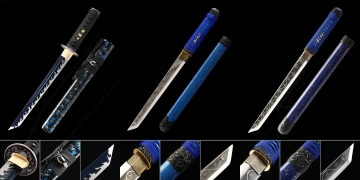
Both the wakizashi and tanto are shorter Japanese blades, but they differ significantly in blade length and display presence. A tanto typically measures under 30 cm and is considered a utility or companion piece, while a wakizashi ranges from roughly 30 to 60 cm — long enough to carry its own visual weight as a standalone display item. In historical practice, the wakizashi was worn alongside the katana as part of the daisho pairing, giving it a formal status the tanto did not share. For collectors, a wakizashi offers more blade surface to showcase hamon, patina work, and polish quality, making it a more visually engaging centerpiece than a tanto of equivalent craftsmanship.
How should I care for a blue-patina blade on display?
Blue-patinated manganese steel requires straightforward maintenance to preserve its finish. Apply a very light coat of mineral oil or choji oil to the blade every two to three months using a soft cloth, wiping away any excess to avoid pooling near the habaki or tsuba. Store the wakizashi horizontally on a display stand in an area with stable, low humidity — high moisture environments can cause uneven oxidation that alters the patina color over time. Keep the piece away from prolonged direct sunlight, which can fade the blue tones unevenly. The lacquered saya should be stored separately from the blade if the piece will not be displayed fully assembled for extended periods, as trapped moisture between blade and saya can affect both surfaces.
Can a blue blade wakizashi be displayed alongside a matching katana?
Yes, and many collectors pursue exactly this kind of paired display. The historical daisho — the matched long and short blade set carried by samurai — consisted of a katana and a wakizashi selected or commissioned to complement each other in fittings and overall aesthetic. Displaying a blue blade manganese steel wakizashi alongside a blue blade katana of matching tsuba style and saya finish recreates this tradition in a visually cohesive way. Coordinating pieces with shared color palettes, such as gold-and-black tsuba and deep blue saya across both blades, creates a display that reads as intentional and curated rather than assembled from unrelated pieces.