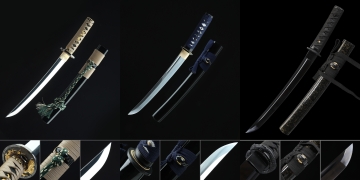
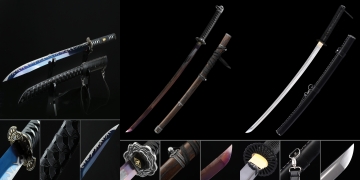
What makes manganese steel a good choice for a ninjato collectible?
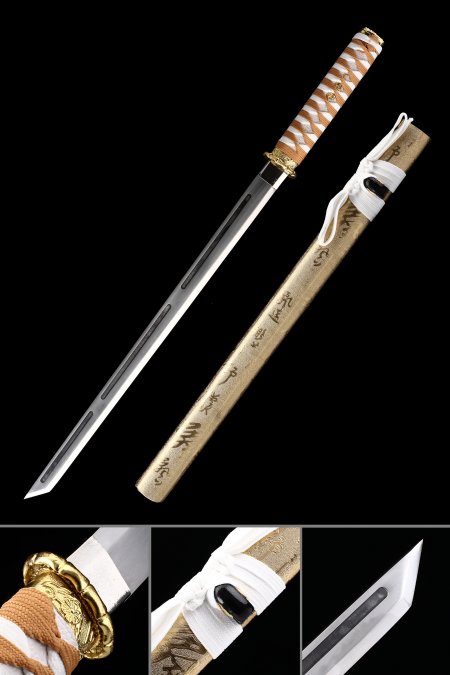
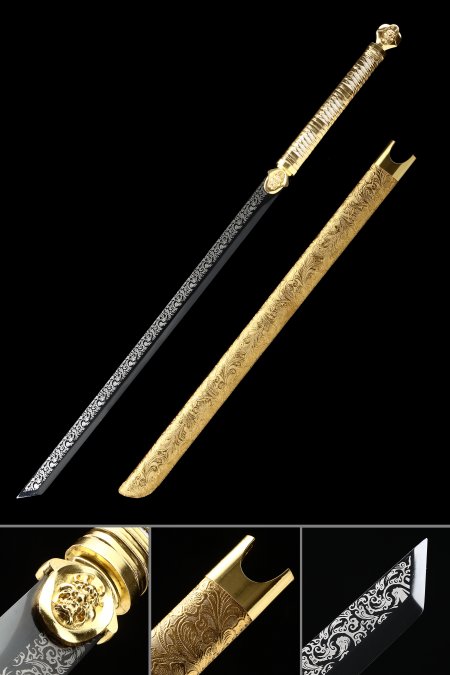
Manganese steel is alloyed with elevated manganese content - typically between 1% and 2% - which gives the metal a notably tough, impact-resistant grain structure compared to standard high-carbon steel. For a ninjato collectible, this translates to a blade that resists micro-fracturing under lateral stress, making it well-suited for display pieces that collectors also want to handle during occasional test-cutting or tameshigiri sessions. The alloy polishes to a clean, even surface that takes both black and mirror finishes well, and it pairs visually with gold lacquer saya without the corrosion concerns that some higher-carbon steels present in humid environments. It is a practical, durable foundation for a display-grade piece.
How is the gold finish on the saya applied - is it painted or lacquered?
The gold finish on these ninjato saya is a multi-layer lacquer process, not a simple paint application. A base coat is applied to the wood saya substrate, followed by successive lacquer layers with gold pigment worked into the finish. On engraved saya variants, the relief carving is done before lacquering so the gold coat flows into and highlights the recessed design, producing depth that flat paint cannot replicate. This technique is closely related to traditional Japanese urushi-influenced saya finishing, adapted here with modern lacquer compounds for durability and consistent color. The result is a surface that resists chipping far better than paint and develops a subtle patina with age that many collectors find adds character to long-term display pieces.
How does a ninjato differ from a katana in construction and profile?
The most immediate difference is geometry. A katana features a pronounced curved blade - the sori - ground to optimize drawing speed and cutting arc from a mounted or standing position. A ninjato, by contrast, uses a straight or very slightly curved blade with a flat shinogi line and a compact kissaki, producing a silhouette that is immediately recognizable as distinct from classical tachi or katana forms. Construction-wise, both can share full-tang assembly and similar steel alloys, but the ninjato's shorter blade-to-handle ratio and square or simple tsuba reflect its historical association with functionality over ceremony. For collectors, this means a ninjato display reads very differently on a wall mount or stand - the straight profile has a graphic, almost architectural quality that complements modern and traditional interiors equally well.
What routine care keeps a gold lacquer saya in good display condition?
Gold lacquer saya requires minimal but consistent care to stay vibrant over years of display. Wipe the saya surface every few months with a soft, lint-free cloth to remove dust and skin oils - both of which can dull lacquer over time. Avoid solvent-based cleaners, glass cleaners, or anything containing alcohol, as these strip the top lacquer coat and fade the gold pigment. For storage or display, keep the piece away from prolonged direct sunlight, which yellows even high-quality lacquer finishes. Humidity is the other key variable: lacquered wood saya can crack in very dry conditions, so aim for a stable environment between 45% and 60% relative humidity. A dedicated sword display case with a small silica gel pack handles both light and humidity concerns simultaneously.
Are these ninjato suitable as display gifts for Japanese sword enthusiasts?
Gold Manganese Steel Ninjato make a particularly strong gift choice for collectors specifically because the aesthetic presentation is immediately striking - the gold saya against a dark blade or ornamental tsuba creates an unboxing impression that generic collectibles rarely match. From a practical standpoint, each piece arrives fully assembled with saya, so no additional mounting hardware is required to begin displaying it. For recipients already familiar with Japanese sword collecting, the manganese steel construction and full-tang assembly signal that the piece has genuine craft behind it rather than being a purely decorative replica. Pairing a ninjato with a compatible display stand rounds out the gift neatly. The straight-blade profile also displays well in smaller spaces where a full-length katana mount might be impractical.