What makes a hamidashi different from a standard tanto?
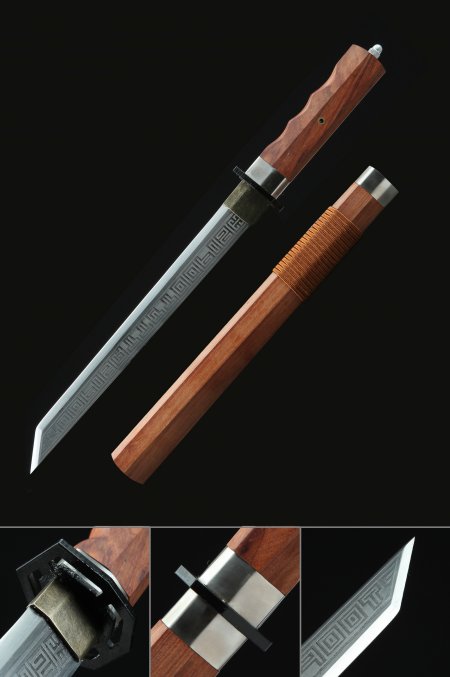
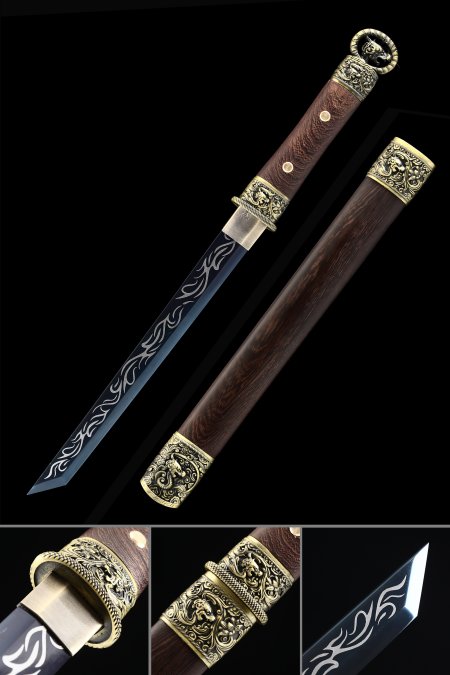
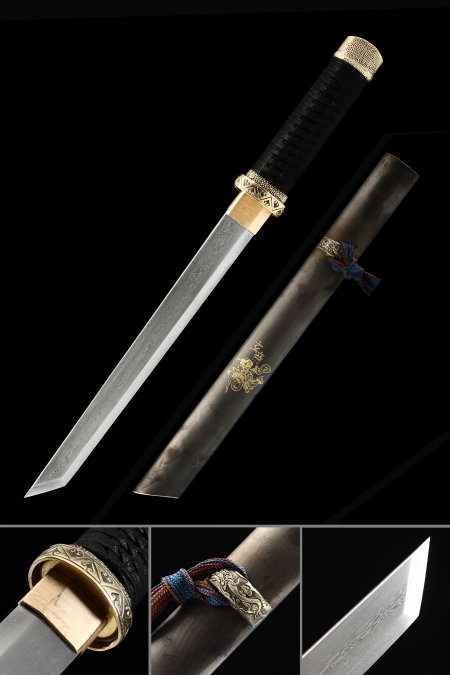
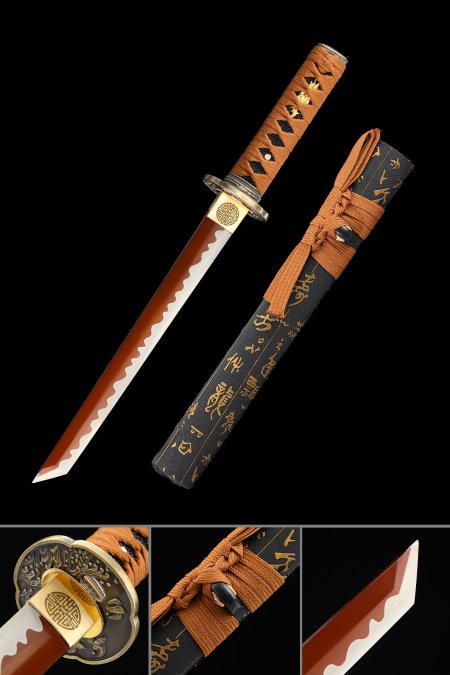
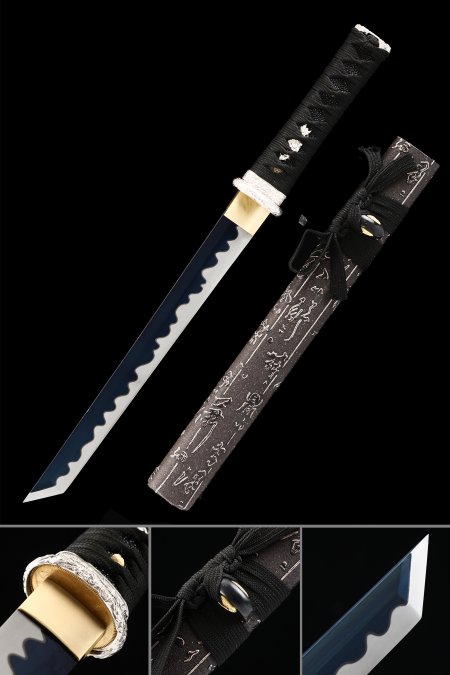
The defining characteristic of a hamidashi is its vestigial tsuba — a guard so minimal it functions more as a visual accent than a structural separator between blade and grip. On a standard tanto, the tsuba is a distinct disc or shaped plate; on a hamidashi, it barely extends beyond the habaki collar, giving the profile a seamless, almost guardless appearance. This design traces back to civilian carry traditions in Edo-period Japan, where a discreet silhouette was socially preferred over the more martial look of a guarded tanto. For collectors, this subtle distinction carries significant historical weight and makes the hamidashi a more specialized and conversation-worthy piece than a conventional tanto.
How does manganese steel compare to T10 in these collectibles?
Manganese steel alloys and T10 high-carbon steel approach blade performance and aesthetics from different directions. Manganese steel — typically a 1060 or 1075 alloy with elevated manganese content — offers excellent toughness and resistance to surface chipping, making it well-suited to display pieces that may occasionally be handled or test cut. T10, by contrast, is a tool-grade high-carbon steel that takes a finer edge geometry and responds more dramatically to clay tempering, producing a natural hamon with visible nie and nioi activity along the transition line. For collectors prioritizing visual hamon detail and classical craftsmanship, T10 is the stronger choice. For those who value durability and a blade that ages gracefully with minimal maintenance, manganese steel is the more forgiving option.
How should I store a brown lacquered saya long-term?
Brown lacquered wood saya are sensitive to humidity fluctuations, which can cause the lacquer to crack or the wood substrate to warp over time. The ideal storage environment sits between 45 and 55 percent relative humidity at a stable room temperature. Avoid placing the hamidashi near air conditioning vents, exterior walls, or windows where temperature swings are frequent. If you live in a particularly dry climate, a display case with a small silica gel pack — monitored and replaced seasonally — will help buffer moisture levels. Before long-term storage, lightly wipe the blade with a neutral oil such as choji oil on a soft cloth to prevent surface oxidation. Store the piece horizontally or on a proper sword stand rather than leaning it at an angle, which stresses the habaki fit over time.
Is a full-tang hamidashi a good choice as a display gift?
A full-tang hamidashi is one of the more thoughtful gifts you can give a collector who appreciates both craftsmanship and historical context. Unlike partial-tang or rat-tail constructions common in lower-tier decorative pieces, a full-tang build signals genuine manufacturing intent — the steel extends the full length of the handle, secured with mekugi pegs through the tsuka, exactly as classical Japanese blades were assembled. This construction detail is immediately recognizable to anyone knowledgeable about nihonto, making the gift credible among experienced collectors. The compact form of the hamidashi also makes it practical for smaller display spaces, desks, or wall-mounted shadow boxes, giving the recipient genuine flexibility in how they showcase the piece.
Can engraved hamon on manganese steel replicate the look of clay tempering?
Engraved or etched hamon on manganese steel is a surface treatment rather than a structural feature, but skilled craftsmen can achieve a visual result that reads convincingly as differential hardening to the casual eye. The hamon is chemically etched or mechanically ground into the blade surface, then polished to contrast the lighter edge geometry against the darker body of the blade. The resulting line can replicate geometric patterns — suguha straight lines, notare gentle waves, or gunome repeating peaks — with a consistency that actual clay tempering rarely achieves. Collectors who understand the distinction tend to appreciate the honesty of the technique on a manganese steel piece, while those newer to Japanese blade aesthetics often find it a visually compelling entry point into understanding what hamon represents in classical sword-making tradition.