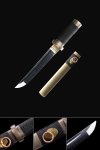
What defines a hamidashi tsuba compared to a standard tanto tsuba?
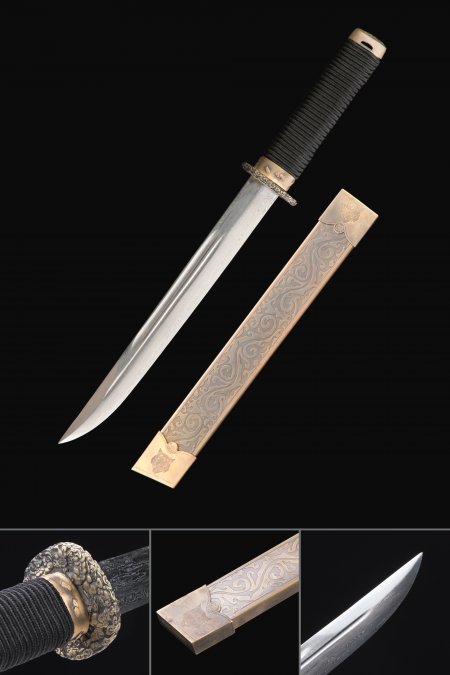
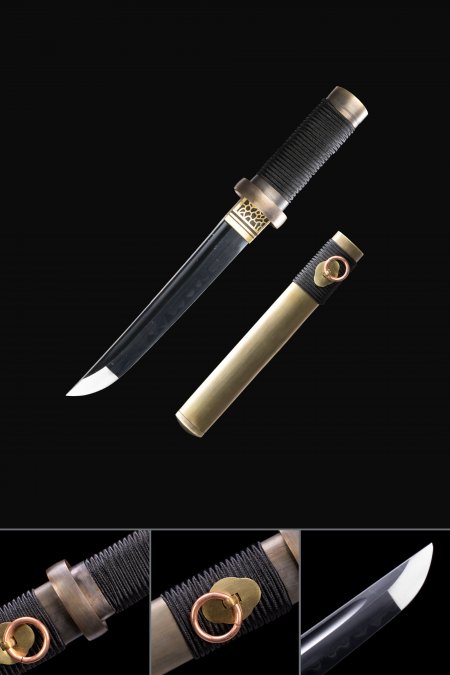
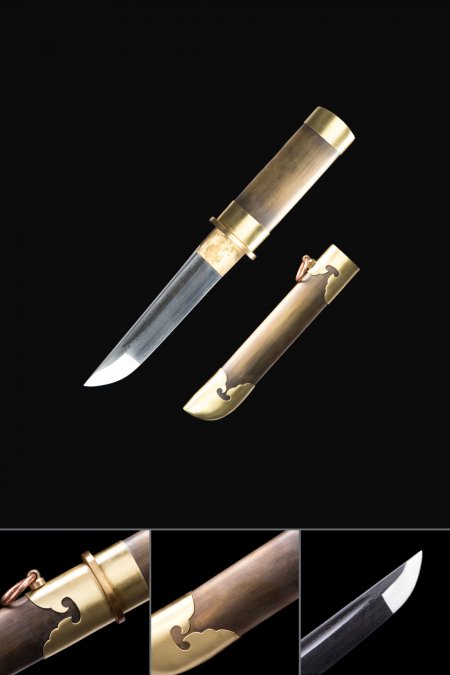
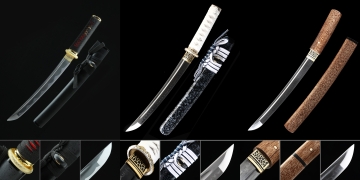
A hamidashi tsuba is distinguished by its minimal projection — it extends only slightly, if at all, beyond the diameter of the handle, creating an almost flush transition between tsuba and grip. A standard tanto tsuba projects more noticeably outward, functioning as a defined hand stop. The hamidashi style was developed as a refined, understated alternative popular during the Edo period, favored when the overall aesthetic of the mounting called for clean, uninterrupted lines. On collectible pieces, the hamidashi guard is typically cast or shaped from bronze, brass, or shakudo, and its small surface area often features engraved or relief decoration that would be lost on a larger guard.
How does bronze differ from brass in tanto fittings?
Bronze is an alloy of copper and tin, while brass combines copper with zinc. In practice, bronze tends to have a slightly warmer, redder tone and develops a characteristic greenish-brown patina over time as it oxidizes — a quality many collectors actively value for the aged appearance it lends to a mounting. Brass retains a brighter, more golden color for longer and is somewhat more resistant to surface tarnish under typical indoor display conditions. On tanto fittings such as tsuba, habaki, and kashira, the choice between the two affects the overall color harmony of the piece: bronze reads as more antique and earthy, while brass creates a crisper contrast against dark lacquered saya or black cord handles.
What is the difference between T10 and Damascus blades in this collection?
T10 is a high-carbon tool steel valued for its ability to produce a distinct hamon — the visible temper line created during differential clay-coating and heat treatment. This hamon is the primary visual and technical feature collectors examine on T10 tanto blades: its shape, activity, and consistency reflect the smith's control over the hardening process. Damascus pattern blades, by contrast, are formed by forge-welding multiple layers of steel and then manipulating the billet to create flowing grain patterns. The Damascus aesthetic is primarily visual, with layered patterns that change character depending on lighting angle. Neither type is superior for display purposes — they appeal to different collecting sensibilities, with T10 attracting traditionalists and Damascus attracting collectors who prioritize decorative surface pattern.
How should I care for the bronze fittings on a display tanto?
Bronze fittings require minimal maintenance but benefit from deliberate care. For display pieces, the most important step is controlling humidity — prolonged exposure to moisture accelerates oxidation and can cause uneven patina development or, in extreme cases, active bronze disease (a powdery green corrosion). Keep the piece in an environment with stable, moderate humidity, ideally in a display case. If you prefer to preserve the original finish, apply a thin coat of renaissance wax or a similar microcrystalline wax to the bronze surfaces every six to twelve months. If you appreciate the natural aging process, simply dust the fittings occasionally with a soft dry cloth and avoid handling the metal with bare hands, as skin oils can create uneven tarnish spots.
Are these tanto pieces suitable as display gifts for collectors?
Bronze Hamidashi tanto make considered gifts for collectors interested in Japanese blade culture, particularly those who appreciate the details of koshirae — the full mounting assembly — rather than just the blade itself. The combination of engraved copper saya, folded Damascus or hamon-bearing T10 blades, and bronze fittings gives these pieces visual depth that rewards the kind of close examination a serious collector brings to a new acquisition. For gifting, pairing one of these tanto with a quality horizontal display stand enhances the presentation significantly. If the recipient already collects longer-format blades, a bronze hamidashi tanto serves as a natural complement to an existing katana or wakizashi display without duplicating what they likely already own.