Black Saya Hamidashi

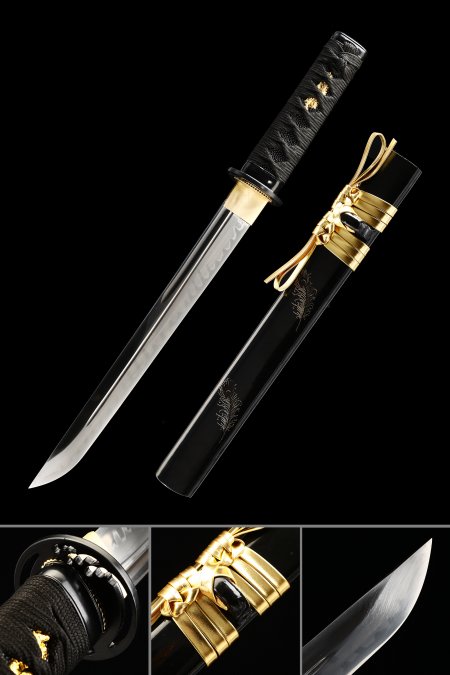
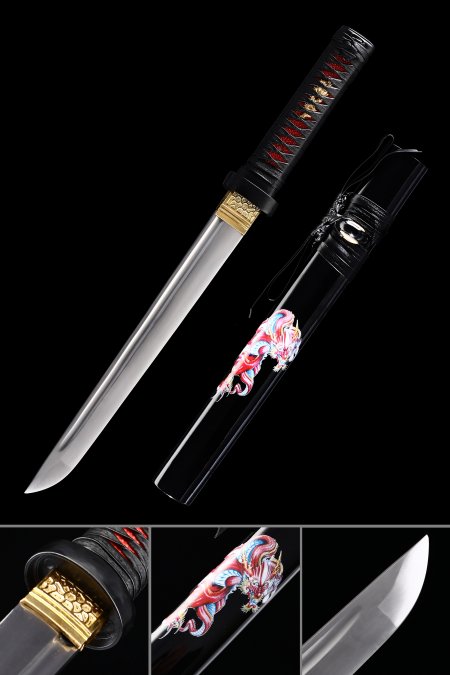
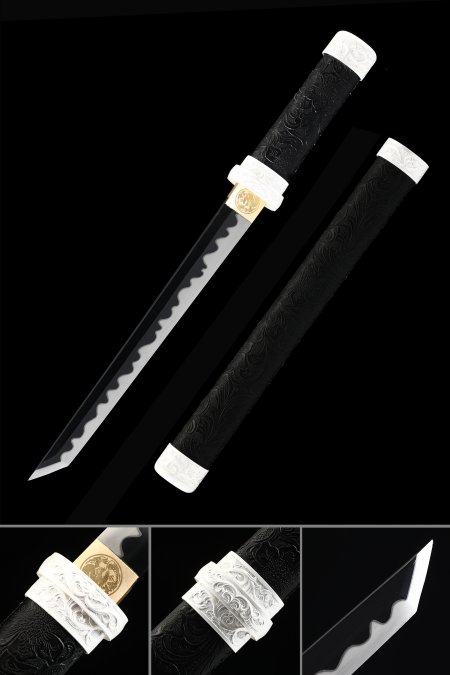
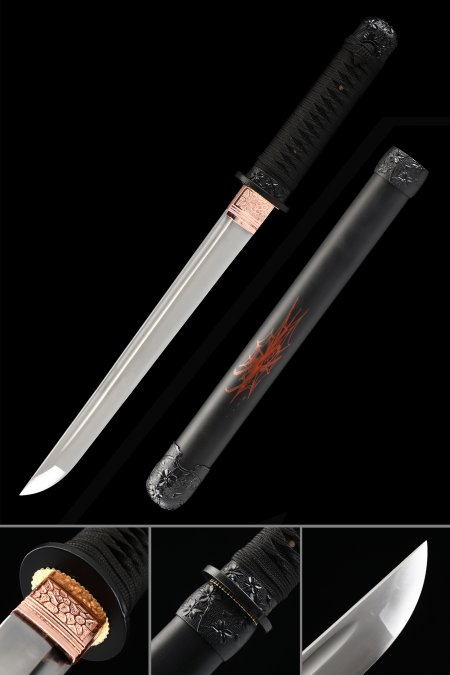
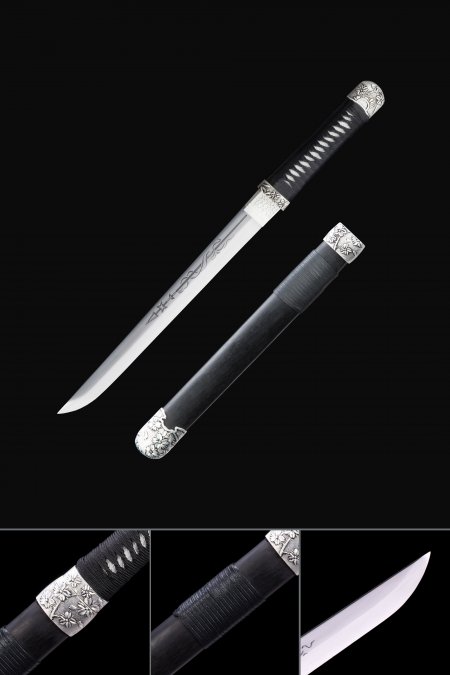
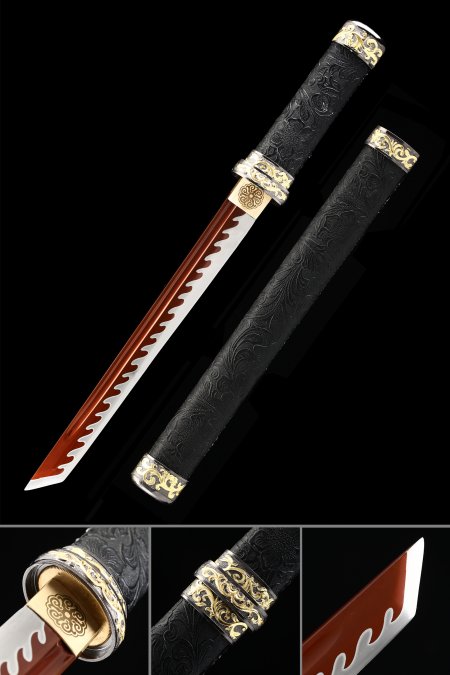
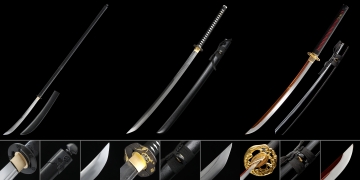
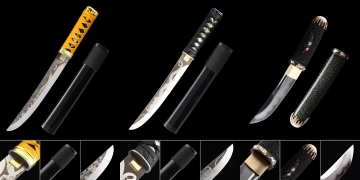
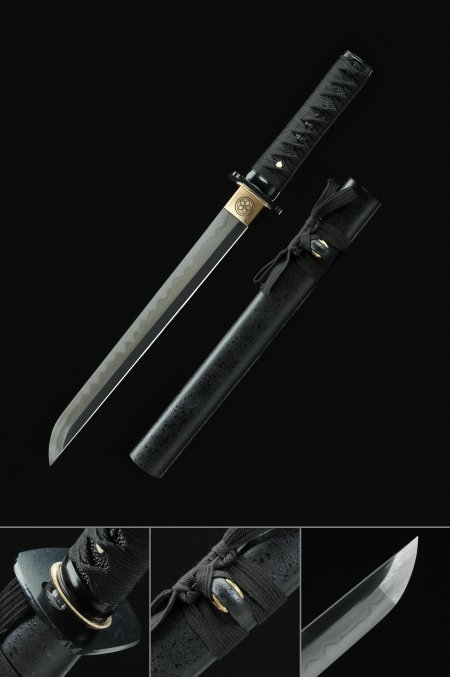
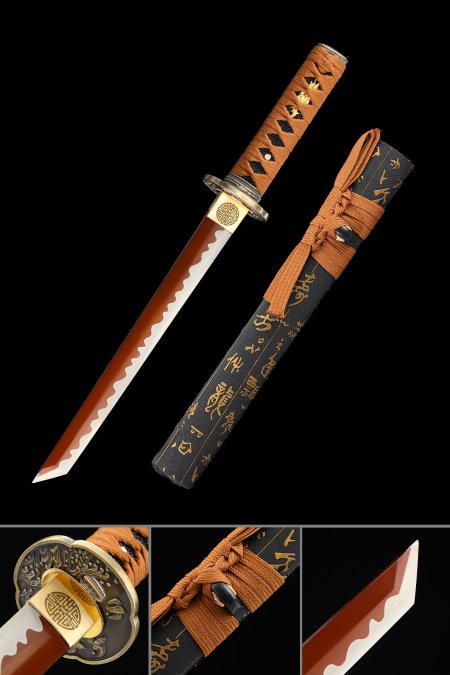
A black saya transforms any hamidashi tanto into a striking display piece, lending it a clean, austere elegance that complements both traditional and contemporary interiors. The examples in this collection pair lacquered or leather-finished black scabbards with hand-forged blades — from T10 carbon steel with a genuine hamon to manganese steel Damascus-pattern work — each assembled with ornate tsuba, gold habaki accents, and carefully wrapped tsuka. Free standard shipping is included on all orders, along with our hassle-free return policy, so you can collect with complete confidence.
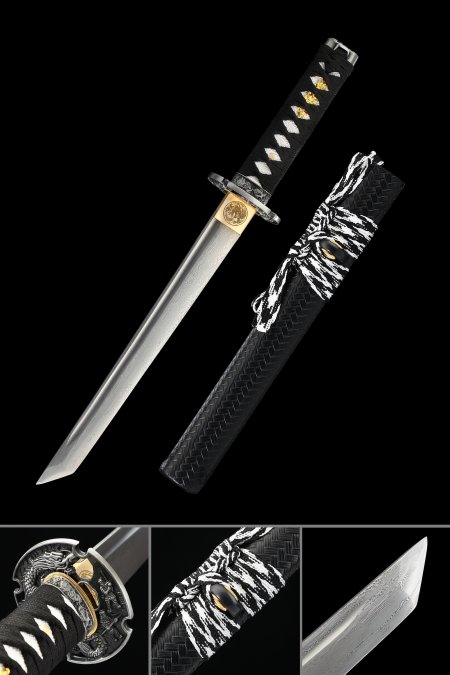
Showing 11 Products

Related Collections

Black Chokuto39 items


288 Reviews

Black Odachi11 items


14 Reviews

Black Naginata4 items


4 Reviews

Black Aikuchi6 items


5 Reviews

Frequently Asked Questions

What makes a hamidashi different from a standard tanto?
The defining difference lies in the guard design. A standard tanto typically features a full, round tsuba that sits completely inside the koiguchi, hidden when the blade is sheathed. A hamidashi tanto has a much smaller, partially protruding guard — the name itself translates loosely to 'protruding' — so a rim of the tsuba is always visible against the saya mouth even when the blade is fully seated. This creates a subtly different visual profile that collectors recognize immediately. From a koshirae design standpoint, the hamidashi format puts the tsuba in constant dialogue with the saya finish, which is why pairing an ornate dragon tsuba with a clean black lacquer saya creates such strong visual tension. It is a format that rewards careful hardware selection.
How does T10 steel differ from manganese steel in a tanto blade?
T10 is a high-carbon tool steel containing roughly 1.0% carbon along with a small silicon content, which refines grain structure during forging. When clay-tempered and water-quenched, it produces a genuine hamon — the visible temper line along the edge — making it the preferred material for collectors who prioritize metallurgical authenticity. Manganese steel carries a different alloy profile: its elevated manganese content increases toughness and hardenability, making it well-suited to decorative surface treatments like Damascus-pattern etching, colored blade finishes, and blackening. It does not typically develop a natural hamon in the way T10 does. Neither is superior in an absolute sense; the choice depends on whether a collector values traditional temper-line aesthetics or surface decorative variety.
Does black lacquer saya require special care during display?
Yes, and the key concerns are UV exposure and humidity. Prolonged direct sunlight causes the lacquer surface to yellow, fade, or develop hairline crazing over time, particularly on piano-lacquer finishes where the surface is highly polished. Stable humidity between 45% and 60% RH is ideal — very dry environments cause lacquer to contract and crack, while excess moisture can soften the binding between the lacquer layers and the wood core underneath. For long-term display, a UV-filtering case or placement away from south-facing windows makes a meaningful difference. A very light application of paste wax, buffed out to a thin film once or twice a year, helps protect the surface without altering its sheen. Never use silicone-based polishes, which can penetrate and discolor the lacquer over time.
Are these hamidashi tanto suitable as gifts for collectors?
They are well-suited to that purpose, particularly for recipients who appreciate Japanese craftsmanship and decorative metalwork. The combination of a distinctly styled black saya, ornate kodogu like dragon tsuba and gold habaki, and a hand-forged blade gives each piece enough visual and material depth to stand out against mass-produced decorative items. For a first-time recipient unfamiliar with Japanese blade collecting, a T10 steel piece with a visible hamon offers a natural entry point for conversation about steel and heat treatment. For a more experienced collector, a Damascus-pattern tanto with matched bronze or rose gold fittings in a koshirae style presents a more sophisticated aesthetic choice. Including a basic care guide with the gift adds a thoughtful, practical element that reinforces the collectible positioning.
What display stand works best with a black saya tanto?
Horizontal single-tier stands in dark hardwoods — rosewood, ebony-stained oak, or wenge — complement a black saya without competing with it visually. The alignment matters: the edge of the blade should face upward following traditional katana-rack convention, with the saya's koiguchi end positioned toward the viewer's left. For a more formal presentation, a two-tier stand that displays both a katana and a matching tanto in coordinated koshirae creates a strong compositional pairing. Lacquered black stands with gold hardware detail echo the aesthetic of the saya itself and are worth considering if the display environment leans toward a more curated, interior-design-forward arrangement. Avoid clear acrylic stands when displaying lacquered pieces, as the contrast between glossy plastic and high-grade lacquer tends to diminish the perceived quality of both.

Customer Reviews

Johnathan Chapman Pennsylvania, United States

Beautiful blade. I’m very happy with my purchase. My only minor inconveniences are that the very tip of the blade is ever so slightly bent, and the sheath has very small damage (most likely from shipping). Other than those two things, everything about the piece is well made and aesthetically pleasing to look at and hold.

T10 Carbon Steel Hamidashi Tanto with Real Hamon in Black Piano Lacquer Saya - Gold Habaki Accent T10 Carbon Steel Hamidashi Tanto with Real Hamon in Black Piano Lacquer Saya - Gold Habaki Accent
Russell Noyes Alabama, United States

I love almost everything thing about this tanto blade. While I could nitpick over insignificant details, my only real complaint is that the blade could be sharper, but bare in mind, I've been a professional cook for nearly 30 years and I'm comparing the sharpness to culinary standards even though I have no intention of using it for cooking.
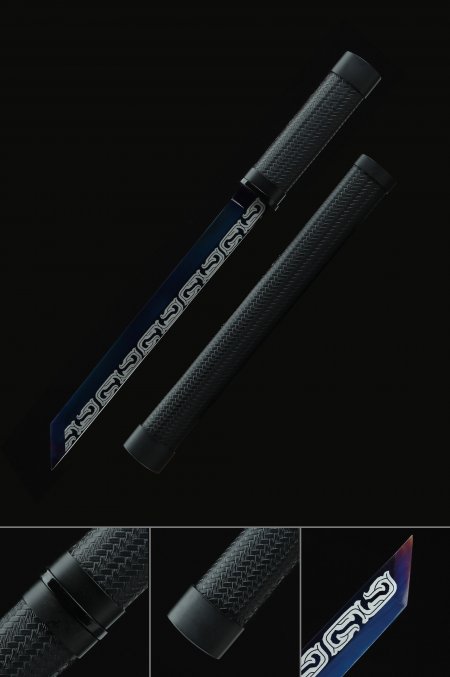
Blue Manganese Steel Hamidashi Tanto with Etched Pattern and Black Carbon Fiber Weave Saya Blue Manganese Steel Hamidashi Tanto with Etched Pattern and Black Carbon Fiber Weave Saya