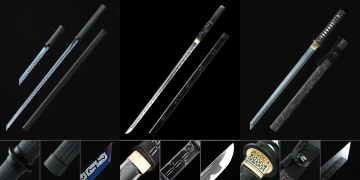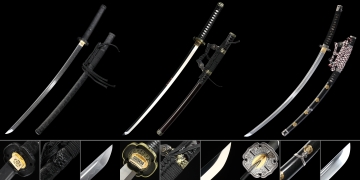
Black Hamidashi

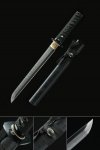
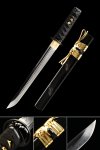
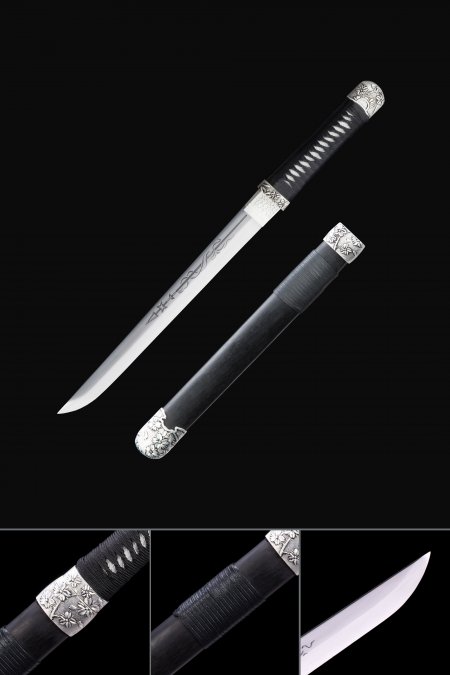
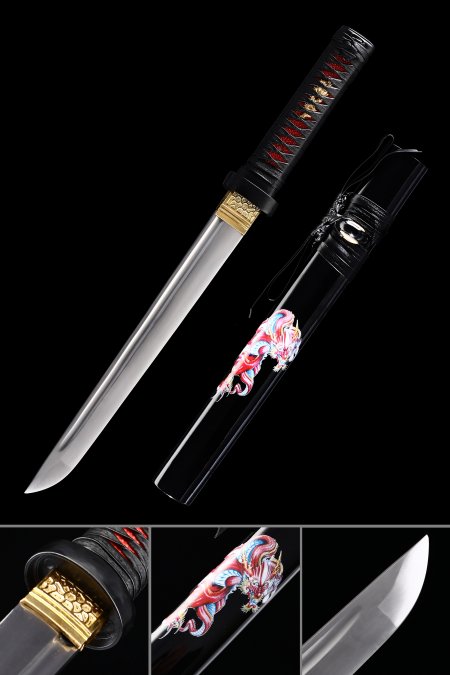
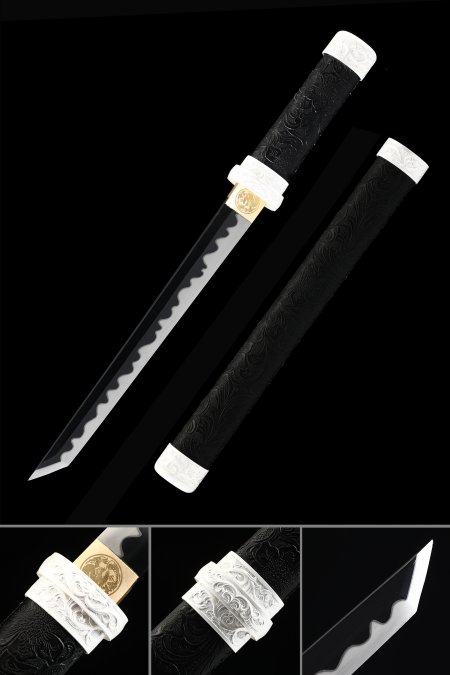
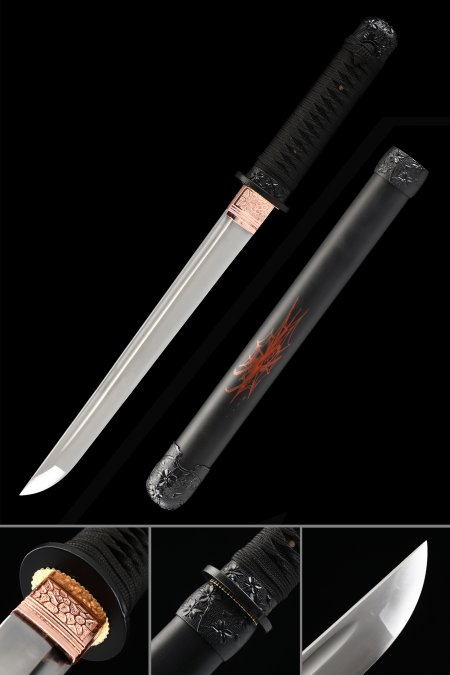
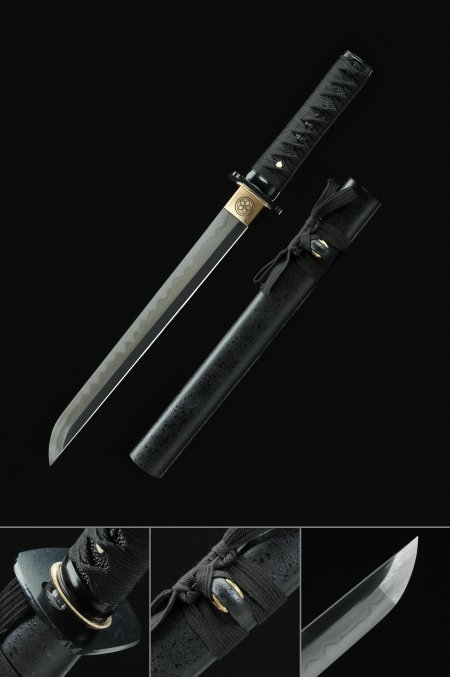
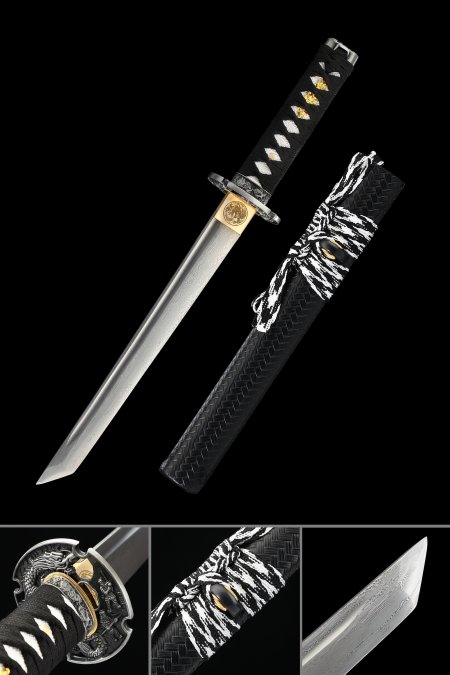
Black Hamidashi tanto blend the understated elegance of all-black koshirae with the compact, guardless silhouette that defines classical Japanese tanto design. Each piece in this collection is assembled with hand-wrapped handles, lacquered hardwood saya, and ornamental fittings - dragon motifs, gold-tone habaki, and carved tsuba - crafted to honor centuries of Japanese metalworking tradition. These are collector-grade display pieces, presented with the visual authority that serious Japanese blade enthusiasts expect. Enjoy free standard shipping on every order, plus hassle-free returns.
Showing 7 Products

Related Collections

Black Tsuba Hamidashi8 items


44 Reviews

Type 95 Shin Gunto30 items


95 Reviews

Daisho Set16 items


251 Reviews

Black Sake Set20 items


Reviews

Frequently Asked Questions

What makes a hamidashi different from a standard tanto?
The defining difference is the guard. A standard tanto typically mounts a full-sized tsuba that extends visibly beyond the handle profile. A hamidashi uses a drastically reduced guard - often just a thin decorative collar - that sits nearly flush with the habaki and tsuka. This creates a much cleaner, more streamlined silhouette along the entire length of the piece. In koshirae terms, this means the transition from blade to handle is almost seamless, which is why the hamidashi style pairs so naturally with formal black lacquer saya: there is no visual interruption to break the line. For collectors, this distinction matters because hamidashi pieces require more precise fitting tolerances between habaki, guard, and tsuka components to maintain that flush alignment correctly.
What is a real hamon and why do collectors value it?
A real hamon - also called a natural or genuine hamon - is the visible crystalline boundary line that forms on a blade when the edge and spine are differentially hardened during the forging process. The edge is coated with clay before quenching; the exposed edge hardens into a dense martensitic structure while the clay-coated spine cools more slowly and remains comparatively softer. The boundary between these two zones appears as a misty, undulating line running along the blade flat. This is fundamentally different from an acid-etched or wire-brushed false hamon, which mimics the appearance but lacks the underlying metallurgical structure. On T10 carbon steel tanto, the real hamon is a direct record of the smith's heat treatment decisions - no two are identical - making each blade genuinely unique. For collectors, this individuality is a key part of the piece's long-term appeal.
How should I store a black lacquer saya to prevent damage?
Black lacquer, whether piano finish or traditional urushi-style, is vulnerable to three primary threats: UV light, humidity fluctuation, and surface abrasion. For long-term display, avoid direct sunlight or halogen spotlights positioned too close, as both cause lacquer to yellow, crack, or blister over time. Ideal storage humidity sits between 45-55% RH; dramatic swings between dry and humid conditions cause the hardwood core to expand and contract, which can crack or lift the lacquer surface. When not on display, store the saya in a padded sleeve or dedicated sword bag rather than loose in a drawer. Never place lacquered saya directly on glass shelves without a soft liner - even slight abrasion from sliding will scratch the finish irreversibly. Applying a thin coat of Renaissance Wax once or twice a year provides a protective barrier without altering the visual depth of the lacquer.
Is T10 steel or manganese steel better for a display tanto?
They serve slightly different collector priorities. T10 is a high-carbon tool steel that responds beautifully to traditional differential hardening, producing the real hamon line that many collectors specifically seek. Its surface takes a fine polish and shows grain structure clearly under light, making it the preferred choice for collectors who value metallurgical authenticity and visual detail at the blade level. Manganese steel, by contrast, offers superior structural toughness and a heavier, denser feel in hand - qualities that make it well-suited to larger display tanto where a substantial presence is part of the aesthetic. Manganese blades often present a slightly darker, more uniform surface tone that complements all-black koshirae particularly well. Neither is a wrong choice; the decision comes down to whether your collecting priority is blade-level detail and hamon character (T10) or overall weight, presence, and tonal unity with the koshirae (manganese).
Do black hamidashi tanto make good display gifts for collectors?
They are consistently well-received as collector gifts precisely because the visual impact is immediate - a full black koshirae with gold or rose-gold accent fittings photographs exceptionally well and displays effectively on both horizontal sword stands and wall-mounted brackets. For gift selection, the key variable is the recipient's existing collection aesthetic. If they favor Edo-period decorative themes, pieces with dragon tsuba and wave hamon align naturally with that context. If their display leans toward cleaner, more formal arrangements, the piano lacquer saya variants with minimal engraving are a stronger fit. These are display and decorative collectibles, and pairing one with a quality wooden sword stand elevates the presentation considerably. The compact tanto format also means they integrate easily into existing display cases without requiring significant rearrangement.

Customer Reviews

Johnathan Chapman Pennsylvania, United States

Beautiful blade. I’m very happy with my purchase. My only minor inconveniences are that the very tip of the blade is ever so slightly bent, and the sheath has very small damage (most likely from shipping). Other than those two things, everything about the piece is well made and aesthetically pleasing to look at and hold.

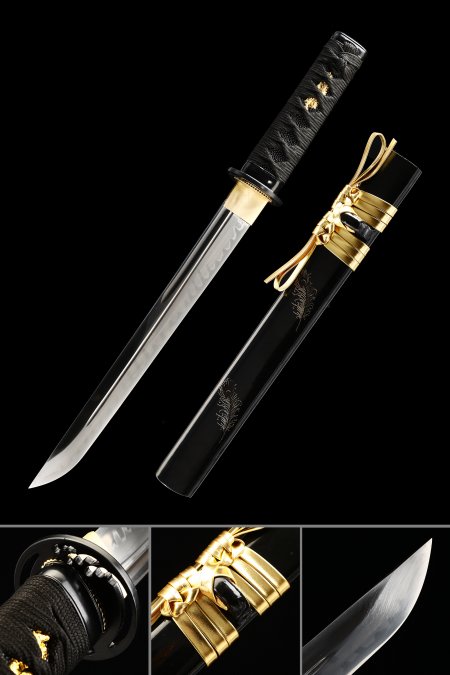
T10 Carbon Steel Hamidashi Tanto with Real Hamon in Black Piano Lacquer Saya - Gold Habaki Accent T10 Carbon Steel Hamidashi Tanto with Real Hamon in Black Piano Lacquer Saya - Gold Habaki Accent