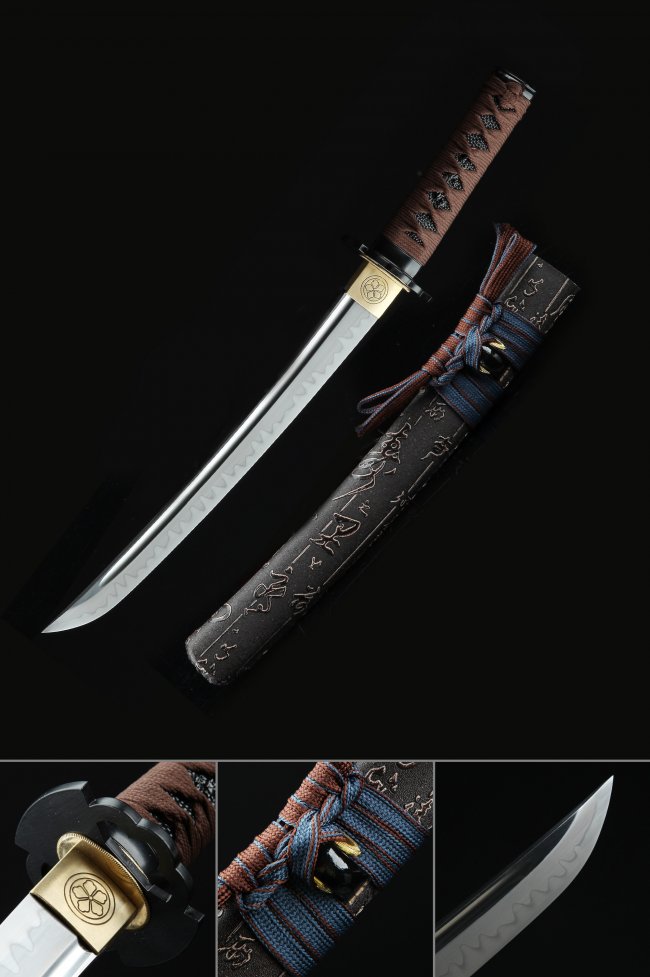
Brown Tanto
Brown on a tanto reads as grounded and traditional — earth tones sit naturally against steel in a way that brighter colors don't, and the combination tends to look like something that belongs in a serious collection rather than on a novelty shelf. The brown tanto in this collection are properly forged and finished, with the handle wrapping and saya color chosen to complement the blade rather than compete with it. The construction holds. Whether you're drawn to the traditional aesthetic, building a display around warmer tones, or just want a tanto that looks like it belongs — take a look at what we have below.
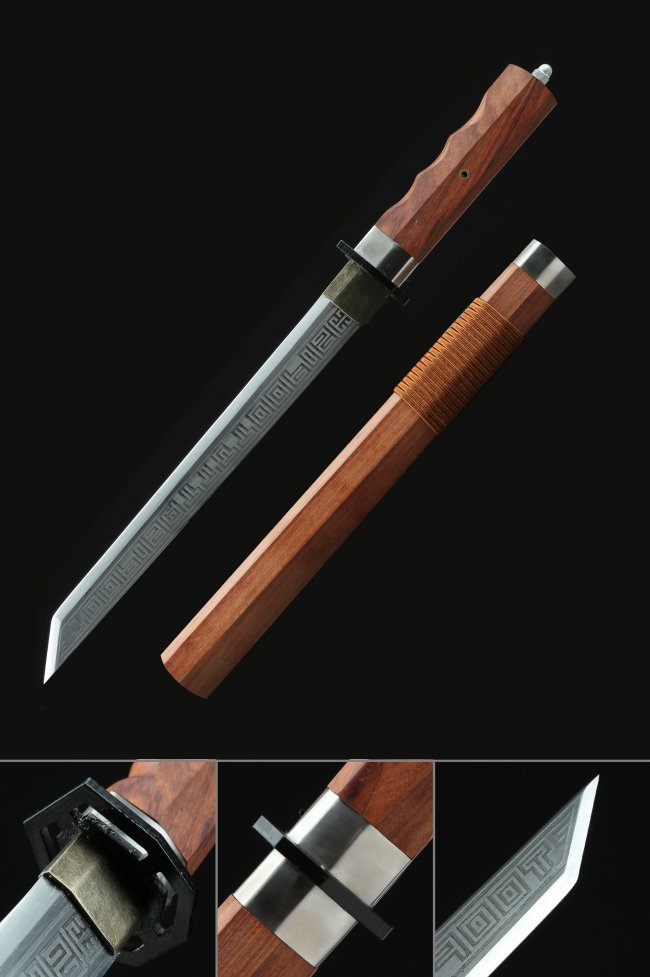
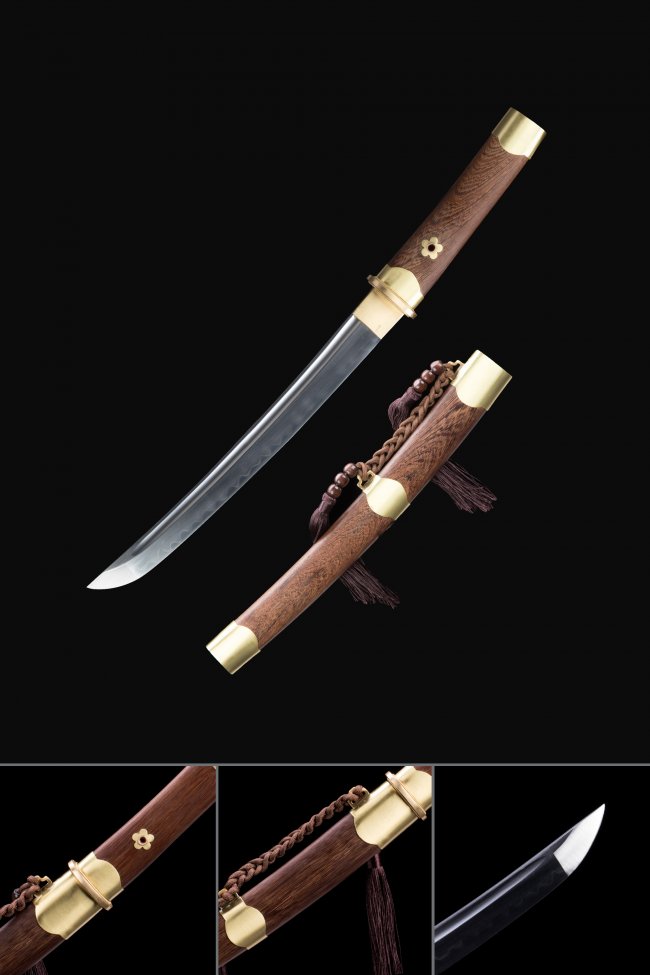
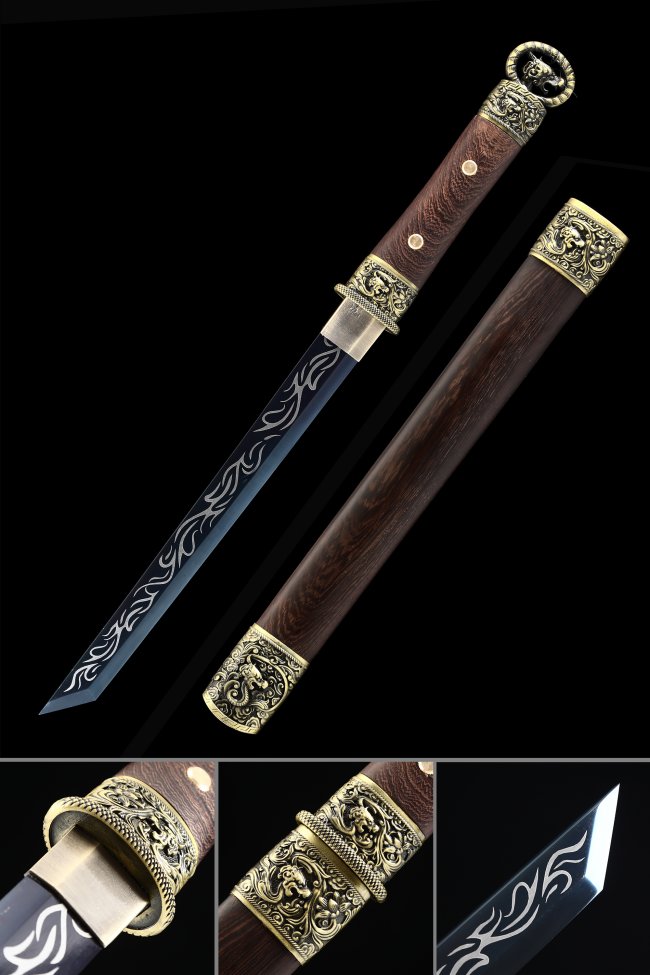
Hamidashi Tanto Manganese Steel With Engraved Geometric Hamon In Rosewood Saya
5 Reviews
ON SALE 15% OFF
$149.00
$179.00
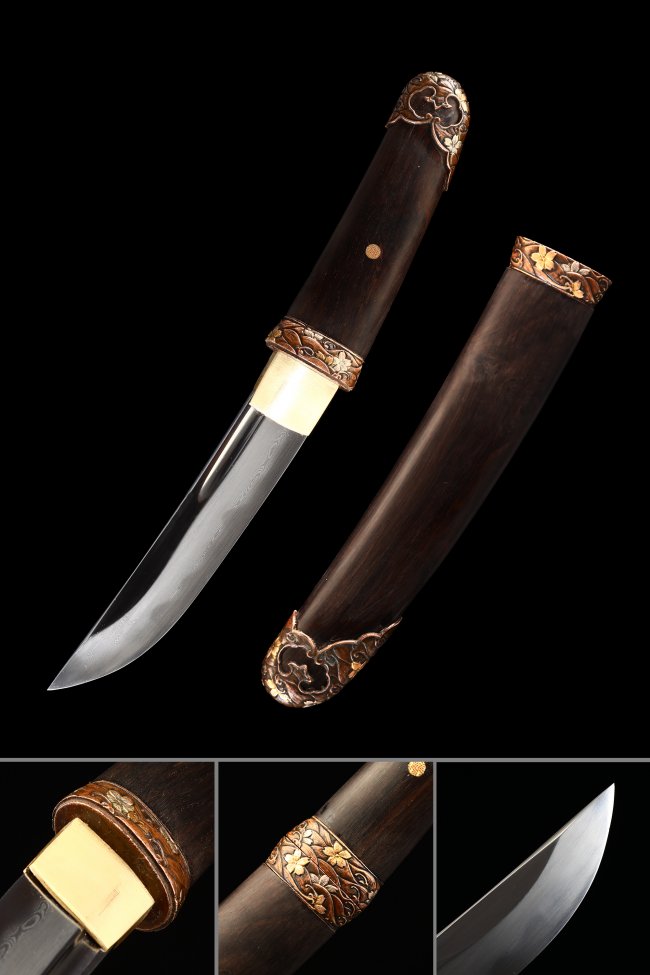
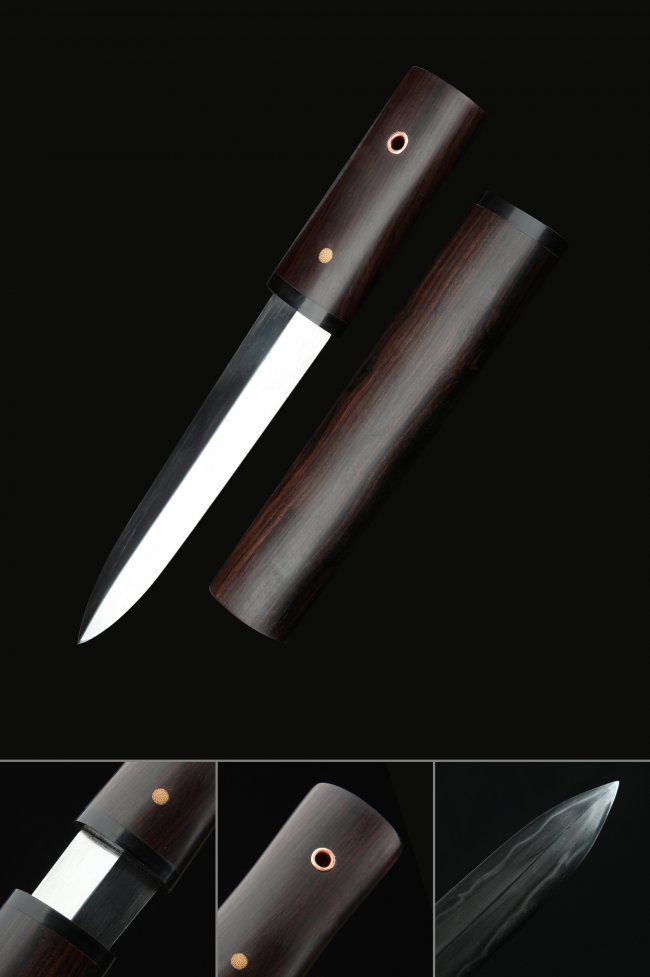
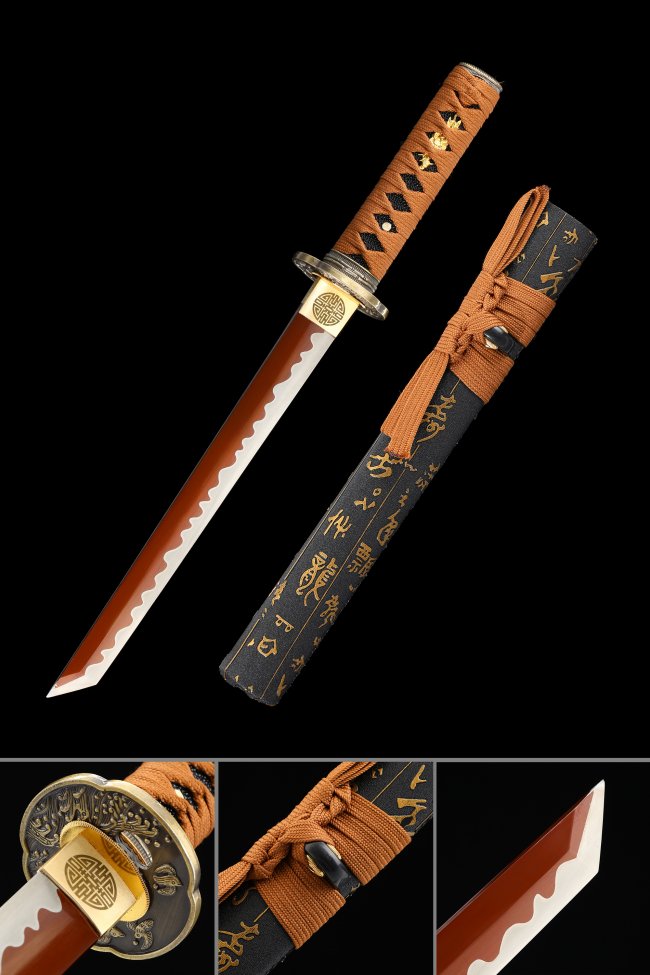
Folded Steel 1045 Carbon Steel Tanto, Full Tang, Dark Red Saya & Dark Red Tsuka
2 Reviews
ON SALE 15% OFF
$189.00
$219.00
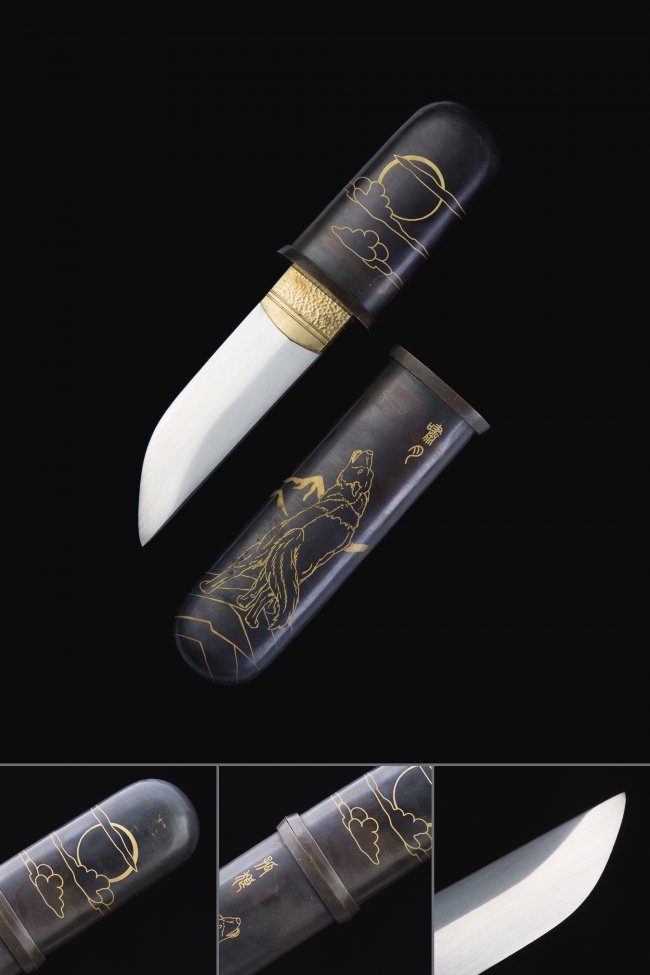
T10 Steel Pocket Tanto With Gold Wolf Engraved Copper Saya - Aikuchi Collectible In Black And Gold
ON SALE 15% OFF
$179.00
$209.00
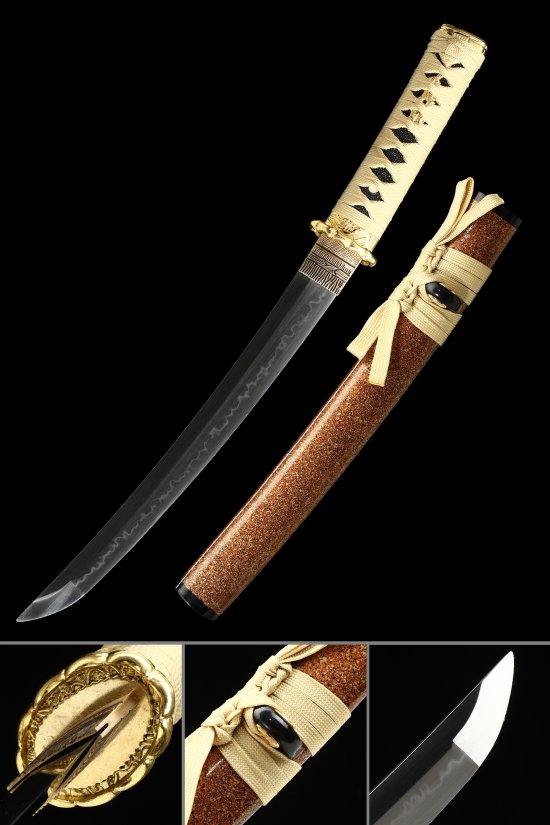
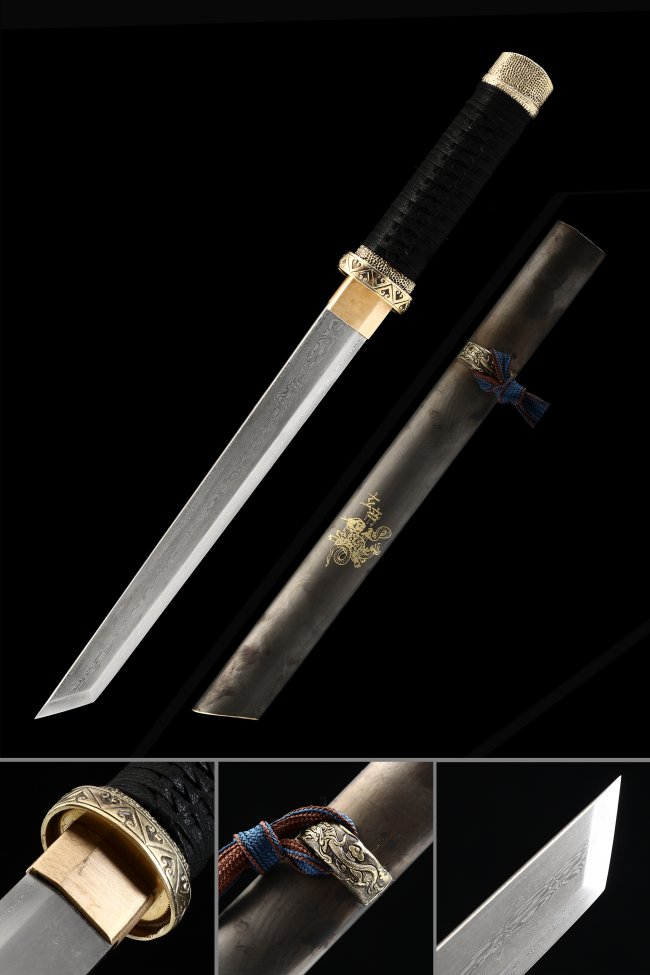
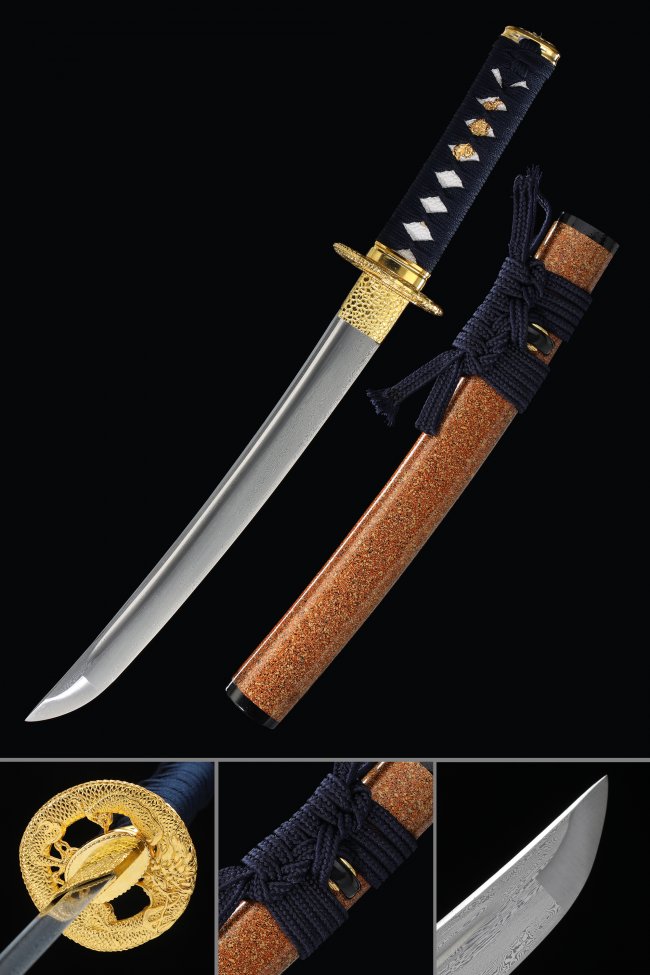
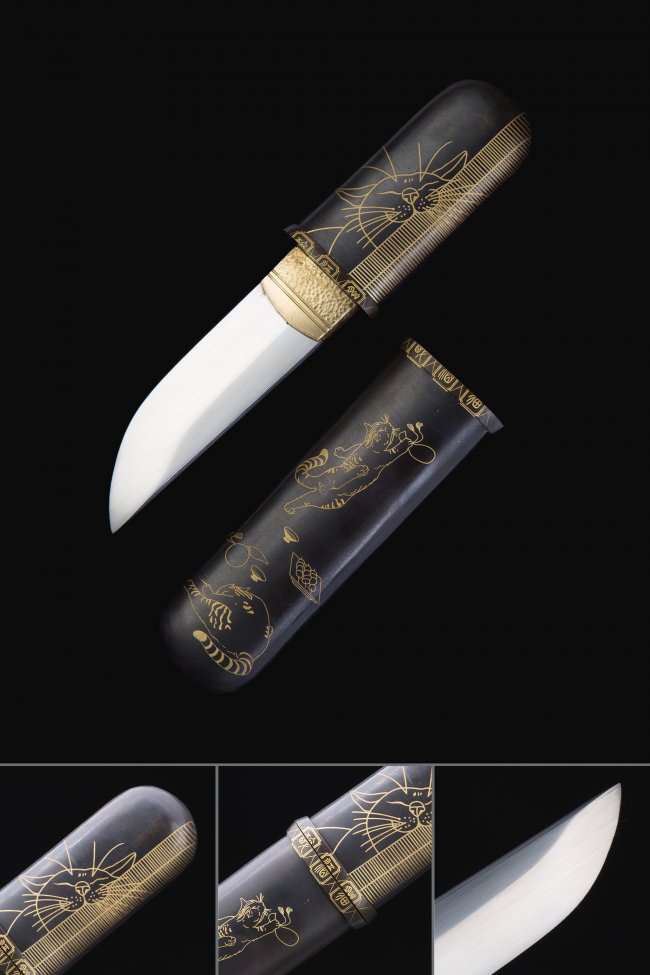
T10 Steel Pocket Tanto With Gold Cat-engraved Black Lacquer Saya - Aikuchi Collectible Knife
3 Reviews
ON SALE 15% OFF
$179.00
$209.00
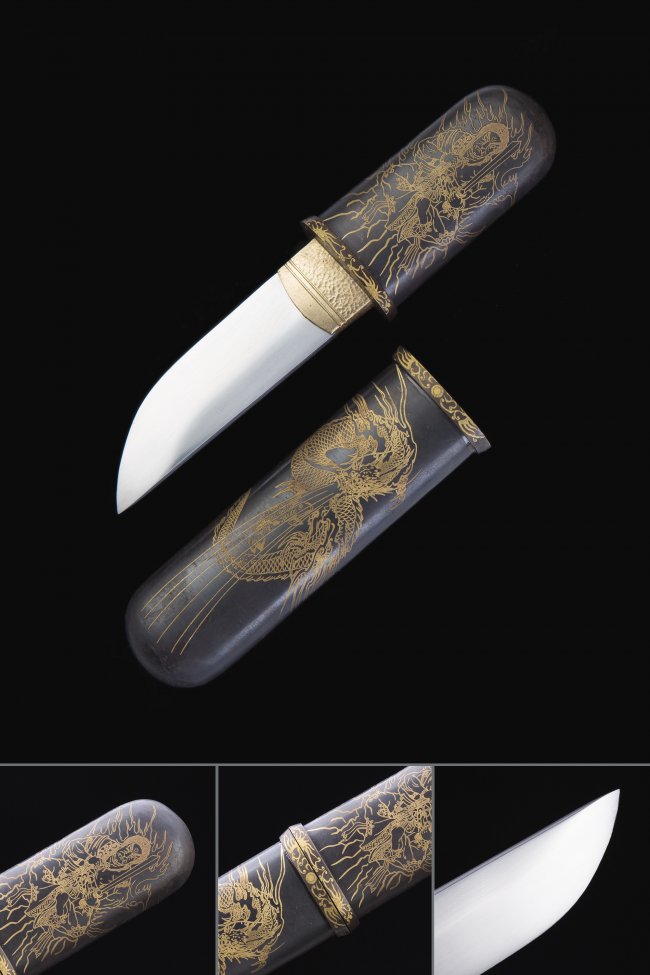
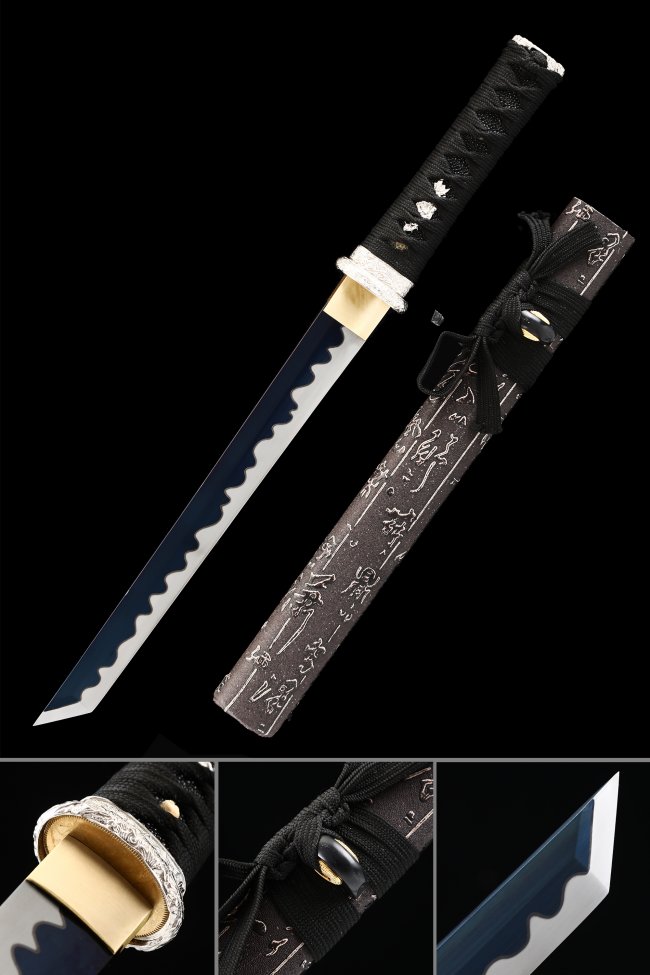
Dragon Tsuba Manganese Steel Tanto, Full Tang, Dark Red Saya & Dark Red Tsuka
1 Reviews
ON SALE 30% OFF
$109.00
$159.00
Related Collections
Customer Reviews
outstanding...this is a beautiful tanto sword...i will buy more.
 T10 Folded Clay Tempered Tanto Sword with Real Hamon in Brown Ito and Kanji-Carved Leather Saya
Verified Purchase
T10 Folded Clay Tempered Tanto Sword with Real Hamon in Brown Ito and Kanji-Carved Leather Saya
Verified Purchase
good communication, fast deliveryr
excellent workmanship of the Tanto sword
T10 Folded Clay Tempered Tanto Sword with Real Hamon in Brown Ito and Kanji-Carved Leather Saya
Verified Purchase
I love the Tanto Sword keep with me every day, shared your company with friend and plan to place another order today. r
Gene
T10 Folded Clay Tempered Tanto Sword with Real Hamon in Brown Ito and Kanji-Carved Leather Saya
Verified Purchase
Beautiful work, very happy with the purchase! Would buy here again.
T10 Folded Clay Tempered Tanto Sword with Real Hamon in Brown Ito and Kanji-Carved Leather Saya
Verified Purchase
The Tanto Sword is beautiful with excellent craftsmanship.
 Hamidashi Tanto Manganese Steel With Engraved Geometric Hamon In Rosewood Saya
Verified Purchase
Hamidashi Tanto Manganese Steel With Engraved Geometric Hamon In Rosewood Saya
Verified Purchase
Very nice piece! Definitely not something you would just buy in the store. Fast shipping and item is exactly as described. Thanks again
T10 Folded Clay Tempered Tanto Sword with Real Hamon in Brown Ito and Kanji-Carved Leather Saya
Verified Purchase
Well crafted, beautiful sword and fast shipping. I'll be a repeat customer for sure!
T10 Folded Clay Tempered Tanto Sword with Real Hamon in Brown Ito and Kanji-Carved Leather Saya
Verified Purchase
Product showed up yesterday to my partners place. They said that it was good quality the pictures all looked great! Great customer service as well, there was a small issue with the address and costumer service helped me get it sorted out in a timely manner. All in all a good experience.
Hamidashi Tanto Manganese Steel With Engraved Geometric Hamon In Rosewood Saya
Verified Purchase
The ito is semi-tight. The blade itself is very well done. Habaki is nicely done. The kahira and fuchi are very plain nothing special but the do their job. Sageo is definitely one of the nicer ones i have seen for a blade of this price.The Tsuba design is nice and the saya has a really cool design. Overall a nice collectors piece. I am happy with the selection.
T10 Folded Clay Tempered Tanto Sword with Real Hamon in Brown Ito and Kanji-Carved Leather Saya
Verified Purchase
A gorgeous piece. I don’t know why I would need more but I want more
T10 Folded Clay Tempered Tanto Sword with Real Hamon in Brown Ito and Kanji-Carved Leather Saya
Verified Purchase
A great service and a great product. Very happy thank you.
T10 Folded Clay Tempered Tanto Sword with Real Hamon in Brown Ito and Kanji-Carved Leather Saya
Verified Purchase
I love the designs on the tanto. This is a great collection and a display.
T10 Folded Clay Tempered Tanto Sword with Real Hamon in Brown Ito and Kanji-Carved Leather Saya
Verified Purchase
I was remarkably pleased with the item I ordered. It is not only beautiful but well crafted .
Thanks.
T10 Folded Clay Tempered Tanto Sword with Real Hamon in Brown Ito and Kanji-Carved Leather Saya
Verified Purchase
Perfect! Love my short sword can't wait to buy more!
T10 Folded Clay Tempered Tanto Sword with Real Hamon in Brown Ito and Kanji-Carved Leather Saya
Verified Purchase
Got here in great condition and is beautifully sharp
T10 Folded Clay Tempered Tanto Sword with Real Hamon in Brown Ito and Kanji-Carved Leather Saya
Verified Purchase
Loading more reviews...