Green Handle Wakizashi
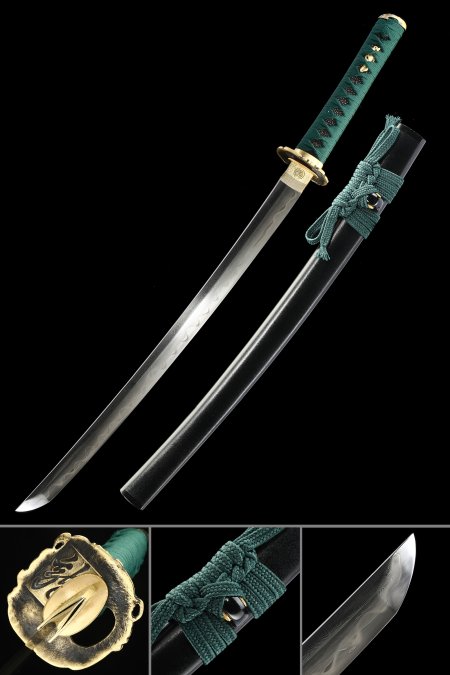
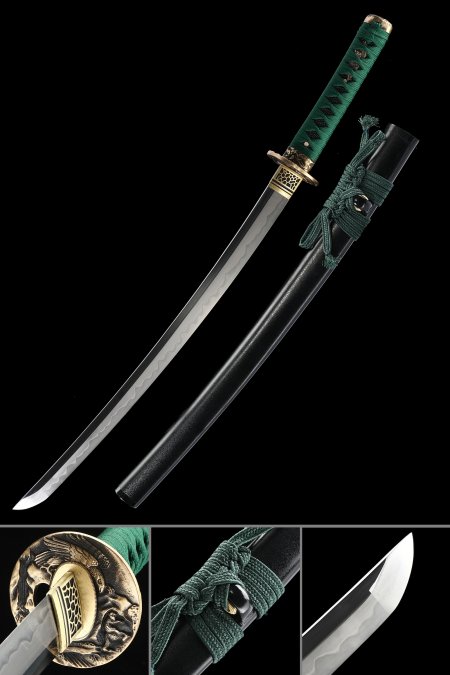
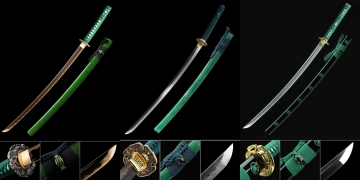
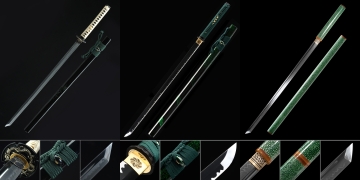
Green Handle Wakizashi brings together the refined proportions of the classical Japanese short sword with a distinctive jade-toned aesthetic that sets it apart on any display. Each piece features hand-wrapped green ito over same' (ray skin) and a lacquered saya, crafted for collectors who appreciate both visual harmony and authentic construction detail. Enjoy free standard shipping on your order, plus a hassle-free return policy for complete peace of mind.
Related Collections
Frequently Asked Questions
What makes a wakizashi different from a katana in length and role?
A wakizashi typically measures between 30 and 60 cm in blade length, placing it firmly between the tanto (dagger) and the full-length katana. In classical samurai practice, the two swords were worn together as a daisho pair, with each filling a distinct functional and ceremonial role. The shorter blade was considered the more personal of the two and was traditionally kept on the wearer even in situations where the longer sword was set aside. For display collectors, this distinction matters because it informs the proportions of the piece: the wakizashi's more compact geometry makes it an excellent standalone display item in spaces where a full katana would overwhelm the setting, while its historical pairing logic makes it a natural complement to a matching katana in a larger collection.
How does folded melaleuca steel differ from T10 carbon steel?
Folded melaleuca steel and T10 carbon steel represent two distinct approaches to blade metallurgy, each with its own visual and structural character. Folded melaleuca steel is produced by repeatedly forge-folding the billet, which redistributes carbon content more evenly and creates the layered surface grain (hada) that is visually distinctive under light. No two folded blades share exactly the same surface pattern, making each piece inherently unique. T10, by contrast, is a modern high-carbon tool steel with a consistent, refined grain. Its real showcase moment comes after differential clay hardening, which produces a vivid hamon temper line along the edge. Collectors who prioritize visible craftsmanship and organic variation tend to favor folded blades, while those drawn to dramatic hamon contrast and reliable edge geometry often prefer T10. Both steels are well-suited to display and long-term collection.
What do dragon and crane tsuba designs symbolize?
Tsuba (sword guards) in Japanese craftsmanship have always served as a canvas for symbolic imagery, and the two motifs featured in this collection are among the most culturally significant. The dragon in Japanese tradition represents celestial authority, transformative power, and protection—making it a recurring motif on objects associated with warriors and nobility. A gold-finish dragon tsuba carries visual weight and commands attention as a centerpiece fitting. The crane, by contrast, symbolizes longevity, purity, and refined elegance; in Japanese culture it is strongly associated with fidelity and is a traditional emblem of good fortune. For a display collector, understanding the symbolism behind the fittings adds a meaningful interpretive layer to the piece and makes it a more engaging conversation point when the collection is shared with guests or fellow enthusiasts.
How should I maintain the green ito and lacquered saya long-term?
Green ito (handle cord) is typically made from cotton or silk and wrapped over same' (ray skin) in the traditional tsuka-maki style. To preserve the wrapping, avoid prolonged exposure to direct sunlight, which can fade the color over time, and keep the handle away from excessive moisture. The saya (scabbard) features a lacquered finish that is best maintained by wiping with a dry or very lightly dampened soft cloth—never abrasive materials that could scratch the surface. For the blade itself, a light application of choji oil or a high-grade mineral oil every two to three months is sufficient to prevent surface oxidation. When storing the piece long-term, a climate-stable environment with moderate humidity (around 40–60%) is ideal. Avoid airtight cases without any desiccant, as trapped moisture accelerates oxidation and can affect the ito wrapping and lacquer over time.
Does a green handle wakizashi work as a gift for a sword collector?
A green handle wakizashi makes an excellent gift for anyone with a serious interest in Japanese sword aesthetics or East Asian decorative arts. The green ito and black lacquer saya color combination is visually striking without being ostentatious, giving the piece broad appeal across different display tastes. For a collector who already owns a katana with matching or complementary fittings, a wakizashi introduces the possibility of building toward a daisho display pairing—a goal many collectors find compelling. If the recipient is new to collecting, this style of wakizashi also serves as an accessible entry point: the piece is self-contained, visually complete, and carries enough material and symbolic depth to reward growing knowledge. A dedicated sword stand or display mount makes a practical and thoughtful accompaniment to the gift.