What makes green and white katana fittings distinctive?
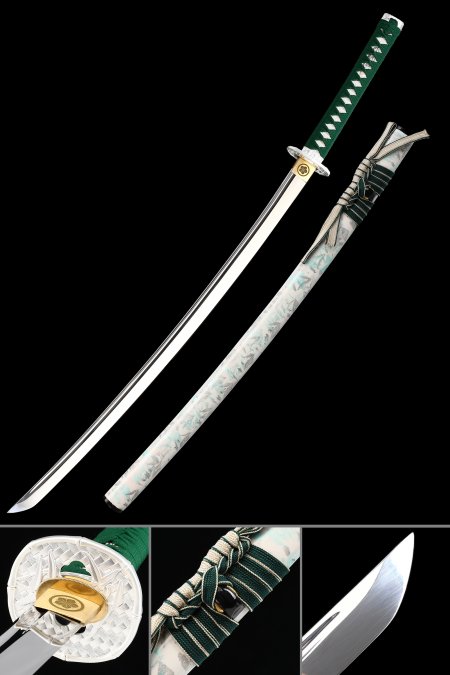
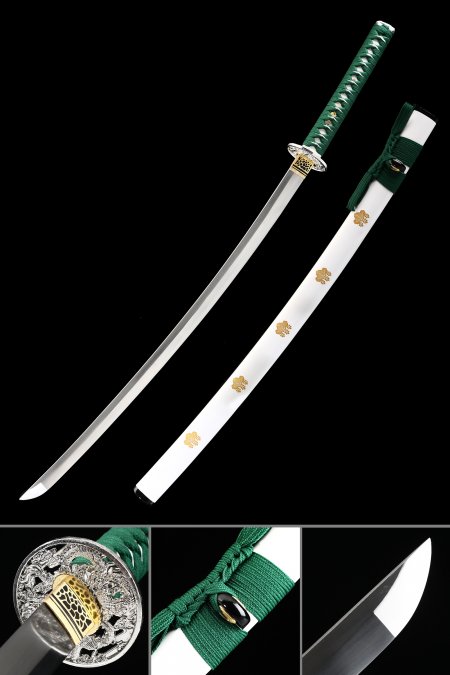
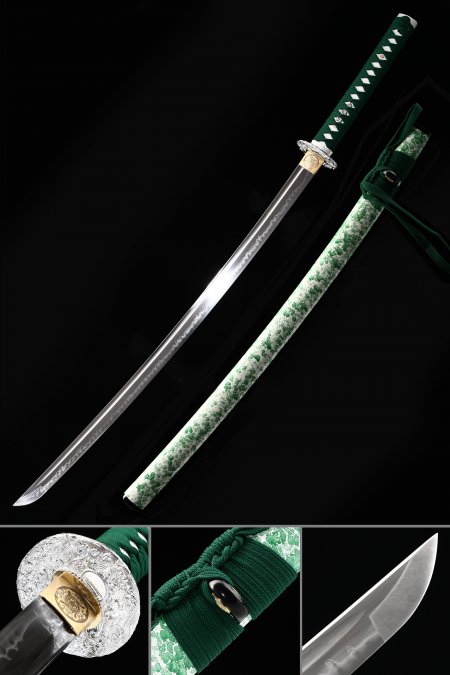
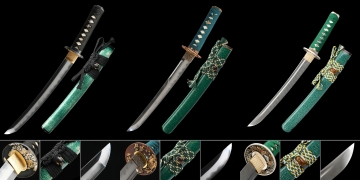
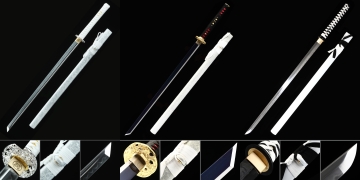
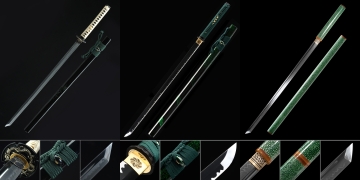
The appeal lies in how two visually opposite tones are unified through material consistency. White appears across lacquered saya, ivory-tone same (ray skin), and bleached cotton or synthetic ito, while green is introduced through dyed silk wrapping, jade-tinted tsuba patina, or marble-veined scabbard composites. When these elements share a consistent finish level - all matte, or all high-gloss - the result reads as intentional design rather than mismatched parts. Collectors who specialize in display arrangements often prefer this pairing specifically because it photographs cleanly against dark display surfaces and wood-grain backgrounds.
How does T10 clay-tempered steel differ from 1095 in these blades?
Both are high-carbon steels that polish to a bright, reflective surface, but their internal structure differs meaningfully. 1095 is through-hardened, producing a consistent grain across the blade's cross-section. T10 tool steel contains trace tungsten, which refines the carbide structure and improves wear resistance, but its defining feature in collectible katana is the clay-tempering process: a clay coat is applied to the spine before quenching, causing the edge to cool faster than the body. This differential hardening produces a visible hamon - the misty transition line between hard edge steel and softer spine - with natural nie crystals visible under magnification. Each T10 hamon is unique, which is why collectors treat these blades as individually documented pieces rather than production units.
How should I care for a white lacquer saya long-term?
White lacquer is more vulnerable to yellowing and micro-scratching than darker finishes, so storage and handling habits matter significantly. Keep the saya out of direct sunlight and away from UV-emitting display lights - a warm-white LED positioned above rather than aimed directly at the saya surface works well. When handling, hold the saya near the koiguchi (mouth) and avoid gripping the center lacquer body with bare hands, as skin oils can dull the finish over time. For storage in high-humidity climates, a wooden sword bag lined with soft fabric helps buffer moisture fluctuation without trapping condensation against the lacquer. Never apply wax or oil polishes to the saya surface - the lacquer is a sealed finish that requires no treatment, only occasional gentle wiping with a dry microfiber cloth.
Is a green and white katana a good gift for a collector?
This color pairing works exceptionally well as a gift precisely because it carries symbolic weight beyond simple aesthetics. In Japanese cultural tradition, white is associated with sincerity and new beginnings, while green connects to growth, balance, and natural endurance. Together they make a visually cohesive piece that carries meaning without requiring the recipient to have deep knowledge of sword history. For collectors who already own dark or black-mounted katana, a green and white piece introduces strong visual contrast to a display arrangement. Gifting a T10 clay-tempered option also gives the recipient a blade with a one-of-a-kind hamon, which experienced collectors recognize as a mark of genuine craft investment.
What display stand complements a white and green katana best?
The saya's white finish creates the most impact against stands in deep walnut, ebonized oak, or matte black lacquer - dark tones that let the blade and scabbard read as the visual focal point. A horizontal two-tier stand positions katana at the traditional display angle and keeps both the tsuka wrapping and saya fully visible. If you are displaying a set of swords together, staggering the heights with a three-tier stand creates depth without requiring a large footprint. Avoid stands with gold or chrome hardware, which can compete with decorative tsuba metalwork. For a wall-mounted option, a horizontal hanger with padded cradles protects the ito and saya finish better than bare wooden pegs.