Orange Tachi Swords
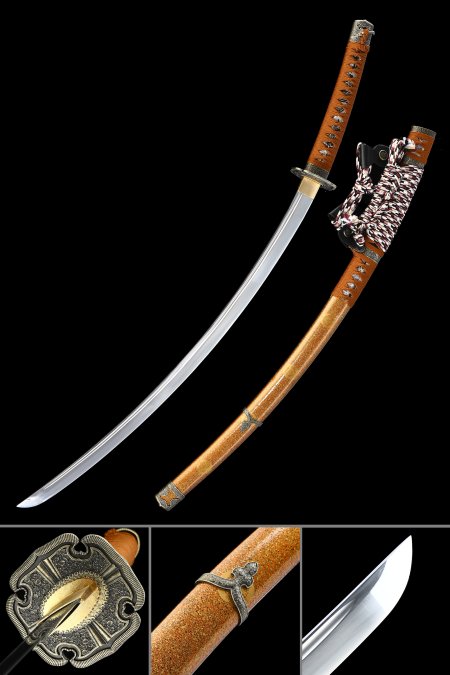
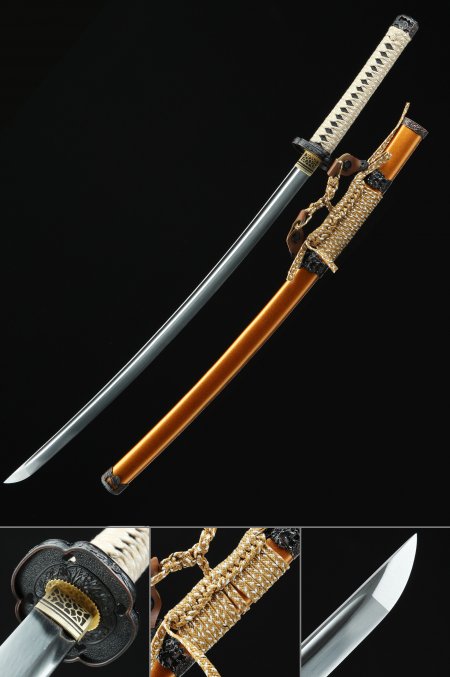
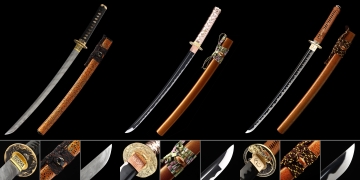
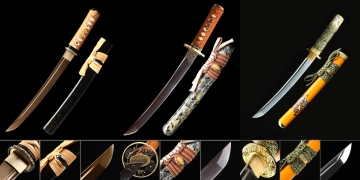
Orange Tachi swords bring a striking visual identity to any serious collection, pairing the commanding length of classical Japanese tachi geometry with vivid lacquered sayas that command attention on a display stand. Each piece is hand-forged from high-carbon steel and fitted with period-inspired fittings — from chrysanthemum tsuba to bronze scroll guards — that reflect authentic Heian and Kamakura aesthetic traditions. Enjoy free standard shipping on every order, plus a straightforward return policy so you can collect with complete confidence.
Related Collections
Frequently Asked Questions
What makes a tachi different from a katana in terms of design?
The tachi predates the katana by several centuries and differs in a few measurable ways. Tachi blades are typically longer — often exceeding 70 cm in nagasa — and carry a more pronounced curvature (sori) concentrated toward the base of the blade rather than the center. They were historically worn edge-down suspended from the belt, while katana were thrust through the belt edge-up. This difference in carry orientation directly influenced blade geometry: the deeper curve of a tachi was optimized for a drawing motion from horseback. On a display stand, the tachi's longer, more dramatically curved silhouette gives it an unmistakably classical presence that distinguishes it clearly from a katana or wakizashi.
What is 1095 carbon steel, and why do collectors value it?
1095 is a high-carbon steel containing approximately 0.95% carbon, which places it in a range that responds exceptionally well to differential heat treatment. When a blade is clay-coated along the spine and quenched, the edge cools rapidly and becomes hard while the spine cools slowly and remains more flexible. This process produces the hamon — the visible temper line running along the edge — which is one of the most sought-after aesthetic features in Japanese-style blade collecting. The clarity and activity of the hamon varies with the smith's technique, giving each 1095 blade its own distinct character. Collectors who study kantei (blade appraisal) often gravitate toward 1095 for this reason: the steel records the maker's process in a way that stainless alternatives simply cannot replicate.
How should I care for a lacquered hardwood saya at home?
Lacquered sayas are durable but benefit from a few straightforward habits. Avoid exposing the saya to rapid humidity swings — the wood beneath the lacquer can expand and contract, eventually causing the lacquer surface to crack or the saya halves to warp. Store the sword horizontally or on a dedicated stand in a room with stable indoor humidity, ideally between 40% and 60% RH. Clean the exterior with a soft, dry cloth; avoid solvent-based cleaners, which can dull or cloud the lacquer finish. If the blade is stored in the saya long-term, apply a light coat of choji oil to the blade first to prevent moisture transfer from the wood interior. Inspect the koiguchi (saya mouth) periodically to ensure the fit remains snug but not binding.
What display setup works best for a full-length tachi?
Because tachi blades are notably longer than katana, standard two-tier katana stands are often too narrow to support the full length comfortably. A dedicated tachi stand or a horizontal wall mount with adjustable peg spacing is the practical choice. When mounting on a wall, orient the blade with the edge facing downward — the historically correct tachi presentation — and position it at eye level so the curve of the blade is visible from across the room. The orange lacquer saya will reflect ambient light effectively, so placing the display where natural light or a directed gallery spotlight can reach the saya will maximize the visual impact. For a multi-sword arrangement, tachi typically anchor the display as the longest and most visually dominant piece.
Are chrysanthemum and scroll tsuba historically accurate motifs?
Both motifs have deep roots in Japanese decorative metalwork. The chrysanthemum (kiku) is one of the most revered symbols in Japanese culture, associated with the imperial family and used extensively in sword furniture from the Heian period onward. Tsuba featuring kiku mon (chrysanthemum crest) were considered marks of prestige and appeared on swords presented as formal gifts or awarded by nobility. Scroll and vine motifs — often rendered in bronze or shakudo — reflect the karakusa arabesque patterns that entered Japanese decorative arts via continental influence during the Tang period and were fully naturalized into Japanese metalwork by the Muromachi era. On a display piece, these motifs are not merely decorative choices; they situate the sword within a recognizable historical visual vocabulary.