What makes T10 steel a preferred choice for hamon display?
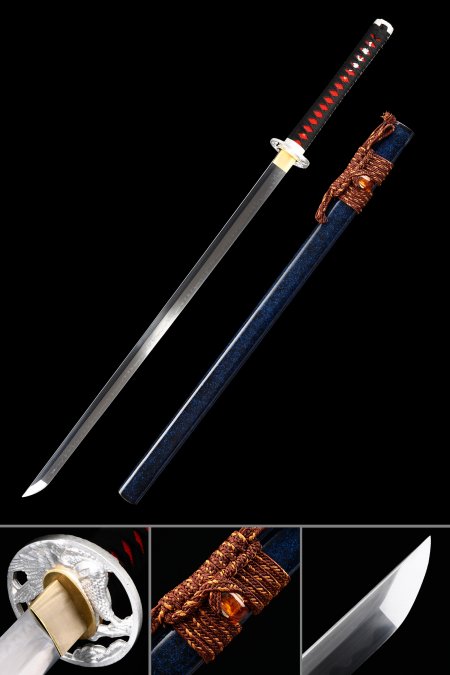
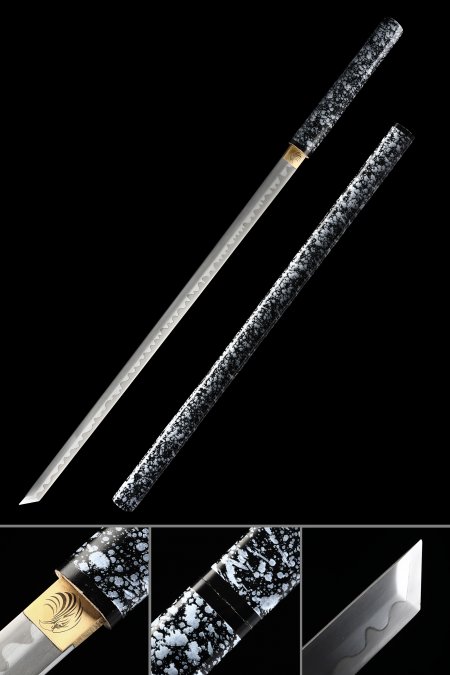
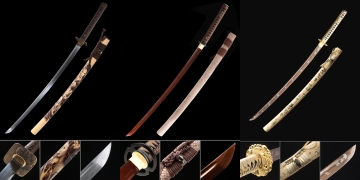
T10 is a high-carbon tool steel with a carbon content of approximately 0.95–1.05%, combined with trace amounts of tungsten that improve edge retention and grain stability. When clay-tempered and quenched, T10 produces a hamon with exceptional visual clarity — the boundary between the hardened edge zone and the softer spine tends to be well-defined and rich in activity (the small crystalline formations known as nie and nioi). Lower-carbon steels or stainless alloys either cannot form a true hamon or produce one that is far less pronounced. For collectors who prioritize the temper line as an aesthetic focal point, T10 consistently delivers a more rewarding result than most comparable steels at this level.
How does a ninjato differ from a traditional katana in profile?
The ninjato is conventionally characterized by a straighter blade geometry and a more compact overall length compared to the curved, longer tachi or katana profiles. The reduced curvature places the point of balance closer to the hilt, which affects how the piece feels when held or displayed. The tsuba on a ninjato is often square or distinctively shaped rather than the round or oval guard typical on a katana — in this collection, that guard takes the form of a cast phoenix motif, making the distinction immediately visible. For the collector, the ninjato offers a recognizably different silhouette that stands out in a mixed display and represents a separate thread of Japanese sword culture.
What is the best way to store a lacquered saya long-term?
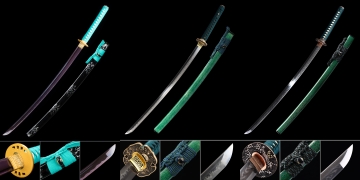
Lacquered sayas perform best in stable environmental conditions — ideally between 45–65% relative humidity and away from direct sunlight, which can cause fading and micro-cracking in the finish over time. Avoid storing the blade inserted tightly for extended periods; a slight loosening of the fit allows for minor wood expansion without stressing the lacquer. Lightly wiping the exterior with a soft, dry cloth every few months removes dust without abrasion. If the saya is displayed horizontally, rotating its orientation occasionally helps prevent uneven warping. Never use water or alcohol-based cleaners on a lacquered surface, as both can lift or cloud the finish.
Is the phoenix tsuba cast or hand-carved?
The phoenix tsuba in this collection is cast metal — a process that allows the intricate feather detail and spread-wing silhouette of the phoenix motif to be reproduced with high consistency across pieces. Cast tsuba have a long historical precedent in Japanese sword furniture; many antique examples from the Edo period were cast in iron or copper alloys rather than carved. The gold-accented variant on the Shikomizue configuration uses a brass-family alloy that holds fine detail well and develops a warm patina over time if left uncoated. For display purposes, the cast construction means the relief detail reads clearly even from a distance, making the phoenix imagery an effective visual anchor in a wall-mounted arrangement.
Does the Shikomizue configuration affect how the piece is displayed?
The Shikomizue is a concealed-blade format in which the sword is housed within what appears to be a walking staff or cane-like outer shell — though in the collectible context here, it refers to a sword fitted with an elongated, cane-style saya in a marble finish. This affects display in practical ways: the piece is longer and more slender in profile than a standard ninjato mounting, making it better suited to a vertical floor stand or a longer horizontal wall rack. The marble-finish saya also creates a strong visual contrast with more traditionally lacquered pieces, so collectors who enjoy varied textures within a single display shelf will find it adds compositional interest alongside darker or plainer scabbard finishes.