Purple Handle Ninjato
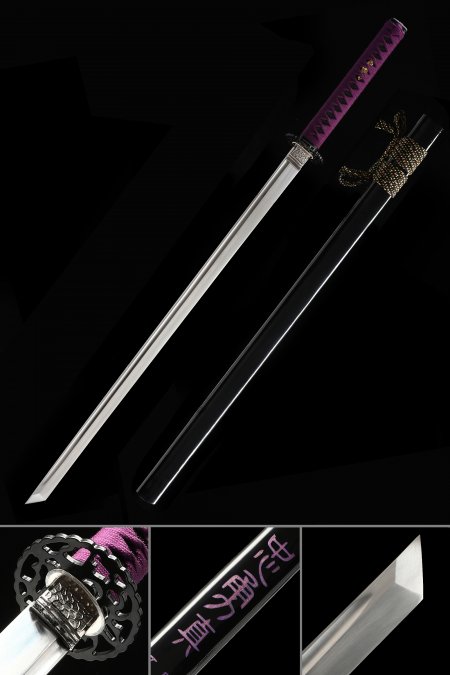
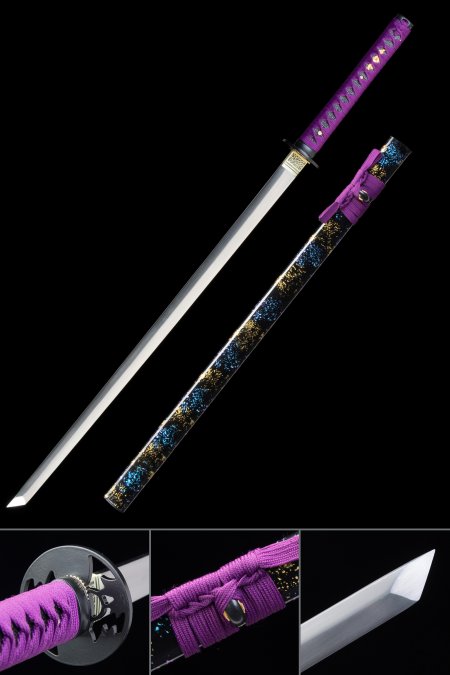
Purple handle ninjato swords bring a striking visual identity to any serious collection, pairing unconventional aesthetics with genuine hand-forged construction. Each piece in this selection features authentic ito wrapping in deep purple, paired with carefully lacquered saya and detailed tsuba work that rewards close inspection. Explore our full range with free domestic shipping and hassle-free returns on every order.
Related Collections
Frequently Asked Questions
What steel is typically used in collectible ninjato swords?
Collectible ninjato in this range are forged from mid-carbon steel grades, most commonly 1045, 1060, or manganese steel. 1045 carbon steel is a practical baseline — it achieves sufficient hardness through heat treatment while remaining less brittle, which suits the straight blade geometry of the ninjato format well. 1060 carbon steel is denser and holds a finer edge, making it a step up for collectors who prioritize material quality. Manganese steel offers a fine-grained microstructure with good toughness, and it appears frequently in straight sword builds. None of these grades are stainless — they are genuine carbon steels that require light maintenance to prevent surface oxidation during long-term display.
How is a ninjato different from a katana or chokuto?
The ninjato is distinguished from the katana primarily by blade geometry: it features a straight or minimally curved blade with a squared tip, compared to the katana's pronounced curvature and pointed kissaki. The chokuto is historically the oldest Japanese straight sword form and is often used interchangeably with ninjato in collectible contexts, though purists note the chokuto predates the ninjato concept by centuries. The katana's curve was developed to optimize draw speed from a hip-mounted scabbard, while the ninjato's straight profile gives it a different visual weight and silhouette that many collectors find appealing precisely because it diverges from the dominant katana aesthetic. Saya for ninjato are also typically straight-sided rather than curved.
Does purple ito fade over time, and how do I protect it?
Purple is one of the more light-sensitive ito colors because the dyes used to achieve deep violet tones — whether on synthetic cord or silk — can shift toward red or brown with prolonged UV exposure. To preserve the color, display your ninjato away from direct sunlight and strong artificial lighting. A UV-filtering display case offers the best long-term protection. The ito wrap itself should be inspected periodically for loosening at the knot points; if the wrap begins to shift, a collector can carefully re-tension it without replacing the full cord. Avoid handling the tsuka with bare hands frequently, as skin oils can discolor the cord at contact points over time. Light cotton gloves during handling are a simple and effective precaution.
Is a full-tang construction important for a display ninjato?
For collectible and display purposes, full-tang construction matters primarily as a marker of build quality rather than functional necessity. A full-tang blade — where the steel runs completely through the handle — indicates that the manufacturer did not cut corners on the core structure. Rat-tail or partial-tang constructions are common in low-cost novelty pieces and are a reliable signal that other components may also be lower grade. When evaluating a display ninjato, full-tang construction alongside a properly peened or pinned mekugi (handle peg) is a good baseline indicator that the piece was built to a standard worth collecting. It also means the furniture — tsuba, fuchi, kashira — fits correctly and securely, which matters for long-term display presentation.
Can a purple ninjato be displayed alongside other Japanese blade styles?
Absolutely — themed display groupings are one of the more satisfying ways to present a Japanese blade collection. A purple handle ninjato pairs naturally with other pieces sharing the same handle color, such as purple katana or tanto, creating a unified color story across different blade formats. The straight silhouette of the ninjato also provides visual contrast against the curved katana profile, making side-by-side wall mounts particularly dynamic. Collectors who prefer cohesion by steel type rather than color can group the ninjato with other carbon steel pieces of similar finish. Whichever approach you take, ensure your mounting hardware is rated for the combined weight and that pieces are spaced far enough apart that saya do not contact each other during minor vibration.
Customer Reviews
Mark Bell
California, United States
It arrived quickly. Delivered with care.r
r
This would be my sixth.r
r
This one, like Rengoku's Flame Nichirin, arrived scalpel sharp.r
Be very careful. r
High quality. Excellent site.r
r
Helpful online assistance, should you ever need it.
 |
Manganese Steel Straight Sword with Purple Ito, Black Lacquer Saya - Law Replica |