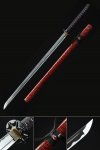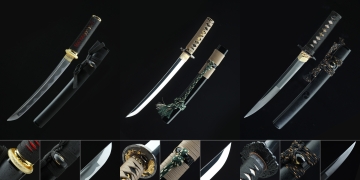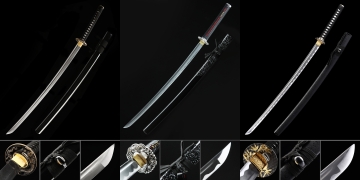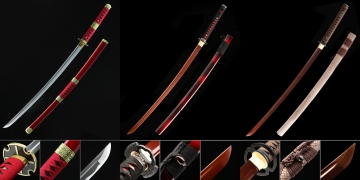
Darkred Ninjato

Explore our curated selection of darkred ninjato — straight-bladed collectible swords distinguished by rich crimson tones across blades, scabbards, and fittings. Each piece is hand-assembled with traditional Japanese sword-making techniques, featuring full-tang construction and carefully wrapped tsuka for an authentic presentation. From Damascus steel variants with layered grain patterns to polished 1045 carbon steel editions with engraved blades, every ninjato in this collection makes a bold display centerpiece. All orders ship free with hassle-free returns.

Showing 1 Products

Related Collections

Black Tanto61 items


367 Reviews

Black Katana407 items


2455 Reviews

Darkred Katana62 items


252 Reviews

Darkred Tanto3 items


4 Reviews

Frequently Asked Questions

What makes a ninjato different from a katana?
The most visible distinction is blade geometry. A ninjato features a straight blade — sometimes called a chokuto profile — whereas a katana has a pronounced curvature known as sori. This straight design gives the ninjato a distinctly different silhouette on a display stand and a different balance point when held. Ninjato blades also tend to be shorter, typically falling between 50 and 60 centimeters, compared with the katana's standard 60 to 73 centimeters. The tsuba on many ninjato models is square rather than round, echoing historical depictions. From a collector's perspective, having both a curved katana and a straight ninjato in the same display creates a compelling visual contrast that highlights the diversity of Japanese sword forms.
Why are some blades in this collection tinted red?
The red coloring on certain ninjato blades is achieved through controlled oxidation or acid-etching processes applied after the steel is shaped and polished. Some smiths use a heated chemical bath that deposits a thin, stable oxide layer on the surface, producing a deep crimson tone without affecting the steel's underlying hardness. Others employ selective acid treatments that darken the steel to a reddish hue while simultaneously revealing the grain pattern beneath. The result is purely aesthetic — it gives the blade a dramatic look that pairs naturally with darkred saya lacquer and complements themed displays. The coating is stable under normal indoor conditions, though a light application of choji oil every few months will help preserve the finish.
What steel types are available in darkred ninjato?
This collection includes three primary steel categories. 1045 carbon steel is a medium-carbon alloy that balances hardness with resilience, making it straightforward to maintain and resistant to accidental nicks during handling. Spring steel, often 5160 or 9260, contains silicon or chromium additions that give the blade notable flex and return, which contributes to long-term structural stability on display. Damascus steel pieces are forged from multiple layers — sometimes exceeding 200 — of alternating high- and low-carbon steel, then etched to reveal the distinctive wavy hada pattern. Each steel type offers a different visual character and collecting appeal, so the choice often depends on whether you prefer a clean polished surface, a dramatic fold pattern, or a resilient everyday-display piece.
How should I store and maintain a darkred ninjato?
For long-term display, keep the sword in a climate-controlled room with relative humidity between 40 and 55 percent. Excess moisture accelerates surface oxidation, especially on carbon steel blades. Apply a thin layer of choji oil — refined clove oil blended with mineral oil — to the blade every four to eight weeks using a soft, lint-free cloth. Avoid touching the blade with bare fingers, as skin oils contain salts that can etch the finish over time. When storing inside the saya, ensure the habaki seats firmly so the blade does not slide and scratch the scabbard's interior lacquer. If you display the sword on a horizontal rack, position it with the edge facing upward and the tsuka to the left, following traditional Japanese convention.
Are these ninjato suitable as gifts for sword collectors?
Absolutely. A darkred ninjato makes a distinctive gift because it combines an eye-catching color palette with a blade profile that many collectors do not yet have in their displays. The straight-blade form stands out immediately next to curved katana and wakizashi, giving the recipient an instant conversation piece. Presentation-wise, each sword arrives in its lacquered saya with fitted fittings, so it is display-ready out of the box. If the recipient already collects ninjato, the range of steel options — Damascus, 1045 carbon, spring steel — means you can select a variant that complements rather than duplicates what they own. Pairing it with a matching darkred katana or tachi from related collections creates a cohesive gift set with serious visual impact.

Customer Reviews

Stephen Oliphant Pennsylvania, United States

Originally sent item with different colors than the picture. Was told that the did not have the exact color as shown. I asked for a return. They sent a return shipping label. I sent the item back. While the item was in transfer, the sword in the correct color scabbard and handle inlays showed up on my doorstep. Happy that I got the correct item. Could have let me know that it was coming.

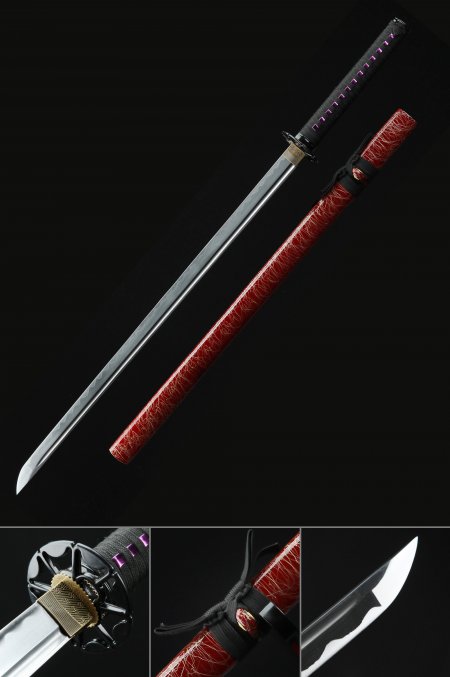
1045 Carbon Steel Chokuto Ninjato with Red Lacquer Saya - Black Tsuba & Purple Menuki Katana 1045 Carbon Steel Chokuto Ninjato with Red Lacquer Saya - Black Tsuba & Purple Menuki Katana
Cart 0 Items

Your cart is empty