FAST SHIP
18 Reviews
ON SALE 15% OFF
$139.00$159.00

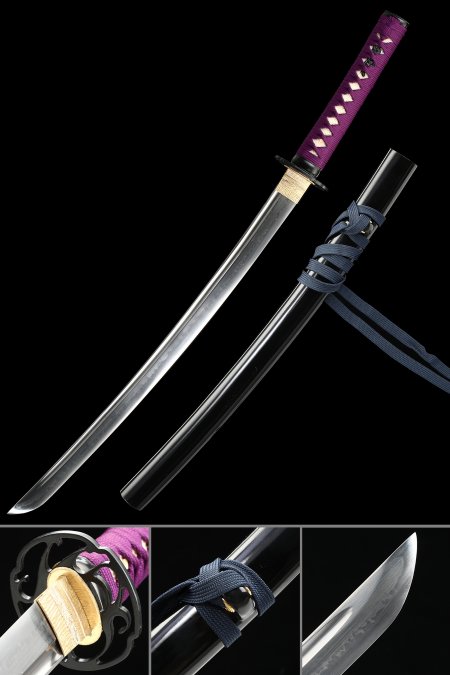
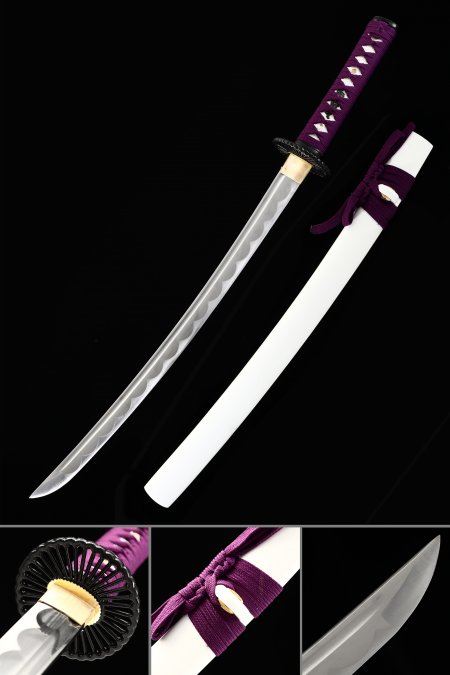
Purple Handle Wakizashi swords bring together rich violet silk wrapping and masterfully finished saya to create display pieces that command attention in any collection. Each sword features a full-tang construction with hand-applied ito in deep purple hues, paired with lacquered scabbards that complement the bold color story. Free standard shipping is included on every order, backed by a hassle-free return policy.
absolutely beautiful a true work of art completed by a true craftsman
 |
1045 Carbon Steel Wakizashi Sword Full Tang with Purple Tsuka Wrap and White Piano Lacquer Saya |
It is a very beautiful wakizashi. The steel and binding are very nice. The handle though does have a small wiggle in the base of it.
|
1045 Carbon Steel Wakizashi Sword Full Tang with Purple Tsuka Wrap and White Piano Lacquer Saya |
The blade is absolutely beautiful well made high quality material I will purchase from true katana again
|
1045 Carbon Steel Wakizashi Sword Full Tang with Purple Tsuka Wrap and White Piano Lacquer Saya |
Well made, only complaint is the metal of the blade doesn't seem to go fully into handle, feels like the weight of it is far too forward, otherwise great purchase
|
1045 Carbon Steel Wakizashi Sword Full Tang with Purple Tsuka Wrap and White Piano Lacquer Saya |
This is a very fine wakazashi and exactly what I will need for the upcoming Legend of the 5 Rings LARP I'm about to take part in.
|
1045 Carbon Steel Wakizashi Sword Full Tang with Purple Tsuka Wrap and White Piano Lacquer Saya |
Shipment on time, received in good condition.
Generally pleased with overall appearance, weight
|
1045 Carbon Steel Wakizashi Sword Full Tang with Purple Tsuka Wrap and White Piano Lacquer Saya |
Wakizashi was fantastic when it came in probably the best sword I’ve ever gotten from this site ever
|
1045 Carbon Steel Wakizashi Sword Full Tang with Purple Tsuka Wrap and White Piano Lacquer Saya |
Got this as a Christmas gift for my husband. He really likes it and the blade is sharp even as a display piece. Will purchase from here more!
|
1045 Carbon Steel Wakizashi Sword Full Tang with Purple Tsuka Wrap and White Piano Lacquer Saya |