Red-black 1060 Carbon Steel Katana
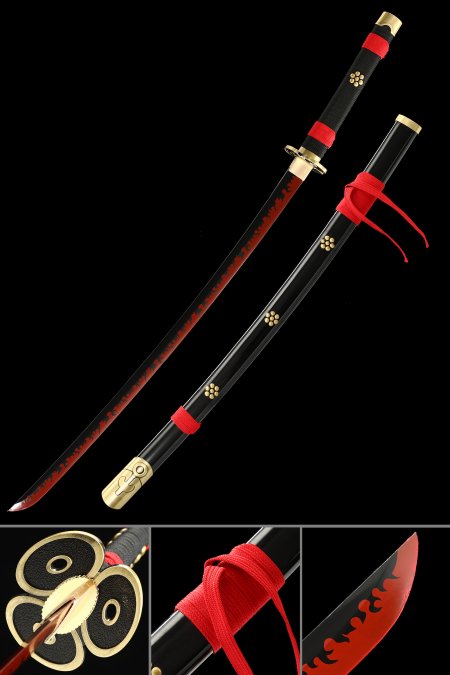
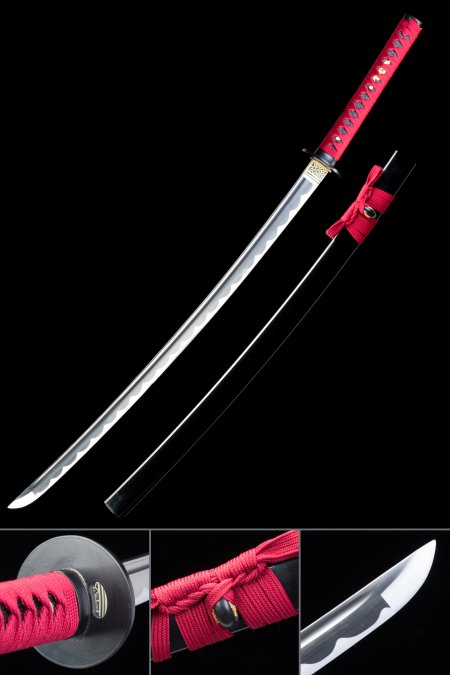
Defined by the striking interplay of crimson and shadow, our Red-Black 1060 Carbon Steel Katana collection brings together bold aesthetic choices and reliable mid-grade metallurgy. Each piece is hand-assembled with red ito wrap, lacquered black saya, and carefully fitted fittings - crafted for the discerning collector who values visual drama as much as authentic construction. Free standard shipping is included on every order, and we stand behind each piece with a hassle-free return policy.
Related Collections

Frequently Asked Questions
What makes 1060 carbon steel a good choice for collectible katana?
1060 carbon steel contains roughly 0.60% carbon, placing it in a range that responds well to differential heat treatment - the process used to create the distinct hamon, or temper line, visible along the blade's edge. This temper line is one of the most recognized markers of authentic katana craftsmanship and cannot be easily replicated on stainless or decorative alloys. For collectors, this means the blade carries visible evidence of its forging process rather than presenting as a uniform, featureless surface. 1060 also polishes to a nuanced finish, developing a natural depth that improves under proper lighting. It's a steel grade that rewards display and close inspection, making it well suited for a serious collection.
What does the red ito wrap signify on a katana?
Ito is the silk or synthetic cord used to wrap the tsuka, or handle, of a katana over a base of same - ray skin - in a traditional diamond-pattern braid. Red ito carries specific cultural associations in Japanese sword tradition, historically linked to vitality, rank, and a bold martial aesthetic. Unlike a neutral black or brown wrap, red ito makes an immediate visual declaration and was often chosen deliberately rather than by default. On the pieces in this collection, the crimson ito is applied in the standard hishi-maki pattern, producing the angled diamond shapes that also provide tactile grip for a secure hold during handling. When paired with a black lacquer saya and gold-tone fittings, the red wrap anchors the color story of the entire piece.
How does a black lacquer saya differ from a painted wood saya?
A black lacquer saya is produced by applying multiple coats of urushi lacquer - or a quality synthetic equivalent - over a fitted wood core, sanding between layers to build up a hard, glass-smooth surface. The result is a finish with genuine depth and durability: it resists minor impacts, repels moisture, and develops a subtle inner glow under light rather than a flat painted appearance. A painted wood saya, by contrast, typically uses a single pigment coat that chips more easily, fades over time, and lacks the visual complexity of a layered lacquer finish. For a collector, the saya is as much a display component as the blade itself, and lacquer's longevity and aesthetic richness make it the appropriate choice for a piece intended for long-term exhibition.
How should I store and maintain a 1060 carbon steel katana on display?
Carbon steel is reactive to humidity and airborne oils, so proper storage is essential even for pieces kept on a display stand. Apply a thin coat of choji oil - traditionally used in Japanese sword care - or a neutral mineral oil to the blade every one to three months using a soft, lint-free cloth. Avoid touching the blade surface with bare hands, as skin oils accelerate oxidation. Keep the display environment below 60% relative humidity; a silica gel pack placed inside a display case adds an extra layer of protection. Store or display the katana horizontally on a stand with the edge facing upward, which is the traditional orientation and reduces stress on the habaki - the blade collar - over time. Inspect the saya fit periodically to ensure it hasn't loosened, as a poorly fitting saya can cause friction marks on the blade finish.
Is this collection a good starting point for a themed katana display?
A red-and-black katana makes an excellent visual anchor for a themed display precisely because its color palette is strong and specific. Gold-tone fittings on the tsuba create a natural bridge to other display elements - brass candle holders, gilded frames, or complementary pieces with similar metalwork. A pair of katana mounted horizontally on a dual stand, or a single piece mounted vertically above a smaller tanto or wakizashi, builds a cohesive arrangement without requiring identical pieces. The consistency of the 1060 carbon steel blade finish across multiple pieces means the collection holds together at a metallurgical level as well as a visual one. For collectors interested in expanding with varied handle styles on the same steel foundation, exploring additional 1060 Carbon Steel Katana options provides natural companion pieces.
Customer Reviews
Skyler
Vermont, United States
Item was as described. Came in with the guard exposed and chipped.
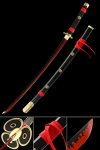 |
Yama Enma Sword - 1060 Carbon Steel Red Fire Blade with Gold Alloy Tsuba in Black Saya |