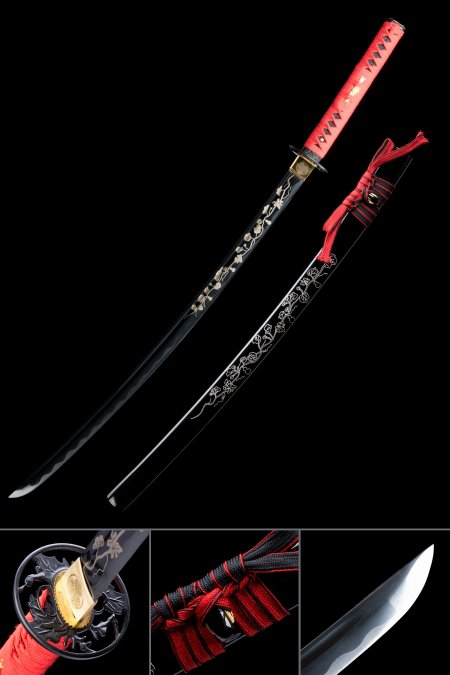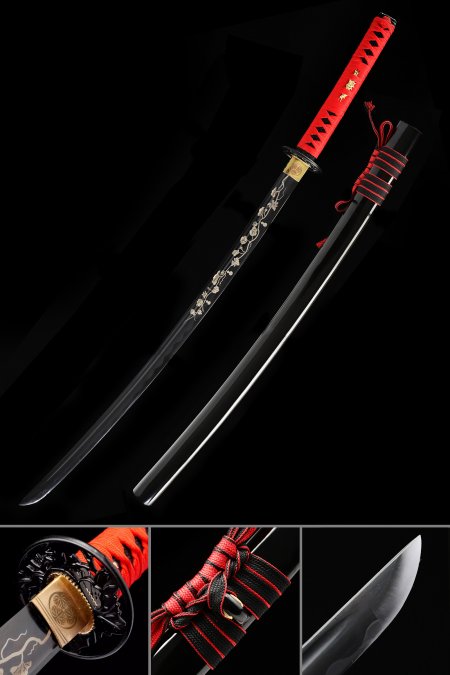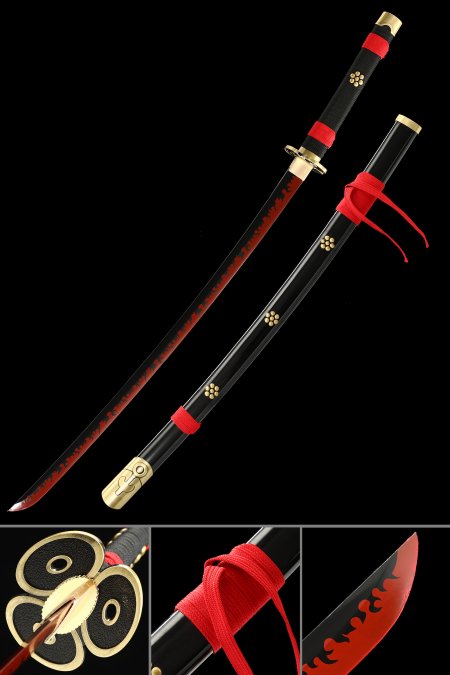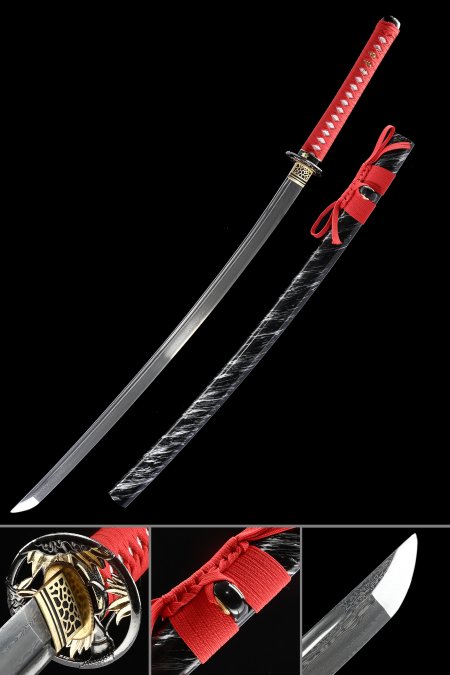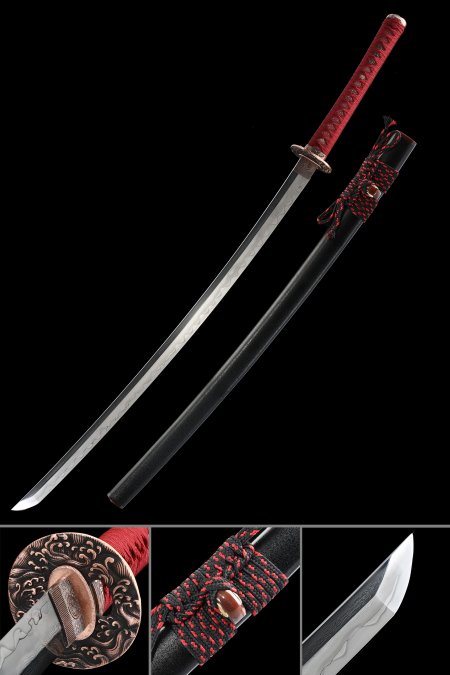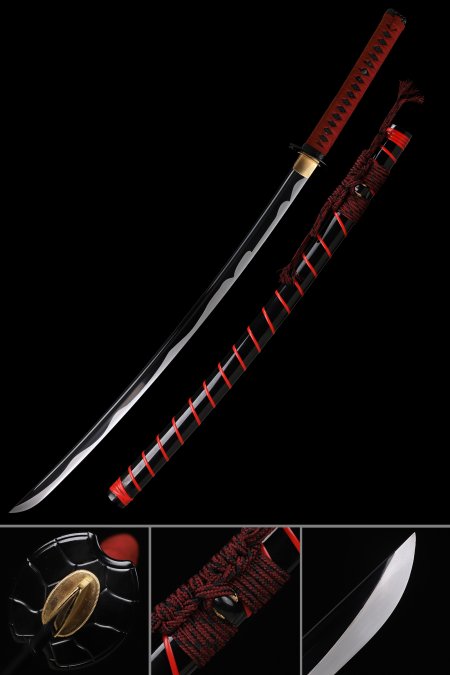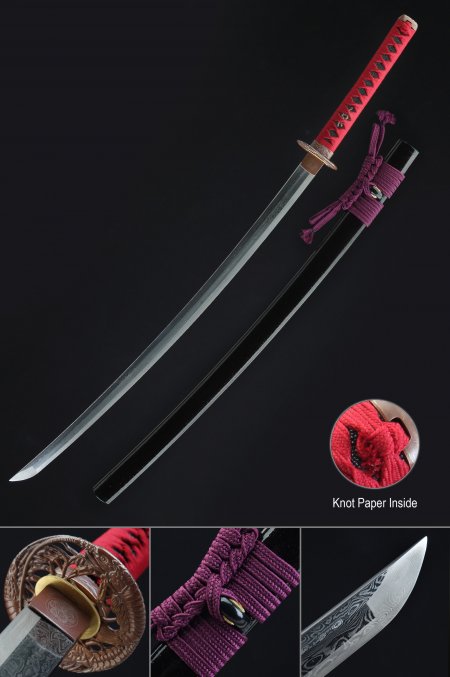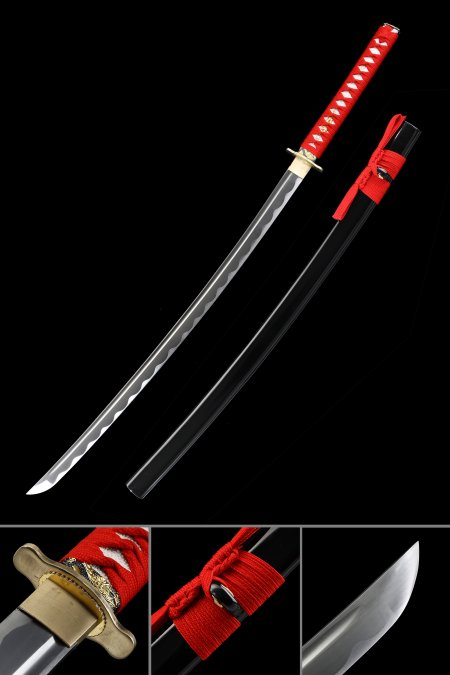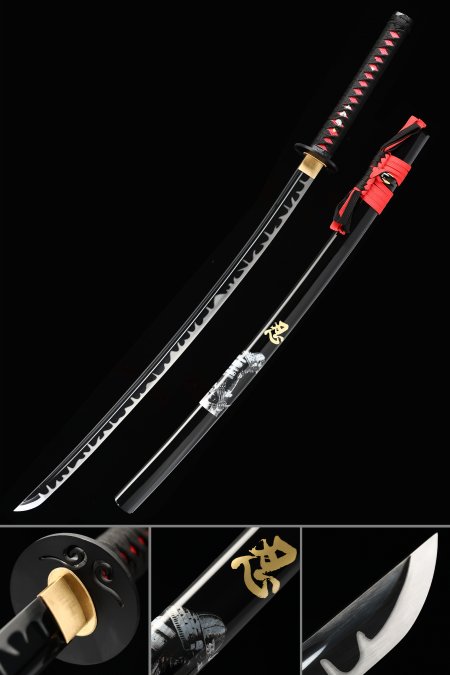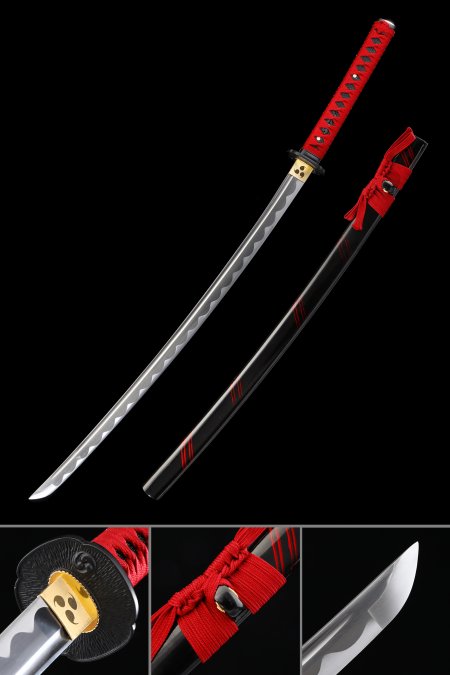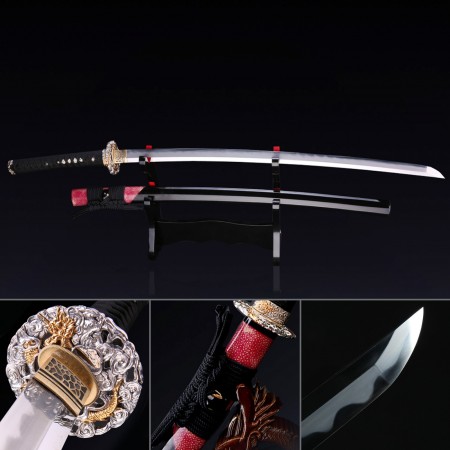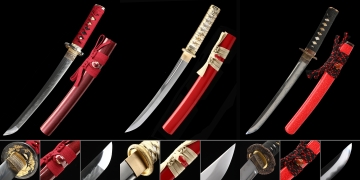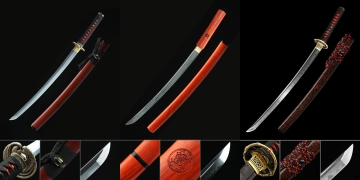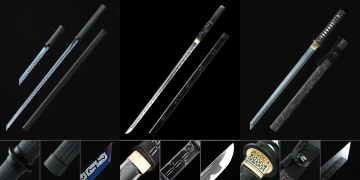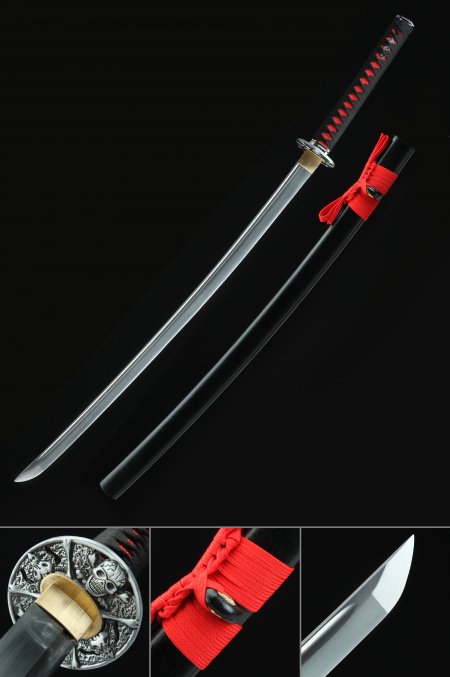
Red-black Katana

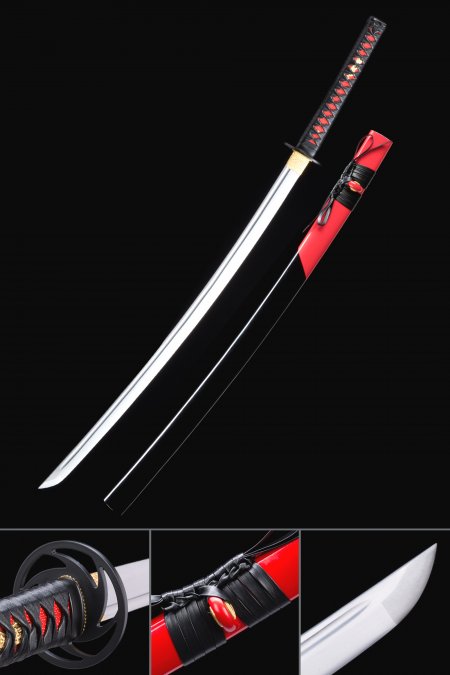
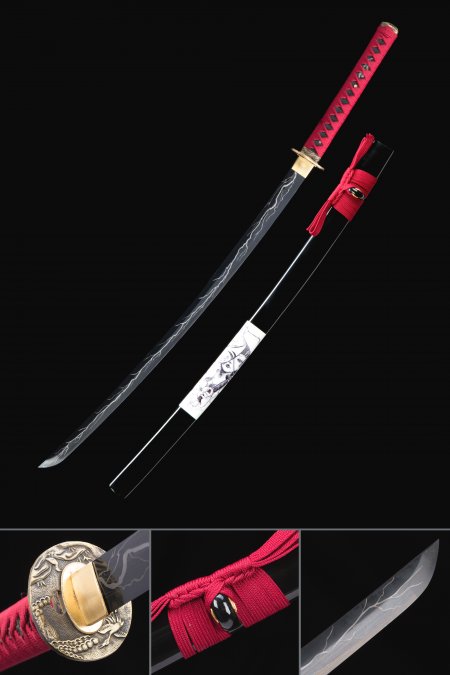
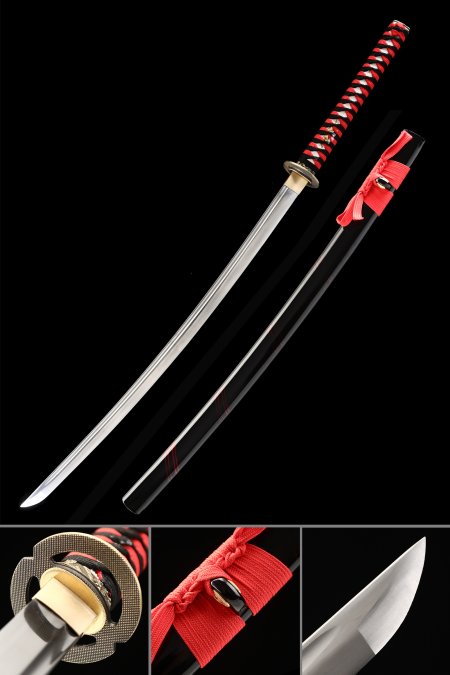
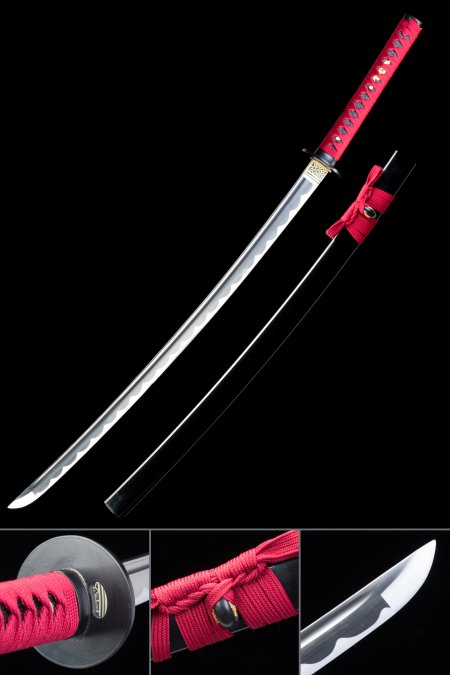
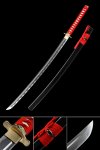
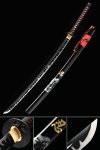
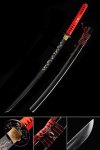
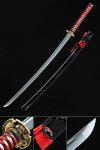
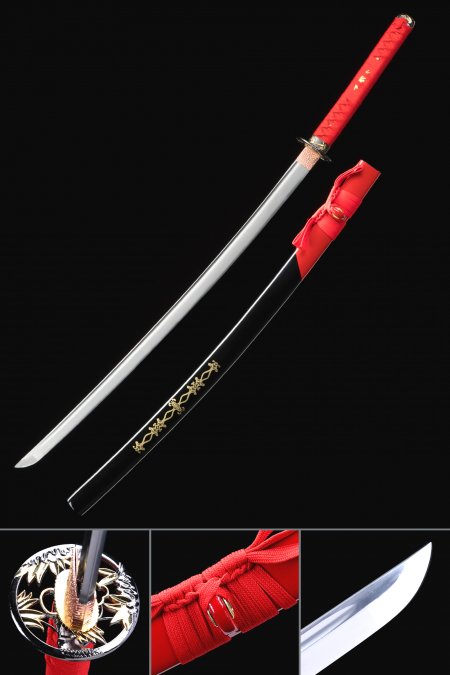
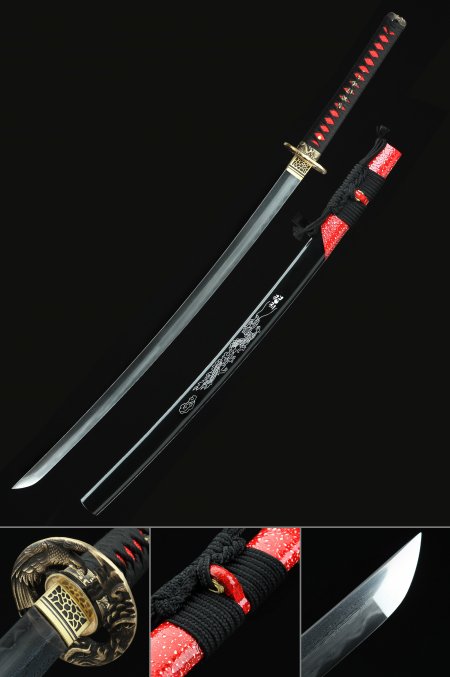
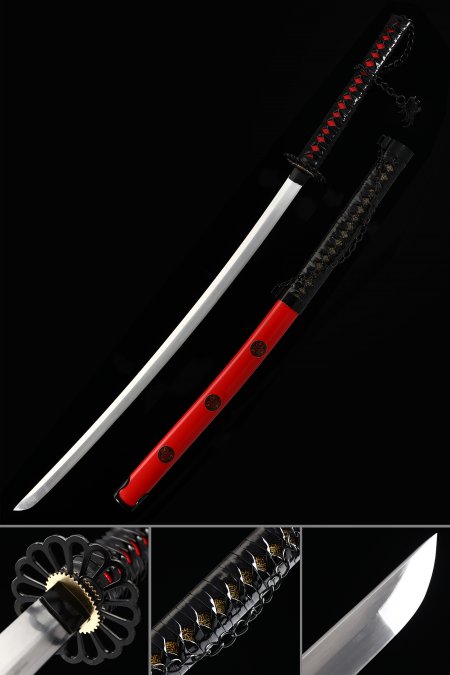
Explore our Red-Black Katana collection — hand-forged pieces that pair deep crimson accents with bold black finishes for a striking display aesthetic. Each katana is crafted from premium steels such as T10, Damascus, and 1045 carbon, with full-tang construction and traditional fittings. Every order ships with free worldwide delivery and a hassle-free return policy.
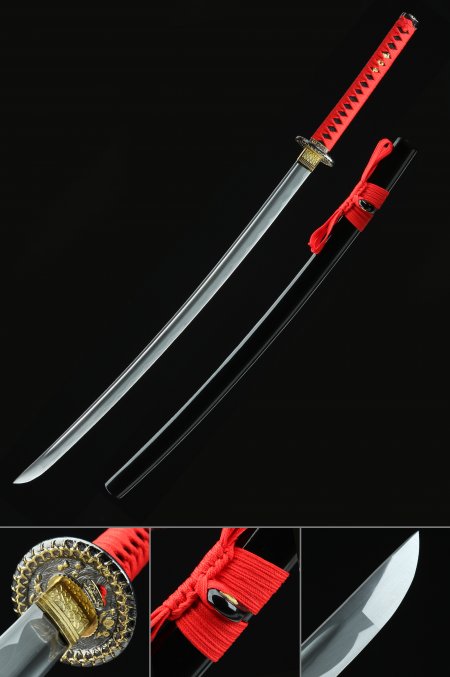
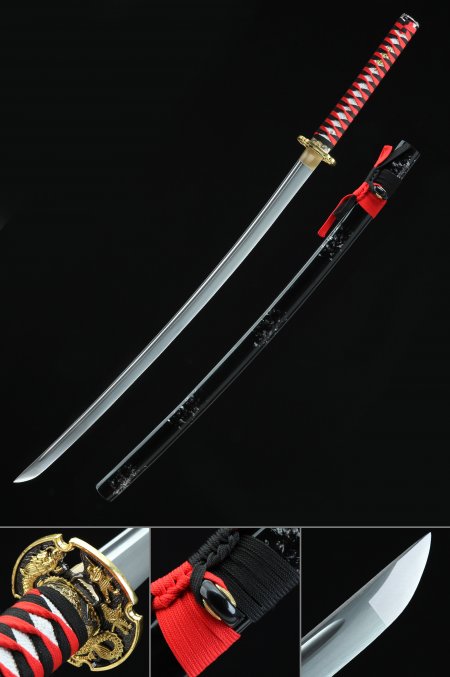
Showing 21 Products

Related Collections

Black Wakizashi40 items


102 Reviews

Red Tanto16 items


23 Reviews

Red Wakizashi7 items


64 Reviews

Black Chokuto39 items


289 Reviews

Frequently Asked Questions

What steel types are used in red-black katana collectibles?
Red-black katanas in this collection are forged from three primary steels. T10 carbon steel is a high-carbon tool steel containing roughly 1% carbon and a small amount of tungsten, which improves edge retention and allows for effective clay tempering to produce a visible hamon line. Damascus steel pieces use multiple folded layers — often exceeding several hundred — that create the distinctive wavy grain pattern along the blade surface, offering both visual appeal and a refined grain structure. 1045 carbon steel, with approximately 0.45% carbon content, provides a balanced combination of toughness and hardness that makes it a popular choice for full-tang collectible swords. Each steel type undergoes individual heat treatment and hand finishing before final assembly.
What does clay tempering do, and how can I spot a real hamon?
Clay tempering is a traditional Japanese heat-treatment technique where a mixture of clay, ash, and charite is applied in varying thicknesses along the blade before quenching. The spine, coated in thicker clay, cools slowly and remains relatively softer and more flexible, while the edge cools rapidly through the thinner clay layer, achieving greater hardness. This differential hardening produces the hamon — the wavy or undulating line visible along the blade. A real hamon, unlike an etched or acid-applied decorative line, reveals itself under close inspection as a subtle, three-dimensional transition in the steel's crystalline structure. Under natural light, you can see the difference in grain texture between the harder martensite near the edge and the softer pearlite toward the spine.
How should I display and maintain a lacquered black saya?
Piano lacquer and matte-finished saya both benefit from careful handling and storage. Avoid placing the scabbard in direct sunlight for prolonged periods, as UV exposure can fade or crack lacquer finishes over time. When displaying horizontally on a katana kake stand, position the sword with the edge facing upward and the tsuka to the left, following traditional convention. Wipe the saya occasionally with a soft, dry microfiber cloth to remove dust and fingerprint oils. If the lacquer develops minor smudges, a very lightly dampened cloth followed by immediate drying works well. For the blade itself, apply a thin coat of choji oil every few weeks or after any direct handling to prevent oxidation. Store in a climate-controlled room with moderate humidity, ideally between 40% and 55% relative humidity.
Can I pair a red-black katana with a matching wakizashi?
Absolutely. A katana and wakizashi displayed together form a daisho — the traditional paired set carried by samurai, where the longer katana and shorter wakizashi complement each other in both function and aesthetics. Our Black and Red Wakizashi collection features pieces with matching color themes, including red ito wrapping, black lacquer saya, and similar tsuba designs, so you can build a cohesive display set. When selecting a pair, look for consistency in steel type and fitting style. A T10 clay-tempered katana pairs naturally with a T10 wakizashi sharing the same hamon characteristics. Mounting both on a two-tier horizontal stand creates a visually balanced presentation that highlights the proportional relationship between the two blades.
What makes a full-tang katana different from a rat-tail tang?
The tang, or nakago, is the portion of the blade steel that extends into the handle. A full-tang katana features a tang that runs the entire length of the tsuka, maintaining a width and thickness consistent with the blade's overall geometry. This construction distributes stress evenly across the handle during any movement or handling, making the sword structurally sound as a single integrated piece. A rat-tail tang, by contrast, narrows dramatically into a thin rod welded or threaded into the pommel, concentrating stress at the transition point. For collectors, full-tang construction is a key indicator of quality craftsmanship because it reflects traditional Japanese swordsmithing methods where the nakago is forged as one continuous piece with the blade, then fitted with a wooden tsuka, wrapped in samegawa, and secured with mekugi pins through drilled holes in the tang.

Customer Reviews

Cart 0 Items

Your cart is empty